2022-06-06
“Safeguarding” must be survivor-centered and intersectional



In recent years, leading international nongovernmental organizations have been implicated in scandals about sexual harassment and other forms of abuse of power and harassment. While individual organizations have had a long-standing commitment - and pioneered innovative approaches - to protecting people from these harms (a process called safeguarding), this has not necessarily been the case for the sector as a whole. At a time when civic space is shrinking and the importance of a civil society that speaks and acts with integrity and accountability has never been greater, how can we shift from a compliance-oriented approach to safeguarding, to one of genuine cultural and norm change? How can we promote survivor-centered and intersectional approaches?
In this collaborative piece of writing, we look at “safeguarding in practice” and gender justice with organisations and women activists at the forefront of social change. Progress has been made, certainly, but gender justice and a world free of abuse, as you will read, is not something that is given, it’s something we have to fight for continually.
How do we keep people safe?
When we talk about “safeguarding”, we mean "protecting people from harm caused by an organization’s staff, operations, or programmes”. But how do we measure harm? For safeguarding to be effective it is essential to understand what specific harms different communities are exposed to, and to recognize the conducive contexts that enable and surround those harms. Harassment, abuse and exploitation don’t happen randomly, they are manifestations of power inequalities. These inequalities intersect with imbalances linked to gender, race, access to resources, and social status.
In the streets, in conferences, homes and schools, inequalities are being addressed by many different communities, and this diversity needs to be taken into account in safeguarding. From Italy to Belgium, women reclaim the streets, the workplace and their bodies. But some groups are discriminated against more than others. We spoke to AIETI, a network that has been working in Spain and Latin America to promote participative democracy for over 40 years.
“We don’t want to be objects of study; we want to talk for ourselves”
They act and mobilise in defense of women's rights, especially the right to a life free of “violencias machistas”, Tatiana Retamozo tells us. Originally from Peru, but in Spain for several decades, Tatiana is a lawyer, specialised in gender and migration. Coordinator of human rights projects in Guatemala and Peru, with special emphasis on women's rights, Indigenous peoples and human rights defenders, she is responsible for advocacy actions about migrant women's rights in Spain.
“To migrate is a human right, but here in Europe it’s not recognised as such,” Tatiana explains. “We don’t want to be objects of study; we want to talk for ourselves. As so-called migrant women we have a life, experiences and value, but as soon as we cross the border it seems that all that is over, we become numbers looking for papers. We are not vulnerable; they make us vulnerable.”
Often denied a space to express themselves, migrant women across Europe are victims of multiple oppressions. In Spain, migrant women report 6 times more incidents of violence than non-migrant women. “Migrant women denounce more, but have much less protection,” Tatiana explains.
AIETI also works to prevent hate speech to spread like wildfires, destroying “the right to be, become and belong, whether individual or collective, on grounds of gender, sexuality, race, ethnicity, class, nationality, age, ideology, creed or religion”. In Spain, as in several countries across Europe, there has been a proliferation of fundamentalisms and anti-rights groups.
“These movements deny the rights of women, deny the rights of migrants, deny the rights of LGBTQI groups. They claim that this is the natural order of things. How are these ‘repertoires of hate’, going to affect us?”, Tatiana asks. "We need to unite and fight together to protect what’s left of our democratic spaces.”
Denmark: "sexual harassment is not about sex”
From Spain we travel to Denmark, considered “one of the best places in the world to be a woman, with a narrow gender pay gap, equal employment rights, universal nursery care, and some of the happiest female retirees on the planet.” Yet, for women participating in social movements, reality is not so rosy.
A recent report by the Danish Institute for Human Rights shows that politically active women get more negative comments than men online. A study by Forus on an enabling environment for civil society confirms this trend, unveiling that feminist groups are among the most targeted by attacks, violence and impunity. Similarly, Amnesty International documented how female politicians are constantly victims of gendered threats and negative comments.
“Women active in public debates, face gendered bullying. They get negative comments about their looks, sexuality, age, appearance both in real life and online, on social media,” Sara Brandt from Globalt Fokus tells us.
Denmark has adopted quite late the #metoo movement, but in 2020 a vigorous debate about workplace sexual harassment was triggered. TV host Sofie Linde bravely started the debate, sharing her experience of sexual harassment in the largest Danish media house.
“She was first attacked for speaking up so many years after the events, but shortly after, hundreds of female journalists backed her up by signing a support letter. Other sectors followed, namely hundreds of women in politics. Prominent male journalists and politicians have been sacked or forced to step down. Among these are the mayor of Copenhagen and leaders of political parties,” Sara Brandt explains.
A new law on consent passed in December 2020 in Denmark, considered a big step forward in changing attitudes when it comes to sexual harassment and rape. This change in law did not come about by chance. It is the result of “years of campaigning by survivors who, by telling their painful stories, have helped to ensure that other women do not have to go through what they endured,” says Anna Blus, from Amnesty International.
The new law widened the circumstances that could constitute rape – under the old legislation, prosecutors had to show the rapist had used violence or attacked someone who was unable to resist. A similar law introduced in neighbouring Sweden in 2018 resulted in a 75% rise in rape convictions. Denmark, however, is only the 12th country in Europe to recognise non-consensual sex as rape, so there is still a long way to go.
“It is important to change the notion that sexual harassment is about sex, it is about power relations and bullying. Young women victims of sexual harassment or even rape should not be held responsible to stop the perpetrators – it is the responsibility of management and leaders and everyone that sees harassment to intervene and change the culture,” says Sara.
Gender is not what it used to be
Google “sexist advertisements” and your screen will be flooded by images hurting your eyes and hearts. The book “Selling Shame: 40 Outrageous Vintage Ads Any Woman Would Find Offensive,” reminds us of how from the smell of hair to the shape of one’s face, women’s bodies and lives were public domain, and thankfully, progress has been made.
Yet, despite significant progress, for many women in Europe, emancipation still means bearing the “double burden” of home-making and child-rearing, or what Silvia Federici calls “reproductive labor,” alongside work outside the home. Today, several decades after the fall of USSR, many problems faced by women across the post-Soviet states have a familiar ring everywhere in Europe. We are witnessing how in Poland and Hungary, activists are facing a particularly tough job suffocated by conservative, patriarchal ideologies. Latvia, where women make up 55% of the population, comes out top for women’s rights in Europe, but at what cost?
“It is hard to find a woman in Latvia who feels really discriminated,” explains Inese Vaivare from LAPAS. “However, our success comes only from women themselves, not from the support of society.” And this is part of the problem.
Any safeguarding response will thus only be effective if it is grounded in an intersectional power analysis, taking into account the variety of oppressions that women can live. In more concrete terms, we have the power to shape organisational cultures, values and behaviours around us, which can either allow perpetrators to hide undetected or kick-start a safeguarding culture that can provoke systemic change.
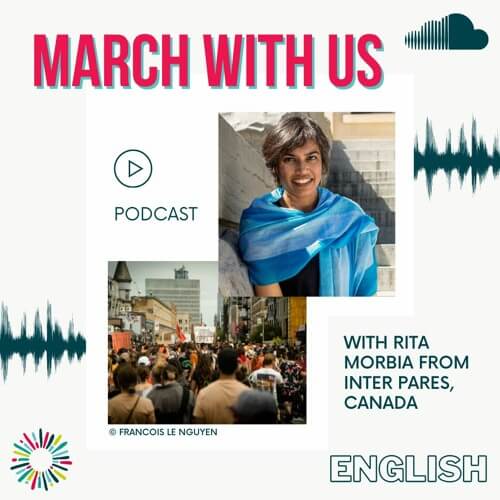
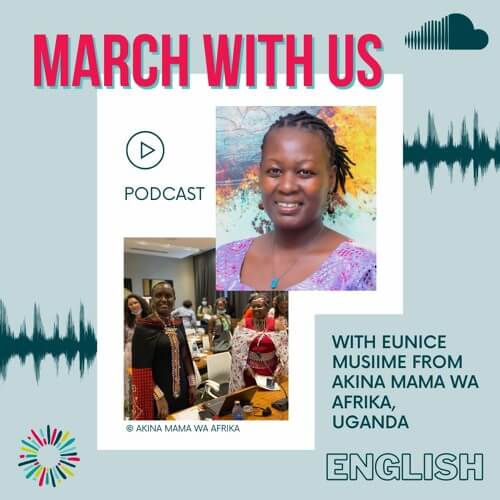
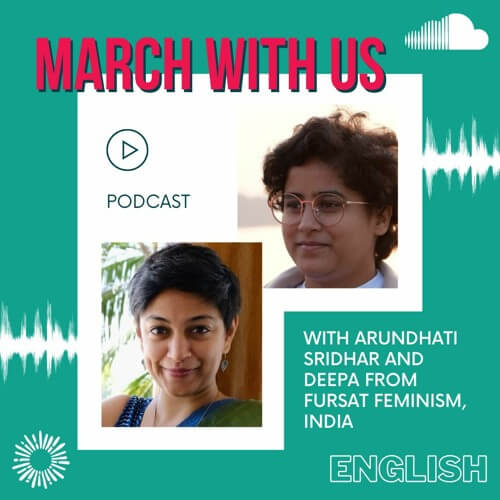
Forus, together with over 20 organisations, recently published a Safeguarding toolkit with examples of practices from all over the globe and developed for the second year in a row the #MarchWithUs participative campaign with over 15 activists and civil society organisations.
So, what does a healthy safeguarding culture look like?
Safeguarding comes in several forms and shapes, but various civil society organisations are showing how various approaches – big and small – can change the way communities protect themselves from harm. Let’s start with a few examples. Coordination SUD in France has started conducting a gender and power analysis of board meetings using an observational grid - a table with several indicators and criteria - to analyse interactions between directors through a gender lens. The Plataforma Portuguesa das ONGD, in Portugal, set up a self-assessment tool for its members. Coordinadora ONGD in Spain revised its Code of Conduct to include and clarify safeguarding measures. The platform has also developed, over time, a tool on transparency and good governance for its membership, which to date includes 79 indicators. The indicators include a requirement for organizations to have their own Code of Conduct, a whistleblowing channel and a Safeguarding Response Group to deal with complaints. CILONG in Chad has shifted to a survivor-centered approach. They set up several prevention measures, including an alert and protection group and the relocation of human rights defenders at risk. Bond, in the UK, makes available resources, tools and guidance on safeguarding principles and practices. Their approach is to redirect to existing materials rather than produce additional resources, unless there is an identified gap.
Equity and safety are relational. Inequalities are rooted in uneven dynamics that give disproportionate power to one group versus another. We all need to participate in the redistribution process. In the words of sociologist Chandra Talpade Mohanty, we need to acknowledge and listen to differences in lived experiences – without restricting the possibilities of alliances. We need to start promoting a healthy safeguarding culture - one where the rights and protection of all adults and children involved in or benefitting from an organization’s work are prioritised above all other considerations, where personnel and communities are and feel safe and valued throughout their involvement with the organization, where individuals know who to go to with any concerns and are confident that they will be listened to and heard without personal or professional repercussions, and where the organization strives to adopt the highest standards of practice across all areas of safeguarding rather than settling for the minimum standard in order to be legally compliant. Do you know of any good examples of safeguarding in practice?
Join our #MarchWithUs campaign to call for a greater gender justice!
We would like to thank Cooperation Canada, Digna, Coordinadora, AIETI, LAPAS, and Pénélope Hubert, for their collaboration.
© Both Nomads