© NGO Forum on ABD
© Forus
Wed 11 Jun 2025
Trends & Insights of Forus members investing in Organisational Strengthening
The Forus National Platforms Projects (NPP) is a partnership among Forus network members that seeks to respond to the self-assessed priorities of 12 to 15 national platforms per cycle. The 6th cycle (January-December 2025) marks the first time that all 12 selected Forus members are dedicating the resources available to strengthening their internal operations, structures, systems, strategies and technical skills of their teams. The overarching goal is to advance towards a more resilient, effective, and sustainable network of national civil society platforms.
Starting the journey with an Organisational self-assessment in August 2024, Forus members found a wide variety of strengths and opportunities for improvement. The Peer Committee selected 12 platforms to participate in the 6th cycle, and they met last April in the first Accountability Circles of the year. Read more about the background of the project here.
What is an Accountability Circle?
An Accountability Circle is a learning and reflection space that occurs quarterly and is designed to foster peer exchanges among project leads about their progress and challenges. Each participant presents a five-minute summary of achievements, lessons learned, and questions. Peers then offer feedback, recommendations, or follow-up questions to deepen the collective learning experience. Ahead of each session, participants prepare a written update, which may include visuals, hyperlinks, or testimonials from members or colleagues.
“I really value this space because it genuinely helps us absorb these experiences. I would love to follow up with Sinergia, for example, to learn more about how they approached the psychosocial support for NGO members (...) or connect further with colleagues from Africa—because we share not only histories of colonialism but also present-day lived realities.”
The relational and iterative approach that the Accountability Circles offer for project evaluation enables project partners to reflect on their own progress while allowing the an easier and better identification of the emerging trends, achievements, and early signals for additional support of the overall group.
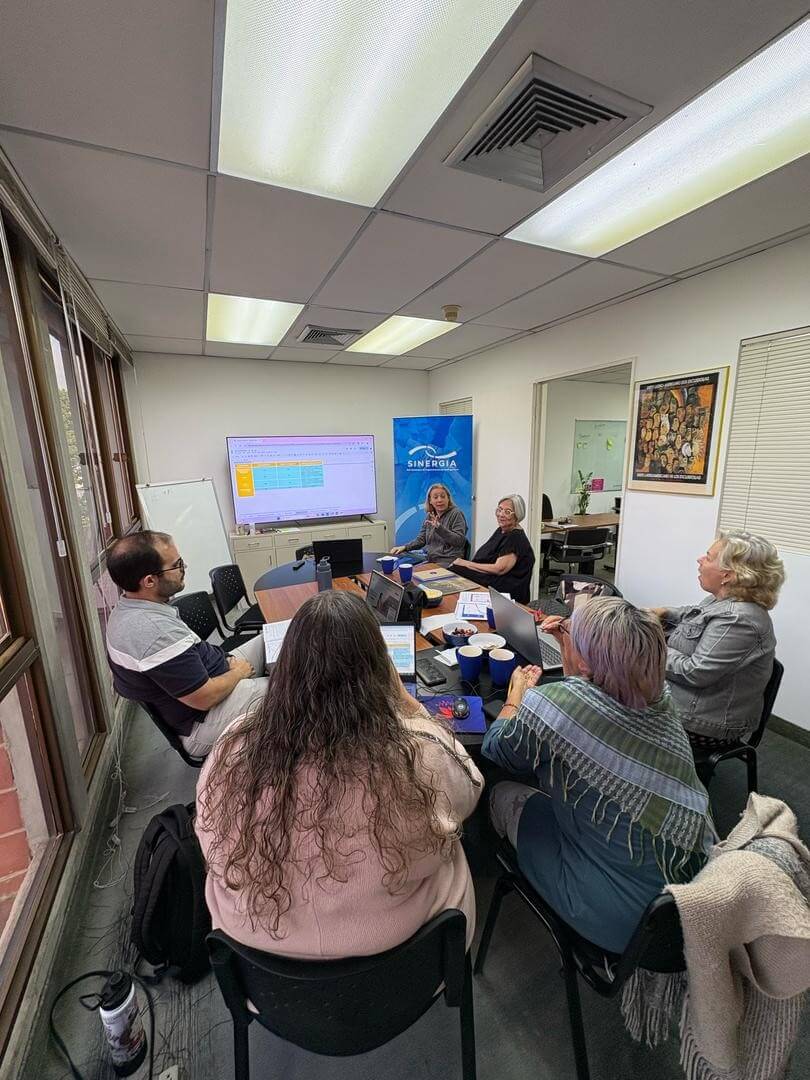
©Sinergia, Venezuela
In the Forus National Platforms Projects, each Accountability Circle brings together four platforms with similar project goals or thematic interests three times a year. The groups were formed based on similar areas of focus although several platforms have interest in more than one organisational development domain. Due to the diversity of platforms (Latin America, Africa and Asia), the 3 sessions (Accountability Circles) were supported by professional interpreters that ensured multilingual participation.
The update below seeks to offer a general picture of the insights and learnings captured and seeks to encourage a global conversation among Forus members and beyond on the diverse tactics and tools civil society is utilizing to resist in such turbulent times.
Laying the Groundwork for Organisational Strengthening
The 6th cycle of the Forus National Platforms Projects kicked off in January 2025 with a virtual Onboarding Session where all project leads shared their stated objectives for the years, their offerings or contributions to the group in case needed and their requests for support from peers. Read more about the objectives each platform set for themselves here. Four months later, they are telling their story about setting the foundations for an intense organisational strengthening 12-month journey with 30,000 euros (approximately).
Overall Progress and Emerging Readiness
Most platforms reported being on track to meet their intended outcomes. The majority are currently in a phase of ‘early planning and awareness’ having mobilized resources effectively and having aligned internally around shared priorities. Half of the platforms are prepared to implement concrete actions in the second quarter, while a few have already delivered key outputs such as governance policies, strategic planning guidelines, draft strategy plan, etc.
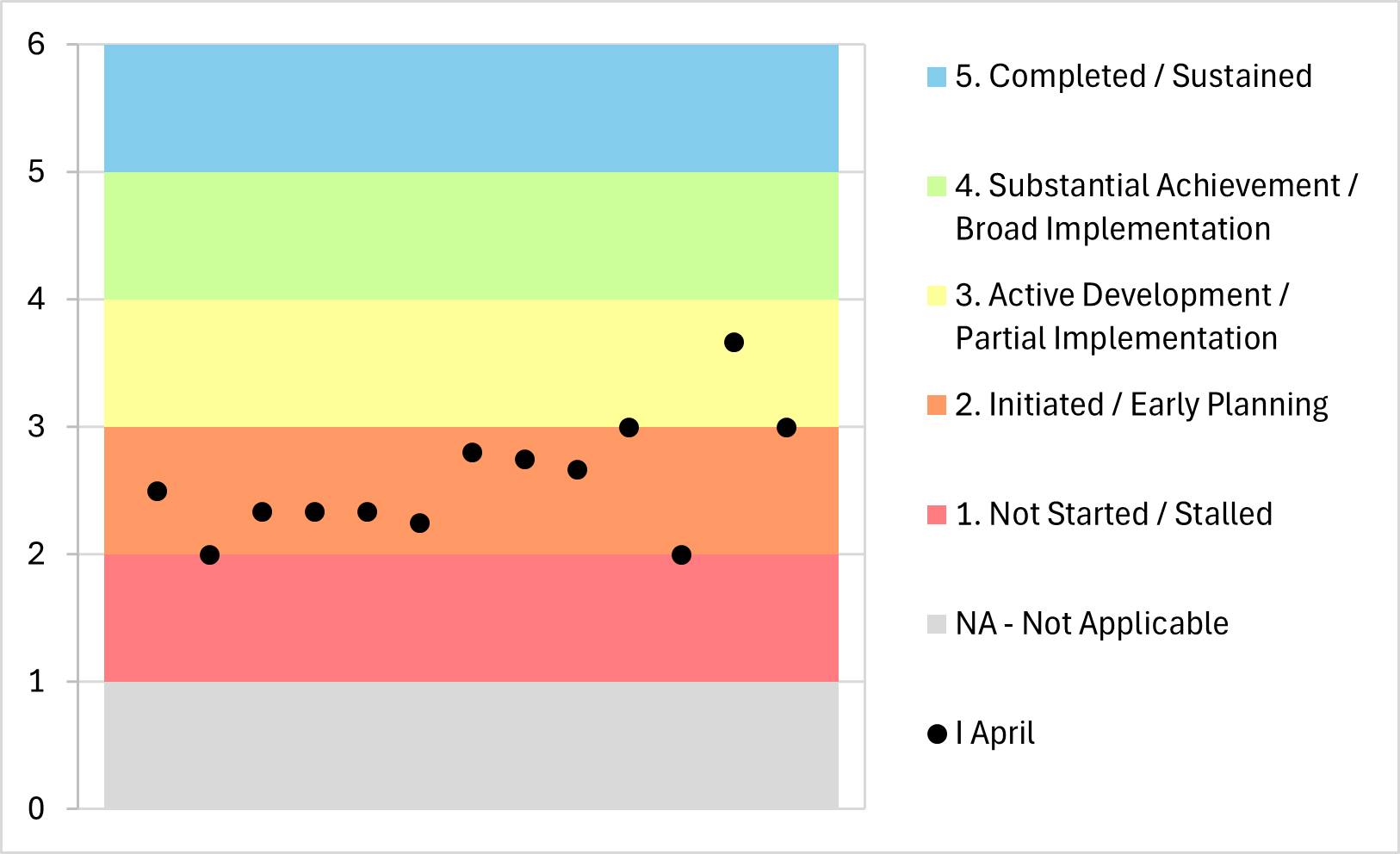
Half of the platforms have engaged in budget revisions and pre-financial reports demonstrating strong budget management and understanding of the dynamics in this partnership scheme. It is important to note that most of the platforms participating in this cycle have engaged in previous cycles, hence their familiarity with grant management and compliance.
What is working well?
Amongst the most common organisational development domains, most platforms are focused in updating or renewing their strategic direction and internal policies, upskilling and equipping their staff and reactivating their external communications for stronger membership engagement. Among these areas, platforms demonstrated progress in:
-
Increased Governance and Representation
National platforms focused on strengthening internal governance successfully recruited and onboarded new Board members and staff in the first four months. These new appointments helped amplify underrepresented voices and address gaps in skills and perspectives.
“Our new governance policy is not perfect, but it reflects who we are today—and who we want to include tomorrow.”
-
Enthusiastic engagement in members’ consultations
Platforms developing new network-wide or thematic strategies (e.g. advocacy; communications or resource mobilization) have begun consultation processes with their members. Feedback thus far reflects renewed cohesion, motivation, and commitment from members, staff, and volunteers.
“This was the first time in five years that we paused to ask who we want to be as a network—not just what we do.”
-
Digital Transformation for wider Member Outreach and Engagement
Platforms investing in membership engagement systems, tools and skills have made significant strides in reaching members outside capital cities, hosting hybrid training workshops, and initiating creative roadmaps to improve member-to-member communication.
Spotlight: NNNGO’s First Quarter Achievements
NNNGO appointed new board members through a structured nomination process. New members bring in expertise in finance, policy, and nonprofit management—areas previously missing from the board. Their fresh ideas and active involvement in the onboarding period has strengthened the enthusiasm in NNNGO’s team. Regular virtual meetings and a dedicated WhatsApp group have enhanced board connectivity and engagements.
Congratulations to NNNGO new Board of Directors.
Additionally, NNNGO finalised a new five-year strategic plan based on inclusive consultations, focusing on capacity-building, resource mobilisation, gender equity, and stronger partnerships.
NNNGO’s membership has grown substantially, with 60 new organisations joining 4060 member – 33 of them as paying members – bringing the total to 189 for 2024-2025.

©Sinergia, Venezuela
Case Study: CNONGD - From Digital Gaps to Digital Growth
At the beginning of 2025, CNONGD embarked on an ambitious institutional strengthening project focused on digital engagement and knowledge management. While the organisation already had proven expertise in CSO coordination, it faced several limitations: restricted access to digital information, poor capitalisation of knowledge produced, and technological tools that were ill-suited to current needs.
Four months later, the change is palpable. CNONGD now has:
-
a restructured website that serves as a showcase for information and a tool for interacting with its members.
-
a better equipped team that is more aware of the challenges of cybersecurity, digital content production, and data management.
Above all, there has been a change in organisational culture: teams no longer see digital technology as a technical constraint, but as a strategic lever for transformation.
The change has been achieved through a gradual and participatory approach, combining several factors:
-
A clear and shared vision led by CNONGD management.
-
Technical support and resources were made available as part of the project.
-
A collective willingness to learn, experiment and adopt new practices.
In conclusion, CNONGD has reached a level of digital maturity in just a few months. It is not simply a matter of having new tools, but of having set in motion a process of continuous transformation. The challenge now is to consolidate these gains, disseminate them throughout the network, and ensure that this approach is sustained over the long term.
Challenges Identified
-
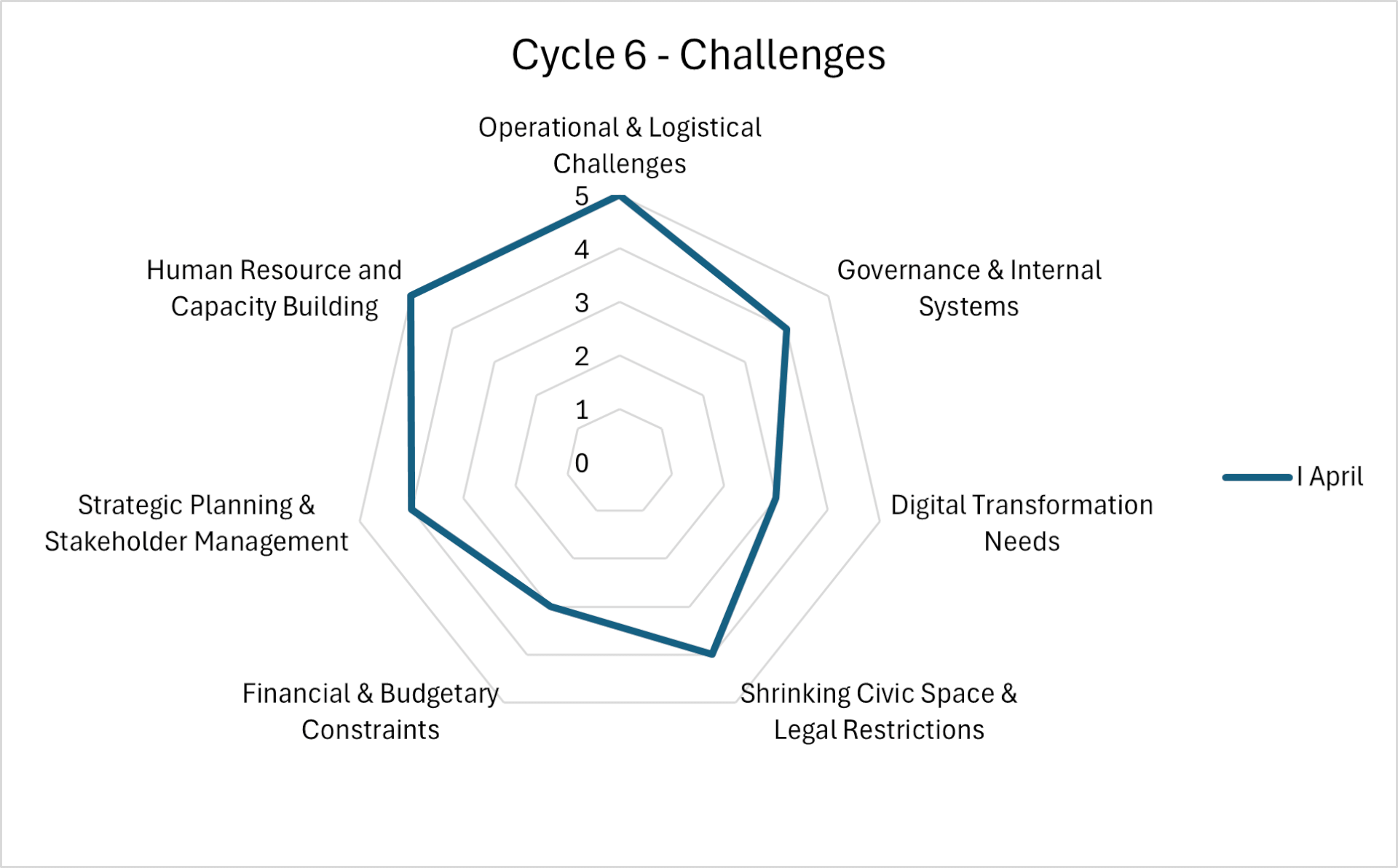
Operational and Logistical Constraints: platforms identified difficulties coordinating among geographically dispersed members; delays in workshop participation and scheduling; and issues with managing physical and digital documentation.
-
Human Resources and Capacity building Gaps: platforms found that recruiting aligned and skilled consultants takes longer than expected, as well as the importance of onboarding younger and less experienced staff gradually versus rapid leadership transitions with limited time for handover and training. Lessons learned included proactive planning, piloting, and adapting.
The root causes of these challenges varied. In some cases, external factors such as government restrictions or new currency regulations affecting international transfers and hence affecting project delivery and budgets (e.g. Latin America). In other cases, internal staff changes or underestimation of activity timelines caused delays (Southern Africa).
Some platforms demonstrated great capacity to adapt and respond proactively to perceived challenges and needs and quickly explored a more holistic approach to organisational strengthening. For example, SINERGIA in Venezuela, integrated emphasis psycho-emotional support and organisational psychology into their projects.
“Although we are civil society organisations, we are led and sustained by people—people affected by fear and uncertainty”.
This people-centred strategy is emerging as a valuable complement to their technical efforts, suggesting that emotional resilience is a critical foundation for sustaining leadership and coordination for civil society under pressure.
Global Learnings
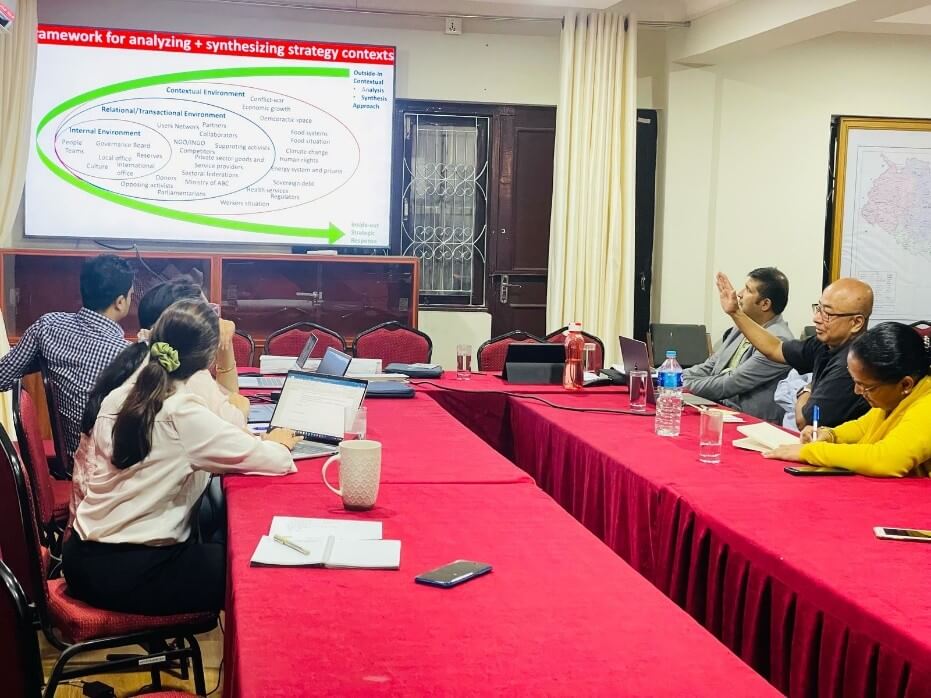
The biggest and most unexpected takeaway was that, despite their diverse contexts, all 12 platforms are grappling with intensifying legal restrictions from national governments and growing economic pressures at both national and international levels. These overlapping external forces are making timely and effective civil society action increasingly difficult.
While for some platforms they thought their national context was what sets them apart and made their project more challenging, the Accountability Circles served to note that all platforms are operating in very similar oppressive environments. Additionally, common technical challenges persist across the platforms—particularly in the areas of information systems, human resource management, and time allocation.
Nonetheless, the resources made available during this initial phase have enabled most platforms to:
-
Invest in and strengthen their internal teams,
-
Reconnect face-to-face with their members, and
-
Structure their priorities, activities, and systems for long-term transformation.
The quarterly reflections—distinct from traditional mid-term or final evaluations—have provided deeper insight into the capacities, limitations, and shared experiences of national platforms implementing similar projects in parallel. Members expressed that Accountability Circles offer:
-
Closer proximity and stronger relationships between national platforms and the Forus team, fostering a sense of solidarity and shared purpose,
-
Quicker identification of common challenges and avenues for mutual support, and
-
A growing appetite to listen, connect, and exchange lessons across geographic and cultural boundaries.
The National Platforms Projects' emphasis on institutional strengthening has therefore proven to be not only timely but also highly relevant in responding to the evolving needs and operating environments of civil society organisations. Through regular group check-ins and bilateral follow-ups, the Forus National Platforms Projects partnership is fostering a culture of agile problem-solving and continuous learning.

©Forus LDP 2025 - Tango, The Gambia
Looking Ahead
-
Bilateral follow-up exchanges to support platforms further behind in their timelines.
-
Second Accountability Circle in August 2025.
-
Train of Trainers learning modules and skills sharing sessions.
-
Final evaluation in December 2025.
Call to action: share feedback, resources, or stories of institutional strengthening to the network by sending an e-mail to [email protected]