© Forus
© Sam Mann



2026-02-09
Great Lakes: Local associations, a bastion of hope
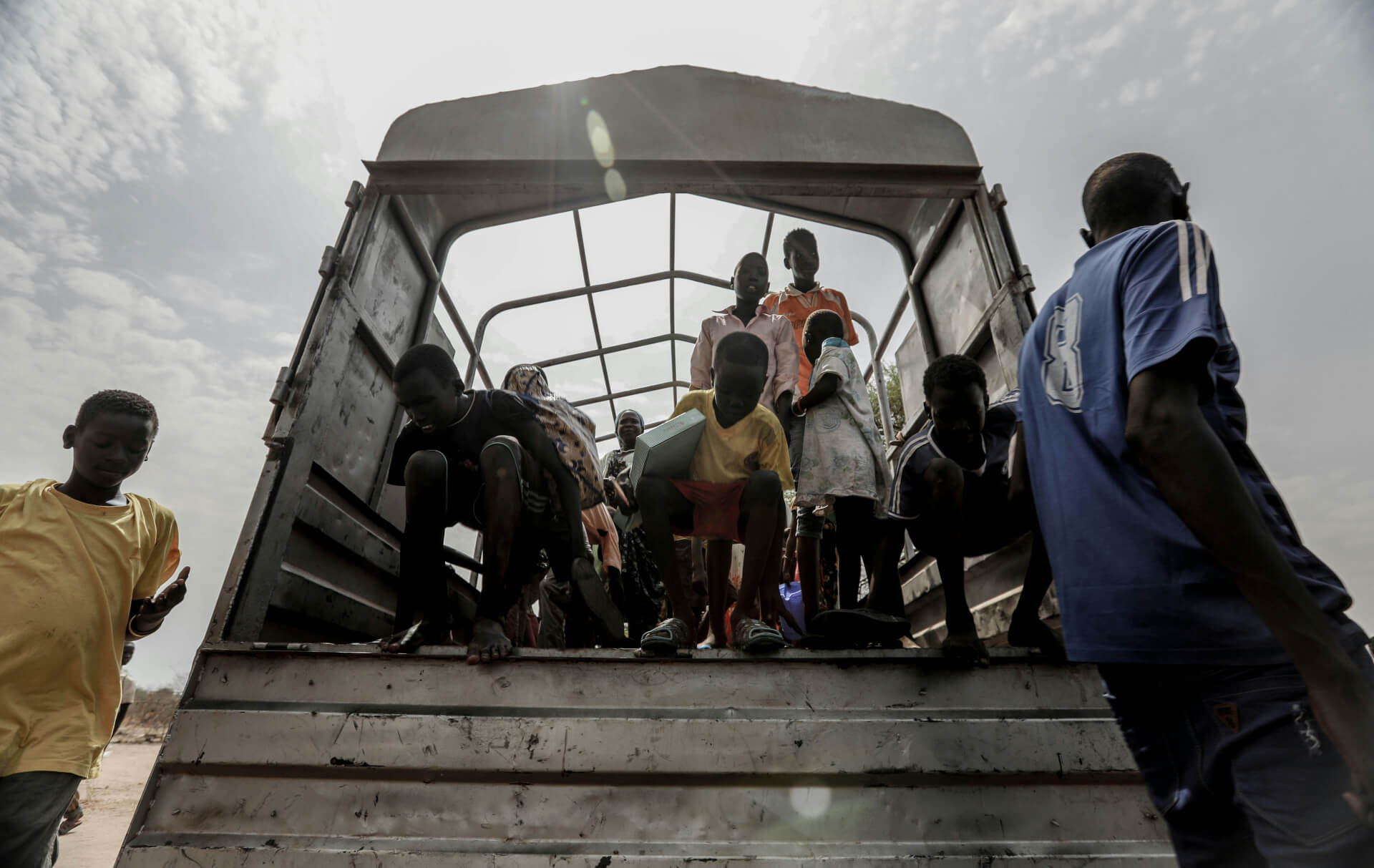
In Burundi and eastern Democratic Republic of Congo, where conflict and population displacement have created a humanitarian emergency, local organisations are trying to make a difference with a simple approach: acting with what they have, where they are. However, these actors on the ground remain largely excluded from strategic decision-making. Faced with a crisis that goes beyond the humanitarian emergency, regional actors are calling for a coordinated political response to enable a dignified and sustainable return.
Wearing the DRC Leopards jersey, Justin, a member of the Goma Actif collective, watches the quarter-finals of the Africa Cup of Nations from a city in the East African Community. It has been almost a year since he left Goma, in the east of the Democratic Republic of Congo, after fleeing the clashes. He says he left for fear of reprisals. He owes his life to the solidarity of the youth and human rights civil society organisations he encountered along the way. He still remembers his journey: from Goma to Bujumbura, then to the city where he now lives and continues his activities. What he calls his “pilgrimage” left a lasting impression on him, particularly the welcome he received in the Burundian capital. “Despite the situation, I felt at home,” he says.
The same was true for Sarah Zagabe. When shooting broke out in Kamanyola, in eastern DRC, she had no time to think. “We fled across the water to neighbouring Burundi,” she says. She had just turned 27: a life, a career as a teacher and plans for the future. In a matter of hours, everything changed. After initially taking refuge in Rugombo (north-western Burundi), where they spent almost a month, Sarah and her family were transferred to the Musenyi camp (southeast Burundi). Between the difficulties of accessing food, drinking water, medical care and emergency shelter, life in the camps is far from easy. But Sarah does not want her life to be defined by suffering; she expresses her gratitude to the ‘beautiful souls’ she has met among the young humanitarian workers.
Young people at the bedside of refugees
Faced with this influx of refugees, whether in Burundi or the DRC, it was youth organisations, often without resources, that were the first to mobilise to share what little they had. A year before fleeing, Justin was one of the volunteers distributing porridge to war refugees in camps on the outskirts of Goma. He remembers those days spent entertaining the children, trying to help them forget, if only for a moment, the difficulties of everyday life.
In Goma, the Goma Actif collective was on the front line, alongside other local associations such as Action Chrétienne des Humanitaristes (ACH). In a region where emergencies are a constant, ACH relies on local solidarity, driven by young people who are convinced that even with little, it is possible to do a lot. Today, the association is active in North Kivu, South Kivu, Ituri and in Burundi.
In Burundi too, young people were the first to respond. In the Gatumba transit camp, it was volunteers from associations who tried to restore a little dignity to thousands of Congolese refugees fleeing violence.
“Our Congolese brothers arrived in extremely precarious conditions. The country was not prepared for such a sudden influx,” says Rodrigue Muzusangabo Makenda, deputy coordinator of ACH Burundi.
The reality in the camps was brutal. For more than a month, men, women and children lived without proper shelter, without sufficient food, without drinking water or latrines, often forced to sleep outside in the rain. “These are our fathers, our mothers, our brothers and sisters. No one can remain indifferent to such a situation,” he says.
It was this outrage that first prompted the members of ACH to take action. True to its humanitarian mission, the association did not want to just stand by and watch. “We went to listen to the refugees. Their cries, their stories, their despair touched us deeply. That's what motivated us: the appalling situation in which they live,” explains Rodrigue.
Without much in the way of resources, but with unwavering determination, the young people of ACH began by simply being there. There to listen, to comfort, to bear witness.
When hope blossoms again thanks to local associations
For Victoire Kubuta, chair of the ACH board of directors, the issue goes beyond immediate aid. “The commitment of young people is helping to rewrite the history of our region,” he says. On the ground, the aid does not take the form of cold and distant assistance. “The welcome was perceived as that of one family member helping another, not as the gesture of an organisation," he says. This closeness helped to create a climate of trust and a warmer atmosphere, even in contexts marked by fear and uncertainty.In Musenyi, survival is not only a matter of humanitarian aid, but also of human connections. "We have good relations with the Burundians. They have become our friends. They bring us cassava leaves, and we share what we have with them,‘ explains Sarah, thoughtfully. ’We pray, we play, we live together.
These simple gestures punctuate our days and act as a bulwark against stress. After experiencing so many horrors, living with others helps us forget the pain of the past," she confides."Talking relieves stress and trauma," confirms Nathalie Chibanguka, a Congolese psychologist. That is why the ACH team regularly visits refugee camps from 8 a.m. to 3 p.m. to provide psychological support. "We try to restore a little hope, to remind them that peace is possible and that one day they will be able to return home," he says.
Actors in the field, excluded from decision-making
Local and youth associations play a key role in the humanitarian response. "They are able to mobilise initial aid through community funds and provide initial data on the context and priority needs of displaced persons," says Rigo Gene Woyie, Secretary General of the Conseil National des ONGD de Développement (CNONGD), a network of development NGOs in the Democratic Republic of Congo and member of Forus. However, they face many challenges in coordinating with national authorities and international partners. "Local actors too often remain mere executors, rather than being jointly responsible for planning and response," emphasises Rigo Gene. He also points to a lack of transparency and skills transfer, as well as poor uptake of tools related to the "localisation" of humanitarian aid. "These tools are still not widely used at the territorial, provincial and national levels, which limits the ability of local organisations to advocate effectively with the government and international NGOs," he laments.
While local associations are involved in identifying needs, they remain largely absent from the spaces where strategic decisions are made, particularly with regard to the allocation of funding. "When it comes to major decisions on funding and the implementation of emergency projects, they are often sidelined," laments the Secretary General of CNONGD. This sidelining is sometimes justified by doubts about the technical management capacities of local organisations, which nevertheless contradicts international commitments on the localisation of aid.
Several changes are needed to ensure that the work of local NGOs is better recognised. Rigo Gene calls for local knowledge to be valued and for the balance of responsibility to be reversed: "The state must not remain an observer. It must monitor the commitments of international partners and translate the Charter for Change into a national legal framework." He also calls for greater transparency and direct access to funding.
Stop managing, start solving
The civil society organisations that make up the Réseau des Plate-formes des ONG de l'Afrique Centrale (REPONGAC) network believe that the voices of the people deserve to be heard beyond emergency aid. Where a small NGO in Bukavu, Uvira or Bujumbura might not be heard in Addis Ababa or New York, REPONGAC uses its regional structure to transform these testimonies from the field into structured policy recommendations.
According to them, the growing flow of Congolese refugees to Burundi is not just a humanitarian crisis; it is a symptom of deep regional instability requiring a coordinated political response at the Great Lakes level. Alain Serge Mifoundou, the network's communications officer, says the situation along the border between South Kivu and the Burundian provinces has deteriorated significantly:
"The incessant flow of Congolese refugees into Burundi is not simply a migration crisis; it is a symptom of deep regional instability that requires a response beyond the strictly humanitarian framework. Our monitoring networks are documenting an alarming increase in human rights violations along the exodus corridors (Ruzizi Plain, Hauts-Plateaux). Civilians, particularly women and children, are victims of extortion and physical violence. The porous nature of the borders, while allowing people to flee, is also exploited by armed elements, creating a climate of suspicion that is detrimental to genuine asylum seekers. Burundi, the host country, is seeing its local resources (water, land, health services) subjected to unbearable pressure. Without increased support for Burundian host communities, we fear an erosion of cross-border solidarity and the emergence of new inter-community conflicts."
REPONGAC condemns approaches that strictly separate humanitarian aid in Burundi from peacebuilding efforts in the DRC. For Alain Serge, the solution does not lie in perpetuating the camps, but in creating secure conditions that allow for a dignified return, which requires increased diplomatic pressure on the actors involved in the conflict.
"We remain convinced that peace in the Great Lakes region cannot be achieved without serious consideration of the human security of displaced populations and greater involvement of the driving forces of regional civil society,’ he explains. "REPONGAC takes a critical view of the way in which international organisations are managing these crises. The network advocates for an integrated approach to the refugee crisis in the DRC and Burundi. They criticise approaches that strictly separate humanitarian aid in Burundi from peacebuilding efforts in the DRC. A significant part of our analysis focuses on the fact that local NGOs (members of national platforms) are the first to respond but the last to receive funding. They analyse this funding gap as an obstacle to a sustainable regional response. Drawing on regional seminars (such as the one held in Bujumbura in December 2025, in which the network actively participated), REPONGAC analyses refugee flows as an early warning indicator. For us, the increase in crossings into Burundi is a precursor to a major deterioration in human rights in South Kivu. Our analysis emphasises that the solution does not lie in perpetuating the camps in Burundi, but in creating secure conditions in the DRC that allow for a dignified return, which requires increased diplomatic pressure on the actors involved in the conflict."
According to humanitarian figures, more than 101,000 Congolese crossed the border into Burundi after the fall of Uvira, bringing the total number of Congolese refugees in the country to more than 250,000. Most are from the provinces of North Kivu and South Kivu in the east of the Democratic Republic of the Congo.
This article is written as part of the Forus journalism fellowship programme. Learn more here
2026-01-19
News
Feminist Organisations Defending Civic Space in West Africa As Uganda heads toward general elections scheduled for 15 January 2026, memories of past election-related violence particularly against journalists remain fresh. In response, civil society organizations are stepping up efforts to protect civic space by equipping journalists with skills in peace journalism, ethical reporting, and personal safety, recognizing the media’s central role in sustaining democratic participation.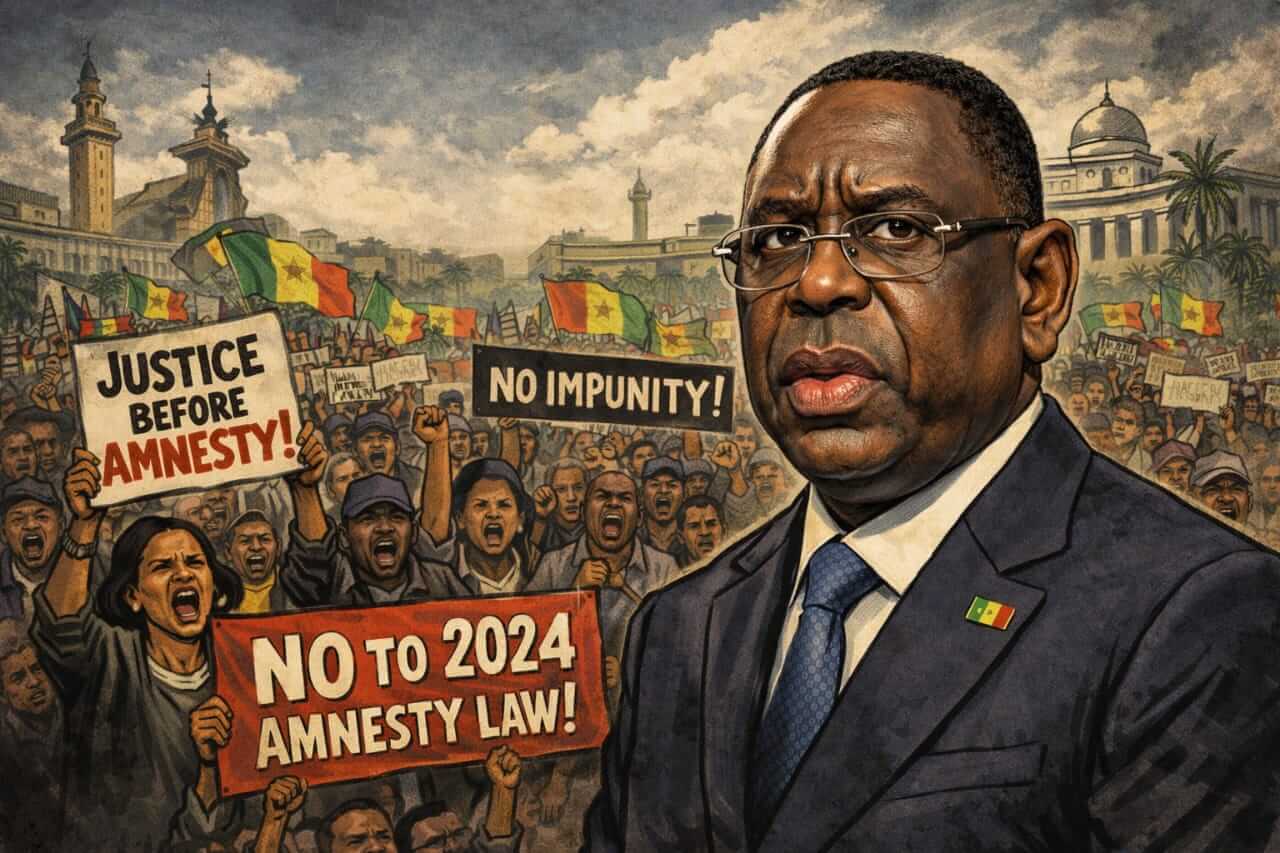
2026-01-15
News
The Collective Shield: West Africa Civil Society’s United Front Against Restrictions on Civic Space- Case of Togo and Senegal The events in Togo and Senegal in 2024 show two different faces of the same crisis: the civic space is in dire need of being protected, and political dissent has become the number one enemy in these countries. At that point, Senegal, once the beacon of democracy in the West African subregion, reduced itself to a dictatorial state, showing how it used Amnesty to bury the past, while Togo used the constitutional amendment to control the future.
2026-01-05
News
As Uganda Heads to 2026 Polls, Civil Society Turns to Peace Journalism to Protect Democracy As Uganda heads toward general elections scheduled for 15 January 2026, memories of past election-related violence particularly against journalists remain fresh. In response, civil society organizations are stepping up efforts to protect civic space by equipping journalists with skills in peace journalism, ethical reporting, and personal safety, recognizing the media’s central role in sustaining democratic participation.