© NGO Forum on ABD
©Camylla Battani

2026-09-15
Lithuania’s development cooperation: follow the money
Lithuania's experience raises questions that go well beyond one national context. At a time when development cooperation budgets are under growing pressure, the debate is not only about how much ODA countries provide, but also about the quality of that cooperation: who shapes priorities, who can access funding, and whether civil society and local actors are treated as implementing partners or as genuine partners in decision-making. Lithuania's evolving approach offers an interesting lens through which to explore some of these questions.
To understand Lithuania's development cooperation today, we have to start from analysing the situation in Ukraine.
In 2022, as Russia invaded Ukraine, Lithuania's development cooperation peaked at an extraordinary 231 million Eur or 0.36% of GNI as a share. The increase was explained by the dramatic events in neighbouring Ukraine and the response to them. Three years later, the trends show a significant shift. According to preliminary data, Lithuania's ODA in 2025 stands at 177.8 million Eur or 0.21% of GNI, down 9.7% in real terms compared to the previous year and the third consecutive year of decline.
But the shift is not only explained by a reduction in overall volumes of assistance. It is also essential to note how Lithuania prioritizes its spending when the urgent need in support of post-war Ukraine is met.
Ukraine remains the focus of Lithuania's development cooperation. In 2025, 62.6 million Euros or more than a third of ODA was allocated to reconstruction and development in Ukraine. Another 31.3 million Eur was earmarked for humanitarian aid. In addition, 15.9 million Eur was spent on refugees, the majority of whom were Ukrainians. It is not surprising, as Ukraine is close to Lithuania, not only politically and militarily but also culturally. Therefore, supporting Ukraine's reconstruction and development, including democracy, education, communities and civil society, plays a critical role for Lithuania.
The fact of the matter is that helping Ukraine is not in question.
The question is: what else is there besides Ukraine?
A small donor's edge
Lithuania is a small donor, and its profile is significantly lower than that of the other European Union members with regard to development cooperation. Thus, the question that Lithuania faces is: what can it offer beyond financial contributions? The answer lies in the strengths of Lithuania's development policy, which has already demonstrated its unique selling points in areas critical to democratic development, digital transformation, and resilience building. Lithuania's NGOs have extensive networks and competencies that can be transferred to partner countries, including local communities in need of support. Their areas of expertise range from humanitarian aid to education, gender, community development, and civil society.
That is why the guidelines, adopted in January 2026, entitled International Partnerships Strategic Guidelines 2026–2030, represent a paradigm shift in Lithuania's development aid policy. They signal the change in strategy from a traditional geographical priority-setting approach to a more strategic one, which considers not only the country-specific needs but also the capacities of Lithuania as a development actor. The five areas of development cooperation, as outlined in the Guidelines, are democratic, social, digital, environmental and economic resilience. Furthermore, mutually beneficial and more equal partnerships, as well as institutional, business and NGO stakeholders, are prioritized in Lithuania's development cooperation for the first time.
In principle, this is all quite logical, and it may work in theory. It is a big step towards a more authentic, equitable and efficient development partnership. In practice, however, it may be challenging, because equal partnerships imply that both sides bring something to the table, rather than the donor just deciding what the recipient country needs and how it should get it.
From consultation to co-creation
For Lithuania's NGOs, the new strategy represents both opportunity and challenge. While the first step has been made, a lot remains to be done. For example, returnable grants have been approved as a major innovation, thus reducing the burden on NGOs, including those with fewer resources. There are plans to ease eligibility criteria for co-financing grants, while co-creation is explicitly mentioned as a strategy. However, mechanisms for lightening the administrative load, improving the structure of the National Development Cooperation Commission, and building long-term partnerships still need to be worked out.
It is crucial to understand that consultation is not the same thing as co-creation. Consultation means organising meetings at which NGOs can voice their opinions, but the government decides what to do nevertheless. Co-creation means that all stakeholders, including government agencies, businesses, NGOs and communities, are involved right from the outset, including design and implementation, with joint ownership of the outcomes.
The new strategy provides for such an approach, which, no doubt, will have a positive impact on Lithuania's development cooperation. The challenge now is to transform ideas into practice. Some steps have already been made in this direction. For example, NGOs are being engaged more actively in Practitioners' Club events and Global Gateway activities, as well as in discussions of Lithuania's international development cooperation policy. There is now a need to involve NGOs in funding decisions at all levels, including developing funding instruments and designing projects in a co-creative format.
For civil society platforms in other countries, Lithuania's experience also highlights an important advocacy opportunity: engaging not only on overall ODA volumes, but on how development cooperation policies and funding instruments are designed. The move from consultation towards co-creation, the development of more predictable and accessible funding, and the recognition of civil society's own expertise are issues that resonate far beyond Lithuania.
Can funding change the rules of the game?
One of the most interesting changes in Lithuania's development cooperation is the proposed qualified applicants platform, which is expected to be launched soon. This tool is designed to identify organisations with a solid track record in development cooperation, which would reduce the administrative burden on them and, at the same time, ensure quality support to partner countries and communities. This is a promising step, because it will help transition from short-term, project-based funding to long-term, sustainable partnerships.
In addition to the qualified applicants platform, returnable grants, approved for 2026, could also change the nature of Lithuania's development assistance. According to the announcement, these grants can be used to finance single projects or ongoing grants with a renewable term. The size of the returnable grant may reach up to 500 000 Euros for one year. If these grants were combined with longer-term funding mechanisms, they could become an important instrument for engaging NGOs.
However, it must be borne in mind that a new funding product requires a change in the way in which NGOs operate. Small donations to local organisations may be useful, but they do not always contribute to long-term and sustainable development. At the same time, large grants usually require a high degree of administrative accountability, which can be a burden for small NGOs. A multi-year funding mechanism would allow an NGO to plan its work more strategically, including investing in building organisational capacity, rather than applying for funding on a yearly basis. It will be interesting to see if the new instrument succeeds in attracting small, medium and large NGOs to engage in long-term, sustainable development.
What happens outside the spotlight?
Development assistance has a tendency to concentrate on issues that enjoy wide political support. Wars and humanitarian disasters capture the public's imagination, while the slow, deliberate work to strengthen communities takes time and is barely visible. New buildings and schools can be photographed and celebrated, while deep reforms to make a local organisation more resilient and sustainable are difficult to communicate.
However, if Lithuania wants to truly transform its development assistance policy, it will be necessary to re-examine the balance between areas of financing, including those that are not immediately apparent. It is especially important for Lithuania to ensure that local organisations, including those that do not have formal status as an NGO, have a voice in setting priorities, designing projects and assessing their impact.
As a small donor, Lithuania has the opportunity to offer alternatives to the global development financing architecture, dominated by large NGOs and multinational corporations. It can support local organisations as equal development partners. It can share its own experience of democratic transformation, as well as digital and social innovation, contributing to the transformation of local communities and institutions. And it can facilitate partnerships between local and international NGOs, including those with fewer resources.
As global discussions increasingly focus on the future and quality of development finance, national debates such as this one are an important reminder that more equitable development cooperation also depends on changing who has a voice in shaping it.
2026-09-11
News
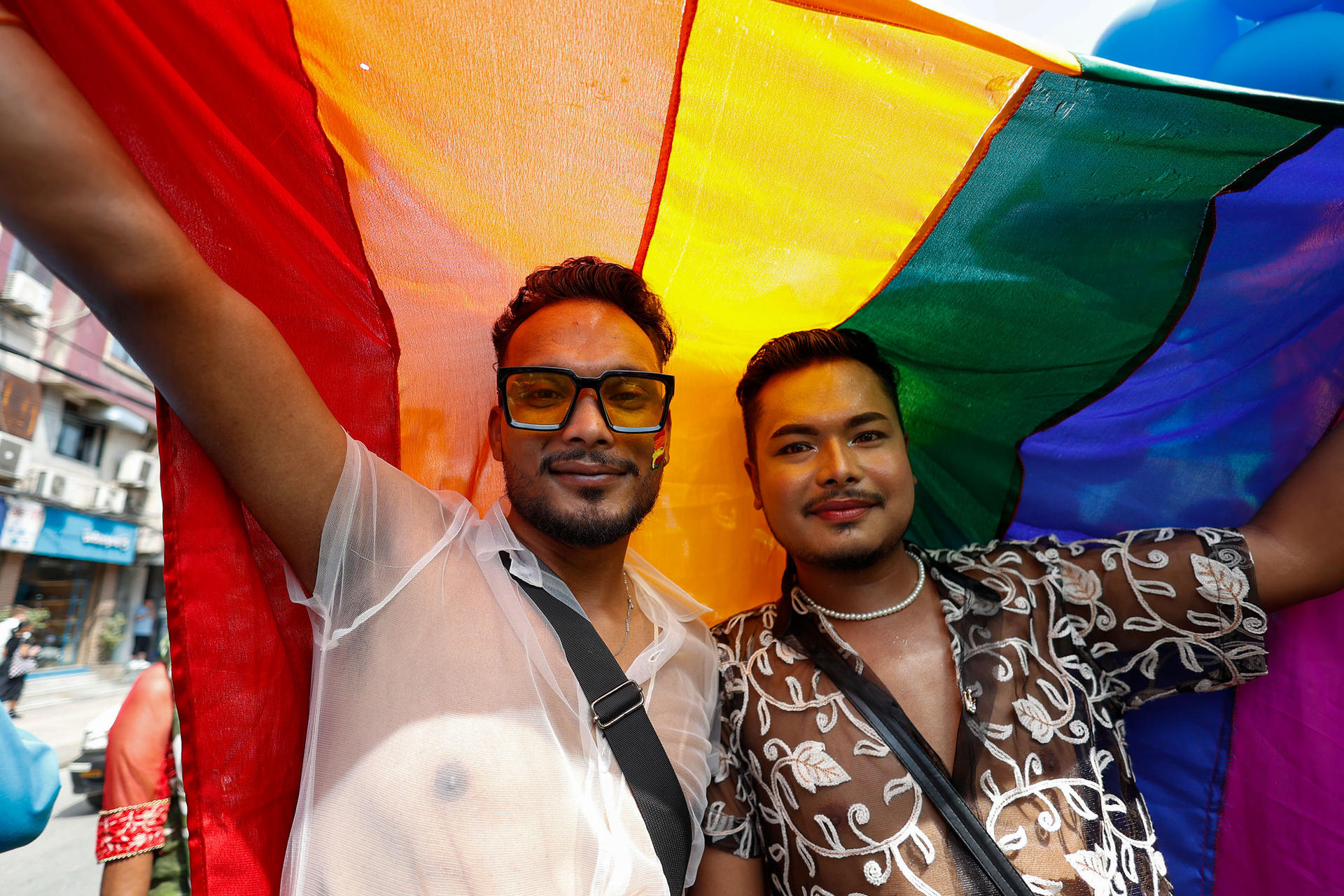
Back in the closet – EU SEE data reveals how governments are reversing freedoms for LGBTQ+ groups globally Evidence from the 86 countries monitored through EU SEE shows how these pressures increasingly overlap, and how beyond the most visible forms of restriction, lack of protection for LGBTQ+ people and the organisations representing them restricts their capacity to exist, organise, speak, participate and challenge power without fear.