© Forus
© Kiiza
Mon 5 Jan 2026
As Uganda Heads to 2026 Polls, Civil Society Turns to Peace Journalism to Protect Democracy
As Uganda heads toward general elections scheduled for 15 January 2026, memories of past election-related violence particularly against journalists remain fresh. In response, civil society organizations are stepping up efforts to protect civic space by equipping journalists with skills in peace journalism, ethical reporting, and personal safety, recognizing the media’s central role in sustaining democratic participation.
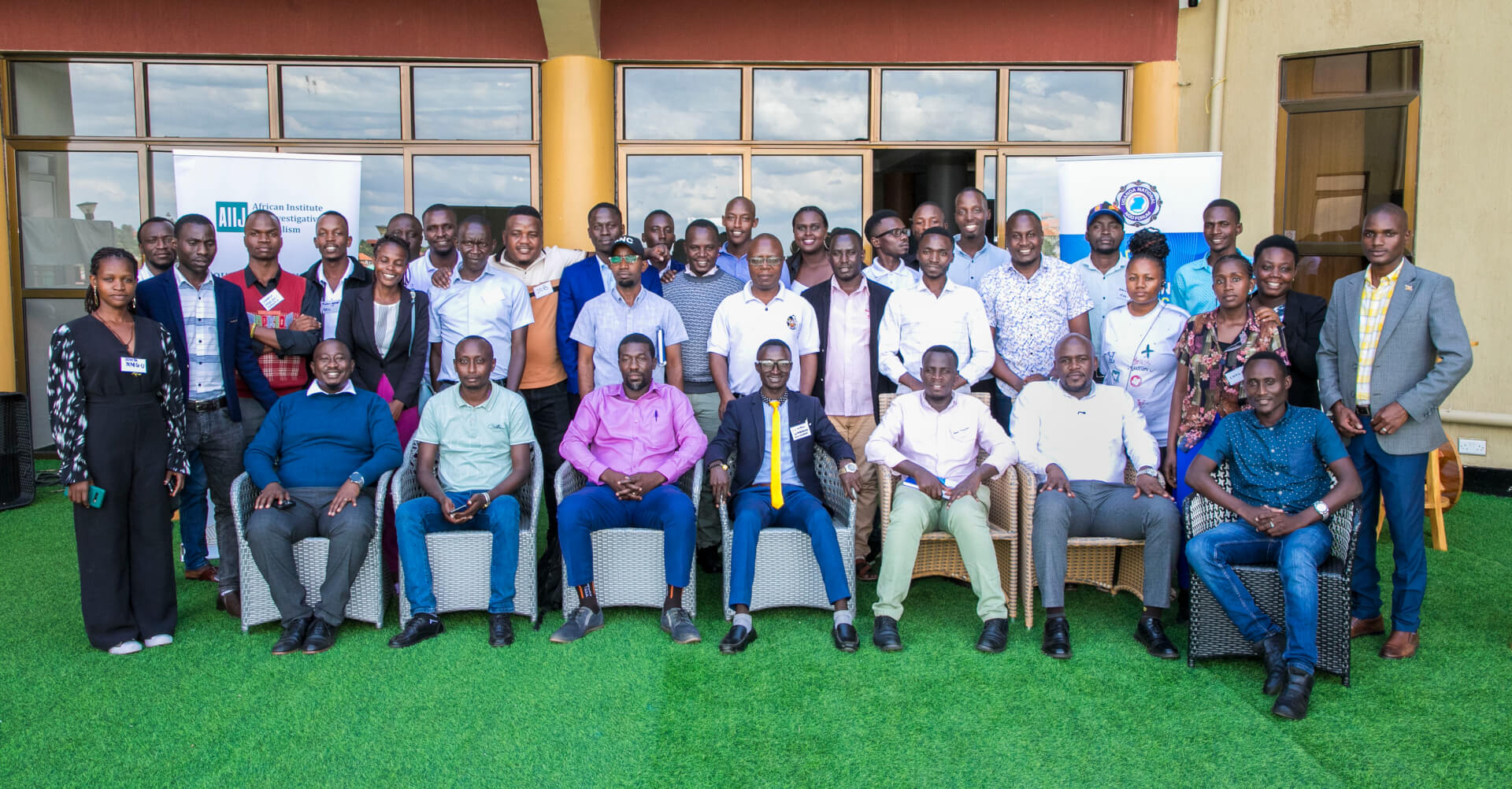
At a recent journalist training convened in Mbarara city, Ugandan civil society organizations led by the Uganda National NGO Forum (UNNGOF) urged reporters to embrace message mapping and conflict-sensitive reporting as tools to counter misinformation, reduce political tensions, and rebuild public trust during the electoral season.
The training forms part of broader civil society initiatives, including support from programmes such as the Democratic Governance Facility / Civic and Political Rights (DGF/CBR) project, aimed at strengthening election coverage, voter education, and accountability ahead of the polls.
When Reporting Becomes a Risk
The urgency of such interventions is underscored by the lived experiences of journalists like Huzaifa Mugerwa, who recalls covering a by-election of Kawempe North in 2025 early in his career.
“It was peaceful for most of the day,” Mugerwa says. “But as voting ended, a masked man kicked a ballot box. People started shouting. Soldiers arrived. Then violence erupted.”
As Mugerwa livestreamed the unfolding chaos, masked men confronted him, demanding to know which media house he worked for. His recording equipment was confiscated, and he was dragged into a vehicle.
In a context of rising violence against journalists in Uganda ahead of the January 2026 general election, journalist Huzaifa Mugerwa recounts being blindfolded, interrogated, and beaten by masked men who accused him of working for opposition leader Robert Kyagulanyi (Bobi Wine) - the main challenger to President Yoweri Kaguta Museveni. Mugerwa says he was detained for six or seven hours and then thrown by the roadside.
Such incidents, long documented by press freedom organizations, have intensified as Uganda moves closer to elections. Journalists fear that intimidation by security forces not only threatens their safety but also limits citizens’ access to credible, independent information—an essential pillar of democratic governance.
Civil Society Steps In
Recognizing these risks, the Uganda National NGO Forum (UNNGOF) and partner civil society organizations are working to strengthen journalists’ capacity to report responsibly under pressure. According to Executive Director of UNNGOF Moses Isooba, ethical journalism is not just a professional obligation, it is a civic duty:
“Journalists must always find facts and be accurate, especially when reporting on sensitive issues like elections,” Isooba said while presenting guidelines on election coverage.
He cautioned against publishing misleading opinion polls, noting that polls are prohibited within 48 hours of polling day due to their potential to influence voter behavior:
“No story is worth your life. You should prioritize safety and wear protective gear when covering volatile political events.”
Message Mapping as a Tool for Peace
A central focus of the training was message mapping, a practical approach that helps journalists identify core facts, avoid sensationalism, and maintain consistency during live reporting.
By encouraging calm, factual storytelling over emotionally charged headlines, message mapping aims to prevent media coverage from escalating tensions. Civil society facilitators emphasized that in politically sensitive moments, how a story is told can be as important as what is reported.
For journalist Evelyn Kabugho, the training was transformative.
“It was an eye-opener,” she said. “It reminded us that our role is to inform the public responsibly, not to fuel conflict.”
Kabugho stressed the importance of fact-checking and media literacy, both among journalists and audiences, especially in an era of rampant misinformation.
“Citizens must also learn to question what they receive; they should not be deceived.” Kabugho said.
Voter Apathy and the Media’s Role
The training also addressed declining voter turnout and growing political apathy. Christine Masika, another participant, noted that many elites no longer vote, partly because they are financially independent and disengaged from electoral processes.
She urged journalists to seek out under-resourced political candidates who struggle to reach voters, arguing that fair media access is essential for inclusive democratic participation.
“Journalists should make the effort to find them and give them a voice,” she said.
A Gendered Risk
The dangers of election reporting are particularly acute for women journalists. According to the Uganda Media Women’s Association(UMWA), many female reporters are reconsidering field reporting due to rising violence and intimidation.
“Choosing journalism, I wanted to be in the field,” said Josephine Namakumbi, a news reporter and anchor at NBS Television. “But with the violence happening, I am scared for my life. It’s frustrating.”
The Uganda Media Women’s Association reports that scores of young women journalists are abandoning the profession altogether while the UNESCO–ICFJ survey found that 73 percent of women journalists globally have faced online or offline violence, simply for doing their work.
Uganda’s Press Freedom Index Report 2020 documented 174 media violations, with police responsible for 60 percent of these cases. Assault accounted for 71 cases, while 40 involved denial of access to information. Studies further show that 10.9 percent of female journalists experienced abuse that year, with reporters bearing the brunt of violations.
During the recent World Press Freedom Day, UMWA, supported by the Uganda National Commission for UNESCO called on government, media owners, and digital platforms to ensure the safety of journalists, especially women.
“When a female journalist is attacked, everyone’s freedom of expression suffers,” said Rosie Agoi, Secretary General of the Uganda National Commission for UNESCO.
A Civil Society-Led Solution
Despite differing views such as those expressed by Media Council of Uganda Chairperson Paul Ekochu, who described journalist insecurity as a “problem” rather than a “crisis” civil society organisations insist that proactive intervention is essential.
By training journalists in peace journalism, ethics, and safety, organizations like UNNGOF are working to protect civic space, strengthen democratic culture, and ensure elections are reported in ways that inform rather than inflame.
This article is written as part of the Forus journalism fellowship programme. Learn more here
Wed 24 Dec 2025
News
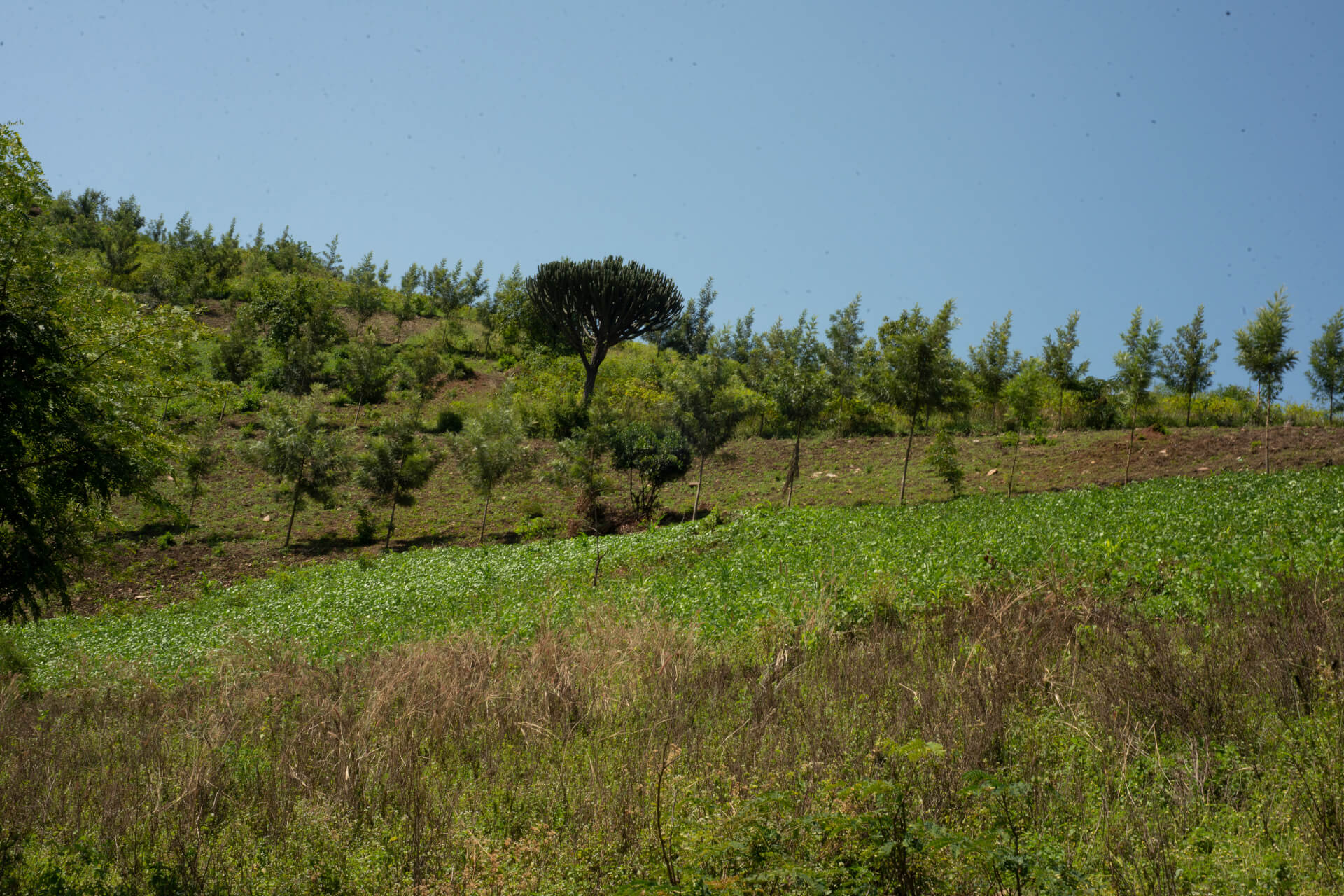
Beyond Aid: How Women-Led Agroforestry Is Strengthening Food Security and Climate Resilience in Uganda This is Uganda’s climate frontline where erratic rainfall, floods, landslides, and prolonged dry spells are reshaping daily life. And it is here that women, often with the least land ownership and decision-making power, are quietly leading one of the region’s most effective climate responses: agro-forestry rooted in indigenous knowledge.
Thu 18 Dec 2025
News
Energy crisis in Mali: between citizen resilience, civil mobilisation and restrictions on civic space For several years, Mali has been experiencing a deep energy crisis, marked by recurrent power cuts, recently exacerbated by a persistent fuel shortage. Entire neighbourhoods are plunged into darkness for days, sometimes weeks. Petrol stations are running dry. Generators – the last line of defence for many households, hospitals and small businesses – remain idle due to a lack of diesel fuel.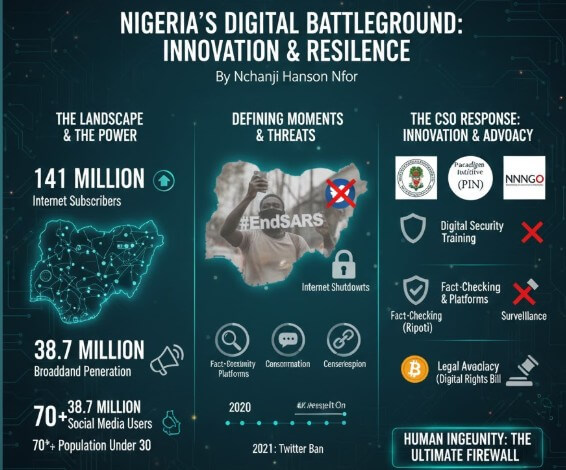
Thu 11 Dec 2025
News
Nigeria: Digital Dissent and Democracy- How CSOs Innovate to Protect Civic Space Online Nigeria’s digital dissent has come of age, and its true measure lies in the innovative and adaptive strategies that are gradually being developed by its civil society. Institutions like KeepItOn coalition ( Access Now) are battling censorship, Paradigm Initiative, PIN, and others are fighting for policy change, while the Nigerian Network of NGOs, NNNGO, is building grassroots resistance. This article examines the temperature through the above organizations; their battles, their victories, and how they are keeping the flames burning to ensure that the digital space remains an avenue for democratic participation and accountability.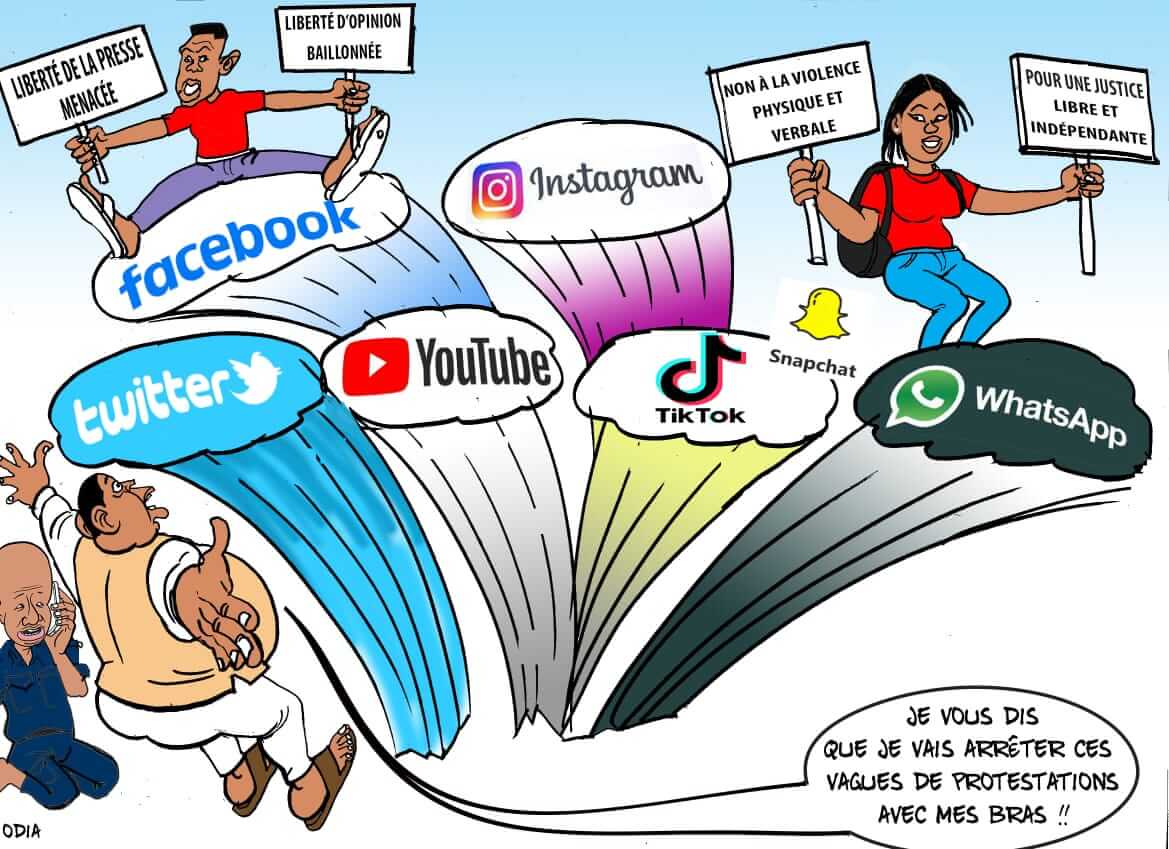
Thu 11 Dec 2025
News
Digital Freedoms in West Africa: A Landscape of Tragedies, Coups, Arrests and Resistance In West Africa, digitally connected citizens experience severe repression, from internet shutdowns in times of crisis to advanced digital surveillance technologies and disinformation. In some countries, the consequences of this growing form of authoritarianism can extend beyond censorship and economic harm to doxxing, arbitrary arrests, and even death. While the internet offers immense potential for democratic participation and economic growth, this surge in digital oppression mirrors a broader political instability. In less than a month today, the military takeover in Bissau and the attempted one in Benin, coupled with concerning patterns of arbitrary arrests in Mauritania, the return of violence in Senegal universities, all highlight the deterioration of civic space in the region. Yet, the region also witnesses how civil society and the judiciary in countries like Senegal lean on vibrant activism, dialogue and legal frameworks to push back against these restraints.