2026-04-13
Civil Society and International Organisations: A Lifeline for People Living with HIV in Venezuela
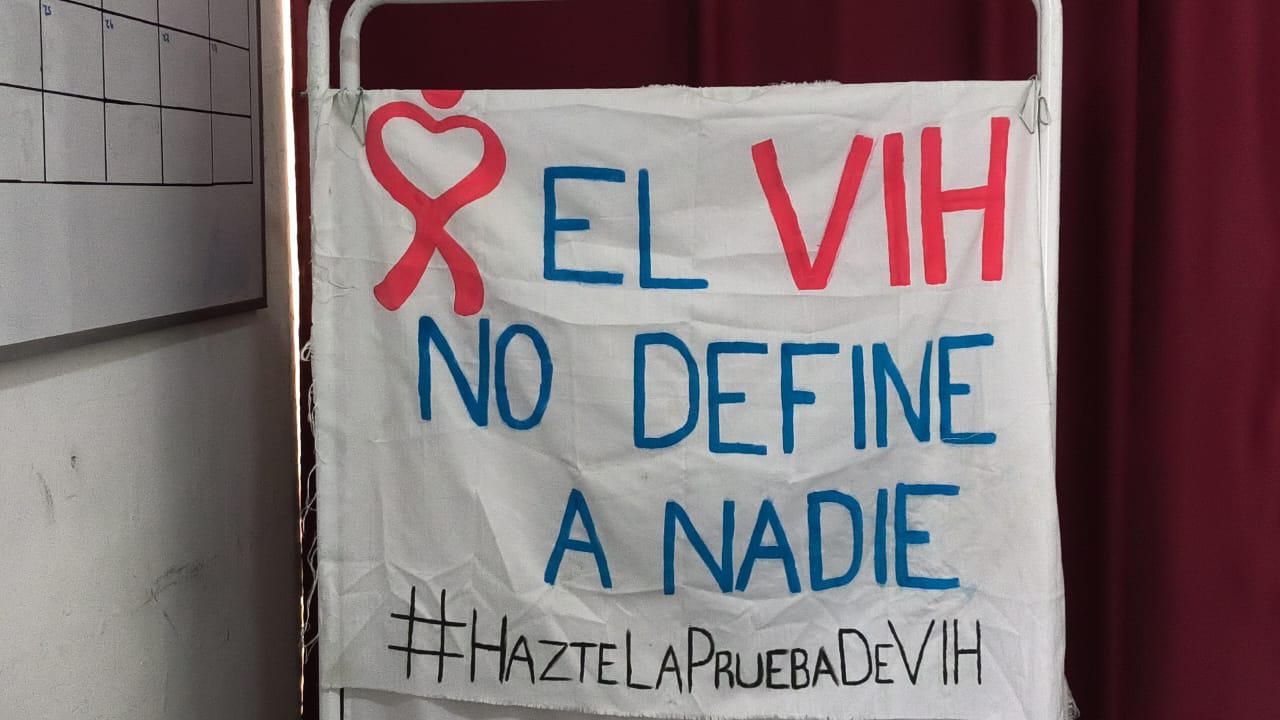
The response to the Human Immunodeficiency Virus (HIV) in Venezuela has undergone a structural transformation over the last two decades, shifting from a state-run model to one that relies almost exclusively on international cooperation and civil society activism. Organisations such as the Venezuelan Network of Positive People (RVG+), the Manos Amigas por la Vida Foundation (Mavid) and Acción Solidaria, amongst others, currently stand out as the main coordinators ensuring that treatment reaches vulnerable populations.
Stigma as a barrier in hospitals: Testimonies of rejection
Institutional discrimination is one of the main obstacles to accessing healthcare in Venezuela. The cases of María Pérez, Petra Rodríguez and Patricia González – names used to protect their identities – illustrate the persistence of prejudice within the public health system and in private centres.
María Pérez, who has been living with HIV for 23 years, recounts that when she needed a procedure to rule out cancer, she faced refusal from specialists on the grounds that the centre was not equipped to handle her “health condition”.
“On several occasions I have been a victim of discrimination. People with HIV are always put last because we are supposedly going to contaminate the operating theatres. I had the operation due to pressure from my family and, 15 days later, the diagnosis was non-Hodgkin’s lymphoma. Fearing further rejection for the bone marrow test, I decided not to undergo any further procedures and to leave it in God’s hands,” confesses María.
This reality is repeated in the field of maternal and child health. Petra Rodríguez, diagnosed in May 2025, experienced segregation during her delivery: “They left me waiting two days for the caesarean section. The anaesthetist didn’t want to treat me; when he finally agreed, he asked me for two face masks and told me not to speak to him.” Petra adds that, after her baby was born, the hardship continued: “My daughter was born healthy, but I couldn’t afford to feed her with formula that cost $37. At the maternity ward they gave me a tin, but it had gone off.”
Patricia González, aged 19, describes a similar experience of isolation: “In the maternity ward, the doctors didn’t want to perform my caesarean section; they were saying to each other: ‘You do it’. They made me buy everything in triplicate and I waited almost 12 hours to go into the operating theatre. Then they left me in a room on my own and wouldn’t let me have any visitors. It’s hard when people point fingers at you; sometimes you get depressed.” These accounts reveal a critical failure: a lack of medical education and a failure to adhere to universal protocols, which lead people living with the virus to states of emotional distress and sometimes push them to abandon vital treatments.
Dr Gianmary Miozzi, an infectious disease specialist, confirms the harsh reality of the accounts presented in this research. For the specialist, rejection is not a subjective perception of people living with HIV, but a systemic failure within the healthcare sector.
“Discrimination and stigma continue to be observed even in healthcare centres. What patients say is true: one of the places where they can feel most rejected is precisely where they should be treated. It is true, it is real,” states Miozzi.
The specialist makes a critical distinction between staff specialising in infectious diseases and those in other medical fields, pointing out that the problem lies in a lack of information.
“What is lacking in Venezuela and around the world is scientifically grounded knowledge. The role of communicators and of us as infectious disease specialists is to never stop educating. We must seek to provide information not only to the general public and the community, not only to patients and their families, but also to our healthcare staff, nursing staff, clinical laboratory scientists, and medical personnel in general,” the doctor emphasises.
The infectious disease specialist highlights that there are universal biosafety protocols, designed to prevent any contact with biological hazards to which healthcare staff may be exposed. In this regard, she warns that, regardless of the patient, the medical environment involves constant exposure to saliva, mucus, blood or splashes. She therefore maintains that “biosafety measures are universal; they are applied to all patients equally. There is no label, no classification; everything depends on the risk of the procedure we are going to perform, not on the patient”.
From her perspective, a medical diagnosis should not be a cause for stigmatisation, as the probabilities of transmission are often miscalculated in the public imagination. The expert clarifies that “the risk of transmission through a workplace accident involving Hepatitis B is 28 to 30 times higher than the risk of transmission through a workplace accident involving HIV”.
As for practice in the clinic, the specialist emphasises that the use of physical barriers should be standard practice when dealing with any bodily fluids. “If we are going to treat a patient, with or without HIV, with or without Hepatitis B or C, we simply must wear gloves if we are going to be in contact with potentially infectious bodily fluids. Nothing more, that’s all,” she asserts.
For Miozzi, information is the best tool for dispelling myths about the care of patients with stable chronic conditions. She explains that, if a healthcare professional has the correct information, they will know that a patient with HIV who adheres to their treatment and has an undetectable viral load does not pose a danger in the healthcare setting. “That patient isn’t even a risk; an undetectable viral load is the result of taking antiretroviral drugs. Undetectable equals non-transmissible, and that tells us there is no viral replication and therefore no transmission.”
Organised to raise their voices
The Mavid Foundation, established in 2003 in Carabobo state, was founded in response to a disruption in the supply of medicines by the Venezuelan Social Security Institute (IVSS). Eduardo Franco, president of Mavid and Director General of RVG+, explains that at that time more than 800 people were left without treatment, resulting in numerous deaths.
“We decided to stand up for the people who could not do so themselves for fear of discrimination,” explains Franco. These actions led to an agreement for the Ministry of Health to take over the National AIDS Programme. However, from 2017 onwards, the economic crisis caused a massive shortage of medicines and a mortality rate that reached 6,000 people a year. This situation triggered the forced migration of approximately 10,000 people living with HIV in search of treatment.
Following various international efforts, the Master Plan was approved, a humanitarian assistance strategy funded by the Global Fund to Fight AIDS, Tuberculosis and Malaria. Currently, this grant benefits more than 62,000 people and has succeeded in reducing mortality to fewer than 500 deaths per year. However, Franco points out that for an effective response, Venezuela requires $33 million annually, but receives only $7 million.
Another civil society organisation, founded in response to the impact of the HIV epidemic in Venezuela, is Acción Solidaria. Since 1995, it has been dedicated to supporting people who were not receiving timely medical care or treatment.
“In recent years, with the onset of the complex humanitarian emergency, we decided to become more fully involved in what is known as the humanitarian framework as such, and we were able to provide general treatment to the population,” says César Pacheco, who has been a volunteer with the organisation for over 20 years and is currently the coordinator of the HIV Response Unit.
The spokesperson for Acción Solidaria emphasised that, at present, they are sustained “thanks to the support of international humanitarian organisations and international cooperation, which has enabled aid to reach thousands of people in the country”.
Pacheco expresses concern, as he asserts that in Venezuela it is difficult to access official figures that would provide a clear picture of the situation regarding HIV. He highlights the work carried out by the Joint United Nations Programme on HIV/AIDS in Venezuela (UNAIDS), whose 2024 report reveals that some 110,000 people in the country are living with HIV.
Shortcomings in monitoring and the legal framework
Despite the availability of medicines for the whole of 2026, the system has shortcomings in monitoring. Since 2016, the State has not guaranteed viral load tests (which cost between $120 and $400) or CD4 tests ($180), which are essential for assessing the effectiveness of treatment.
The demand for care is grounded in the Venezuelan legal framework, specifically Articles 83, 84 and 85 of the Constitution, which define health as a fundamental social right and a financial obligation of the State.
“So far, everything has been donated. The State has not provided a single pill, and it is their obligation,” notes Franco.
In a post on the Ministry of Health’s official website in 2023, it is stated that the Venezuelan State guarantees antiretrovirals to patients living with HIV. In the press release, they assert that, through the National Public Health System (SPNS), patients can obtain their medicines directly and at no cost.
It was also reported that the Ministry of Health occasionally runs prevention campaigns, screening days in public squares or healthcare centres, and anti-stigma initiatives; however, the HIV-positive population is calling for more and better public policies.
Challenges: Child education and nutrition
Volunteers identify discrimination and the lack of basic supplies as the main barriers. Carlos Liendo and Freddy Camacho, volunteers with RVG+, emphasise the need for educational campaigns to treat HIV like any other health condition. Camacho expresses concern about the lack of pharmacies in remote areas, which increases travel costs for vulnerable patients.
Franco reports that breast-milk substitutes have not been publicly available for six years and, due to a lack of resources, some mothers are forced to breastfeed, increasing the risk of vertical transmission.
According to the leaders of the civil society organisations consulted, the complexity of accessing resources and treatments for HIV care has become more critical following the Law on the Supervision, Regulation, Operation and Financing of NGOs and Non-Profit Social Organisations, passed in 2024.
“Unfortunately, due to the stringent requirements of this law, some organisations dedicated to supporting people living with HIV decided not to continue with the process of updating their organisational status; some did not even begin it, whilst others decided to close their doors,” notes César Pacheco, spokesperson for Acción Solidaria.
The NGO’s spokesperson also noted that, since 2025, following Donald Trump’s election as US president, a significant number of organisations that had received aid through international programmes were left without support.
The president of Sinergia, Luisa Rodríguez Táriba, points out that there is a recurring call for civil society to seek funding through the private sector. “With the US imposing sanctions on various sectors of national production, we are seeing a decline in the number of companies willing to fund civil society,” she emphasised.
Despite the administrative challenges posed by the NGO Oversight Act, civil society is not standing still. In an environment of restrictions, activism persists in the search for resources and the implementation of actions that ensure medicines reach people on time and that diagnosis ceases to be synonymous with exclusion.
However, faced with a bureaucratic system, one must ask: Will the new legal controls be able to halt the determination of a society resolved to save lives?
This article is written as part of the Forus journalism fellowship programme. Learn more here