2021-12-15
Mobilisation to act for SDGs in Latvia
Press - Uncategorized
How can capacity development projects drive organizations towards new opportunities? Since 2017, Forus’ members have been able to implement externally focused projects that responded to their needs and contexts via our capacity building projects. Some of the initiatives supported were pre-existing initiatives, which could become sustainable and, in some cases, scale up. From an enabling environment for civil society to shadow reports monitoring the Agenda 2030 how did Forus members increase their positioning and recognition?
Find 3 examples from the Forus network below!
Focal points to monitor and implement the Agenda 2030
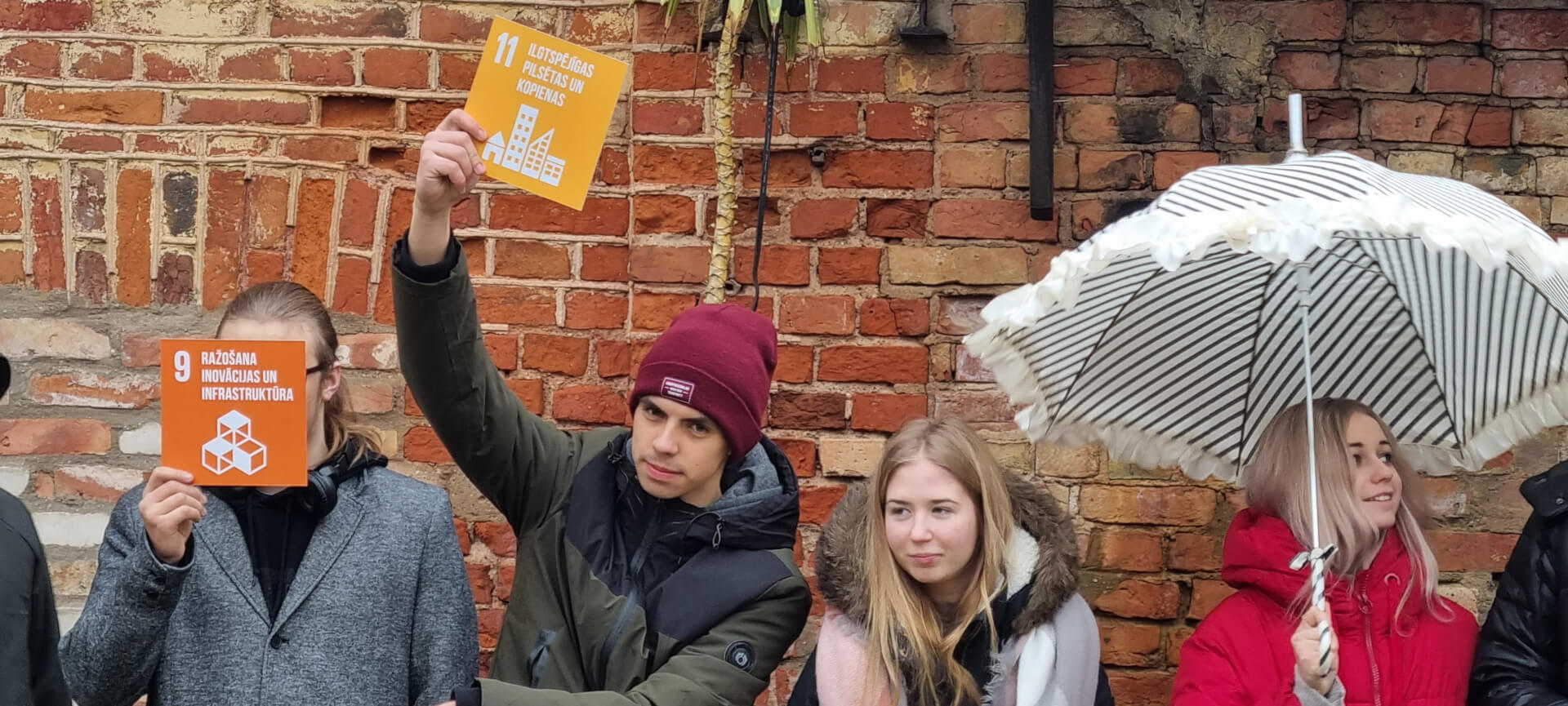
LAPAS in Latvia, implemented a project around the voluntary national review on SDGs, with the production of a shadow report. In its written report to Forus, LAPAS states that “the reach-out of the project was higher than planned nationally but also much higher internationally, as best practices and materials produced are still multiplied in different international settings. It is important that the project also had positive impacts on the development of new partnerships - with parliamentarians especially. Also new members joined the platform”.
Similarly, INFID in Indonesia, carried out a project directed towards the promotion of a constructive and effective civil society participation in key Indonesian social and economic public policy dialogues and the implementation of SDGs. As per their report, their position “as a focal point for the labour consortium has made INFID into a strategic institution recognized by the government, especially the Labour Ministry and other Civil Society networks, and an organisation concerned over the SDGs, primarily SDG 8”.
SLOGA in Slovenia, managed to strengthen NGO cooperation and monitoring for enhanced ownership over SDGs nationally. Compared to the first Voluntary National Review (VNR) prepared by the Slovenian government in 2017, SLOGA highlighted the significant progress in terms of collaboration with civil society in 2020. This ability to give input was possible thanks to a regular and renewed dialogue with the Government Office for Development.
UNITAS in Bolivia, focused on Popular education and strategic litigation for articulation and advocacy on SDGs. They developed a guide and organized a regional course, with the regional coalition Mesa de Articulación, to monitor citizen participation at the local, national, and regional level. UNITAS’ members also saw their capacities strengthened: they know the guide, understand the concepts, and are able to carry out the monitoring of the SDG implementation in Bolivia.
Changing Narratives around civil society
Abong in Brazil, saw its visibility increase thanks to the strengthening of the communication capacity of Brazilian civil society organisations in the field of the promotion and protection of human rights. They focused on campaigning to counter far-right political narratives on civil society organisations and on building new coalitions. The impact of this project was expressed as providing an opportunity for the public to understand the work of civil society through concrete and tangible examples of interventions. The project was timely and directly related to the political climate at the time, in the immediate aftermath of the presidential election.
ANONG in Uruguay, implemented a project aimed at strengthening its members' capacities in communication and advocacy, as civic space witnessed repression and closing in the country. Thanks to the development of a communication strategy, the platform developed multiple press releases, were interviewed on television and radio, and visited the national Parliament to organize a discussion between government officials and civil society organisations on the role of the latter in bringing democratic practices to the forefront and in developing human rights-based public policies.
Strengthening a platform’s structure & positioning
FOND in Romania, was able thanks to Forus support to carry out for the first time a long term evaluation of the platform’s first ten years of activity, enabling a more in-depth reflection on the results, as well as providing important recommendations and input for their 2021-2025 strategic planning cycle. It is an important example of accountability and legitimacy for the platform in relation to its members and relevant external stakeholders, who were invited to provide input and recommendations throughout the evaluation process. The process and conclusions of the impact evaluation inspired the elaboration of a synthesis with best practices and lessons for other Forus members and similar NGO platforms, which included recommendations on the: self-awareness and positioning within the sector, capacity building, building and maintaining a strong membership, advocacy and stakeholder engagement and connecting (network engagement).
PFNOSCM in Madagascar, used Forus support to organise its General Assembly and all the preparatory and communication work around it. As a result, its governance and accountability were strengthened and the platform was able to secure funds to implement a project with UNESCO.
With a project on Disaster Risk Reduction, NFN in Nepal, gained visibility and recognition with public authorities and civil society organizations, such as the National Reconstruction Authority, the Disaster Preparedness Network Nepal, and the National Disaster Management Network Nepal at the province levels. “With support from Forus, NFN enhanced the capacity of more than 250 civil society representatives on Disaster Risk Reduction. Interactions with concerned government agency representatives have improved” and enlarged the space for civil society to work and contribute to community resilience and post-emergency efforts, particularly at subnational levels”.
Finally, the project implemented by BOCONGO in Botswana, was the first major step towards the "re-activation" of the platform, as it brought partnerships back to life. Their project was aimed at building new links between the civil society and the private sector –opening up other streams of social enterprising across the country. More specifically, BOCONGO signed a Memorandum of Understanding with Business Botswana, a representative body of the country’s private sector, to facilitate joint advocacy activities, secure support and a buy-in of the partnership model developed by the platform.
Curious to know more? Discover Forus capacity development projects supporting national members here