© The Garden of Hope Foundation

Thu 12 Mar 2026
Rethinking Statutes of Limitations in Child Sexual Abuse Cases in Taiwan
The Hidden Reality of Child Sexual Abuse
In Taiwan, if sexual assault cases are categorized by the age of the victim, cases involving children and adolescents account for the largest proportion, representing more than half of all cases. Among these cases, the younger the victim, the more likely the perpetrator is a family member. For example, in sexual assault cases involving children under the age of six, as many as 57% of perpetrators are family members.
Because the abuse occurs during childhood, many young victims are unable to recognize what happened to them or to understand how to seek help. Even when they attempt to speak out, they may face doubt, dismissal, or even be told “not to bring it up again.” These deep psychological wounds, combined with fear, power imbalances, and the pressures of family relationships, often make it extremely difficult for children to disclose abuse during childhood. As a result, delayed disclosure of trauma is not the exception but the norm.
The Complexity of Abuse Within Trusted Relationships
For decades, TaiwanAid member, the Garden of Hope Foundation (GOH) has accompanied survivors of sexual violence committed by family members or acquaintances. Through this work, we have witnessed the profound complexity of these relationships. Perpetrators may be parents, stepparents, cohabiting partners, siblings, or other relatives, individuals whom children deeply depend on and trust.
For many children, disclosing abuse can mean the breakdown of the family, economic disruption, and pressure from relatives. Some are even told to remain silent “for the sake of the family.” Within these intertwined dynamics of power and emotional dependency, many survivors are only able to speak about their experiences after reaching adulthood, when they have gained greater psychological and financial independence.

The Garden of Hope Foundation is the first organization to advocate for the prevention of child and adolescent sexual abuse in Taiwan.
The Statute of Limitations: A Barrier to Justice
However, in Taiwan, the statute of limitations for child sexual assault cases is no different from that for other criminal offenses: it is calculated as 20 years from the time the crime was committed. This means that by the time survivors grow up and are ready to speak about their trauma and seek justice, their cases may already be time-barred. In effect, the limitations period places the burden on children who were never in a position to exercise autonomy or seek justice at the time of the abuse.
Drawing on more than 30 years of experience, the Garden of Hope Foundation formally launched a legislative advocacy initiative in 2022 calling for a reform: for sexual assault committed against minors, the statute of limitations should begin when the victim reaches adulthood. We argue that child survivors must be given sufficient time and space to understand and recover from trauma, and to decide—when they are ready—whether to speak out or pursue legal action.
Recent Legal Developments in Taiwan
In 2025, Taiwan’s Ministry of Justice announced plans to introduce relevant legislative amendments. In January 2026, the Executive Yuan approved a draft amendment to the Criminal Code stipulating that the period between the commission of a sexual offense and the victim reaching the age of 20 will not be counted toward the statute of limitations. The bill, however, is still pending review by the Legislative Yuan.
In March 2026, Taiwan’s Constitutional Court initiated a closed explanatory procedure to review how the statute of limitations should be calculated in cases of child sexual abuse, elevating the issue to the constitutional level. This development represents not only procedural progress but also a clear signal that the state has begun to reconsider whether the current system truly addresses the unique characteristics and long-standing structural challenges of child sexual abuse cases.
International Trends Toward Abolishing Time Limits
Many European countries have already abolished statutes of limitations for sexual violence against minors, including Switzerland, the Netherlands, and Denmark. Belgium has gone even further by abolishing the statute of limitations for all sexual violence cases, regardless of the victim’s age.
If we already recognize that the traumatic nature of child sexual abuse and the difficulty of disclosure justify extending the statute of limitations, then even an extension of 20 or 30 years may still exclude some survivors from access to justice.
Given the unique nature of child sexual abuse, a further review moving toward the abolition of statutes of limitations would ensure that survivors retain the right to seek justice whenever they are ready to confront the legal process. Such reform would not only better protect survivors’ rights but also send a strong societal message of zero tolerance for sexual violence against children.

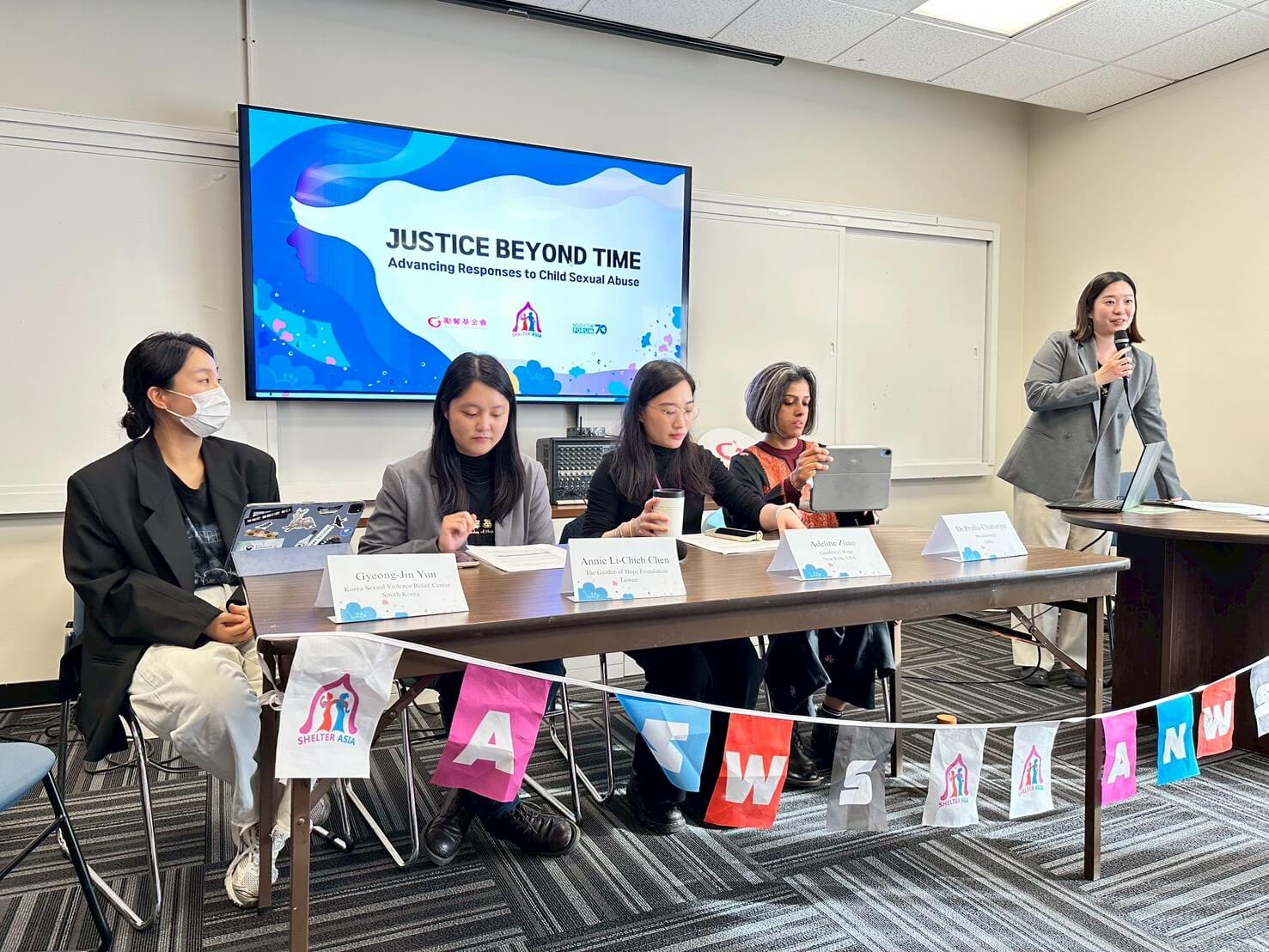
The Garden of Hope Foundation held a parallel event during CSW70 in New York focusing on the access of child sexual abuse survivors to justice.
Reform Is Only the Beginning
The Garden of Hope Foundation recognizes and deeply appreciates the efforts of all those who have long advocated for reform. At the same time, we emphasize that changing the starting point of the statute of limitations is only the beginning, not the end.
We therefore reiterate our call: Starting the statute of limitations when victims reach adulthood is an important step forward, but abolishing it entirely would demonstrate a true commitment to zero tolerance for child sexual abuse.
Moving forward, the Garden of Hope Foundation will organize a series of advocacy initiatives, policy dialogues, and surveys to gather practical experiences and survivors’ voices. We will continue to promote the following reforms:
- Revising evidentiary rules to incorporate trauma-informed principles
- Establishing procedural remedies for past cases
- Developing diverse responses beyond the criminal justice system
Through these efforts, we hope to build a system that truly responds to the justice needs and lived experiences of every survivor.
Sun 8 Mar 2026
When women organise, democracy survives: Why gender justice cannot be a casualty of global crisesInfluence
Wed 4 Mar 2026
From Reporting to Reality: A Pacific Call for Justice and Locally Led DevelopmentInfluence