


2026-07-14
Power, Rights and AI: What Geneva Digital Week Revealed about the Future of Governance
Last week, the Forus network landed in Geneva for the Digital Week, where several discussion spaces emerged simultaneously: the United Nations Global Dialogue on Artificial Intelligence Governance, the “futuristic” AI for Good Summit, and the World Summit on the Information Society. All this while the UN High-Level Political Forum kicked off in New York with complementing discussions on digitalisation, global cooperation, the future beyond 2030, and meaningful civic participation highlighting how technology is central to development debates.
On the surface, the conversations were about artificial intelligence, data, and emerging technologies. In reality, they were about who holds power in the digital age, who gets to shape the rules, who benefits from technological change and whether civil society will be given the space to help govern AI.
“Technology is never neutral”
Across the week, the global debate around AI repeatedly moved between ambitious - bordering utopian - promises and insufficient attention to harms and fears hidden behind the “AI hype curtain”.
We heard about advances in healthcare, education, public services, and productivity. But these promises sit alongside misinformation, surveillance, algorithmic discrimination, job displacement, online violence, the environmental costs of technological infrastructure and the growing use of AI in military contexts.
As Andrew Findell-Aghnatios from the Arab Reform Initiative pointed out during discussions last week, “technology is never neutral”. Every decision embedded in an AI system from the data it uses and the languages it prioritizes to the purposes for which it is deployed,is a human decision. It reflects power structures, economic incentives, political choices, geopolitical scenarios, and social values.
One concern raised repeatedly during the week was the growing tendency to anthropomorphise AI systems: to talk about them as if they were independent actors rather than products of human choices. Beyond creating unrealistic expectations, this trend can blur accountability. If an algorithm makes a harmful decision, responsibility does not disappear as someone designed the system, procured it, deployed it, and decided how it would be used.
For civil society, maintaining that chain of accountability is essential and if technology is never neutral, AI governance cannot be politically neutral either.
Human rights must be the starting point
A clear message emerged from civil society organisations working on digital rights including Data Privacy Brasil, Derechos Digitales, Paradigm Initiative, Global Partners Digital, and Tech Global Institute: human rights must be the foundation for AI governance, not simply one policy consideration among many.
The logic must be reversed. Instead of asking how human rights can be incorporated into AI governance after systems have been developed, AI policies, public procurement, deployment and regulation should be assessed against existing human rights obligations from the outset.
International human rights law already provides a strong normative framework. UN bodies and international human rights mechanisms have developed standards that can help identify unacceptable uses of AI and define clear “red lines”. Civil society has also developed practical approaches for translating these principles into policy and oversight. Governments should be asked clearly: what are they committing to in order to protect human rights in the development, procurement and deployment of AI?
Answering this question is particularly urgent as public authorities increasingly collaborate with private platforms and technology providers. Such partnerships may offer innovation and capacity, but they also raise concerns about accountability, sovereignty, transparency and the protection of the public interest.
AI governance needs capacity, not only principles
Many governments, regulators and civil society organisations are expected to engage in increasingly complex AI governance debates without having the necessary expertise, resources or negotiating power.
This is especially visible at national level and across regions where governments depend heavily on foreign technology providers, infrastructure and platforms.
This week, partners like Paradigm Initiative warned that public procurement of AI systems reproduce forms of technological dependency or “AI colonialism”, particularly where governments lack the capacity to assess systems independently, negotiate appropriate safeguards or understand the longer-term implications of vendor dependence.
Capacity strengthening must therefore go beyond general digital skills which requires sustained investement.
In this context, government and regulators
-
Require mandatory transparency and traceability for high-impact AI systems
-
Mandate pre-deployment risk assessments (including bias, cybersecurity, and operational safety)
-
Establish independent oversight and auditing, with regular reporting obligations
-
Require post-deployment monitoring (incidents, performance, and compliance) and mitigation plans
Civil society
-
Request system documentation and scrutinise procurement/contracts for clear, enforceable safety and accountability requirements.
-
Monitor and report harms such as bias, discrimination, surveillance, and misinformation.
-
Strengthen AI literacy and education, especially for vulnerable communities.
-
Participate effectively in national and international governance processes and partner with academia and technical groups for independent testing and verification.
Companies
-
Implement an AI risk management system (governance, controls, testing, and review).
-
Prioritise data quality and privacy-by-design (minimization, documentation, bias checks).
-
Build for monitoring and incident response (metrics, logging, rollback, communications).
-
Ensure appropriate human oversight and internal training.
The digital gender gap is about power, safety and leadership
Discussions on inclusive digital transformation also highlighted the persistent barriers facing women and girls with calls to include gender equality within AI policy and in the design, regulation and evaluation of digital systems.
Speaking during a panel on women leading the digital future, Professor Salma Abbasi shared the need to move beyond questions of access and confront the deeper social, cultural, and structural barriers that continue to exclude women from technology spaces.
The challenge is both about whether women and girls can access digital tools and their ability to shape them, lead governance processes, enter technology sectors safely and exercise real agency in digital environments.
This means: addressing stereotypes and structural exclusion; expanding digital and AI literacy; strengthening women's leadership in governance processes; tackling online gender-based violence; creating pathways into STEM and entrepreneurship and designing technologies that reduce rather than reproduce bias.
Equally important is to treat gender-based harms as a central AI governance issue.
Sexual deepfakes and image-based abuse are a major and growing concern, with women disproportionately targeted as shared by Derechos Digitales.
AI systems and platform architectures must include stronger safeguards against gender-based abuse, image-based sexual violence and online harassment as well as gender-sensitive measurements, indicators and commitments related to AI.
Military AI remains the elephant in the room
Military uses of AI were excluded from the Global Dialogue, despite being among the most serious dimensions of emerging AI governance.
This absence is particularly significant because the Global Dialogue itself is not expected to produce binding outcomes.
Military AI remains highly sensitive due to geopolitical competition and the desire of powerful states to retain freedom to develop, test and deploy new systems. Discussions under the Convention on Certain Conventional Weapons have not yet produced consensus on legally binding rules.
UNESCO’s Recommendation on the Ethics of AI includes the principle of peaceful use of AI and affirms that life-or-death decisions should not be delegated to AI systems.
Future intergovernmental negotiations must go further.
Harmful military applications, autonomous weapons and the delegation of lethal decisions to machines require serious international scrutiny and, where necessary, legally binding regulation.
The exclusion of military AI from major political dialogues cannot mean that it disappears from the governance agenda.
AI for good—but for whom?
These concerns echoed throughout discussions led by CADE – Civil Society Alliances for Digital Empowerment, project co-funded by the European Union of which Forus is a partner — where participants examined a deceptively simple question: AI for good—but for whom?
Many of the current AI value chains depend on vast amounts of data, labour, energy, water and infrastructure drawn from countries and communities that have little influence over how the resulting technologies are designed or governed.
The benefits are often concentrated, while the risks and costs are widely distributed.
A rights-based approach requires us to look behind the apparent automation and recognise the workers, communities and infrastructures behind AI systems. It also means confronting exploitative labour practices, unequal access to resources and the concentration of decision-making power.
Using real-life scenarios helps make these dynamics visible. It allows policymakers and civil society to identify where harm occurs, who bears the cost, and where accountability is missing.
These questions however mirror longstanding debates in international development.
For decades, civil society has challenged approaches that treat communities as end-users and passive recipients rather than decision-makers.The same principle applies to digital transformation: communities should not merely receive technologies designed elsewhere; they must have the power to shape the systems that affect their lives.
This is also why global and local dimensions of AI governance cannot be separated as showcased in the Civil Society Manifesto for Ethical AI.
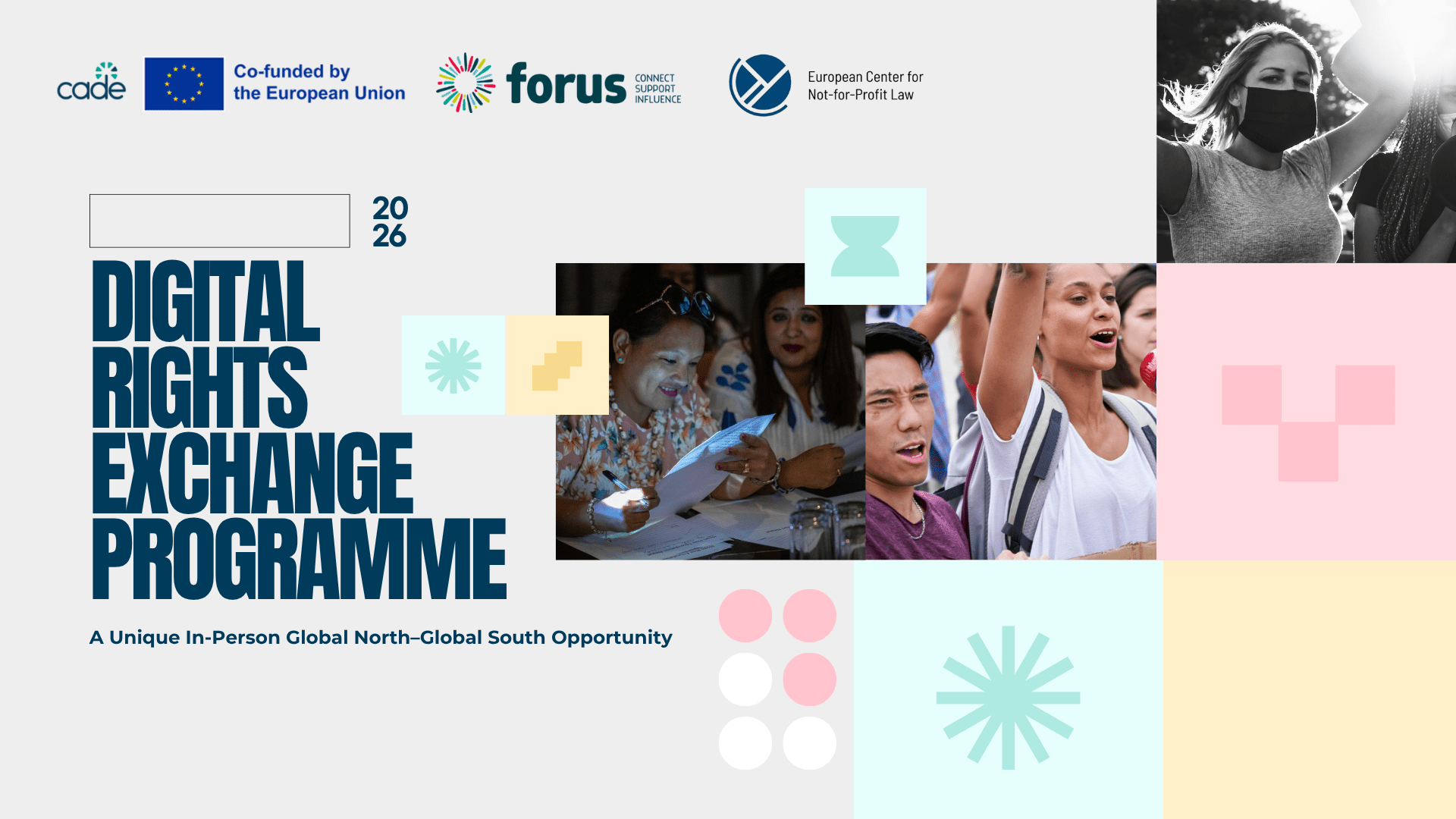
To strengthen civil society-led transformation, through its Digital Rights Exchange Programme, Forus is supporting Global North - Global South partnerships to jointly address shared digital governance challenges, strengthen cross-regional learning, and develop concrete joint advocacy strategies linked to national, regional and global policy processes.
From consultation to meaningful participation
Bringing governments, companies, technical experts and civil society together is valuable, but multistakeholder participation is not automatically meaningful.
Throughout the Geneva Digital Week, civil society representatives expressed concern about the lack of clarity regarding the follow-up to the UN Global Dialogue on AI Governance. In particular, many questioned how discussions would progress between Geneva and the planned UN follow-up discussions in New York in 2027, what governance architecture would emerge, and how – and who from - civil society would be able to participate meaningfully throughout the process.
The Co-Chairs’ Summary Report on the UN Global Dialogue on AI Governance should reflect civil society concerns, including human rights, accountability, gender equality, power imbalances between stakeholders, public-interest safeguards, transparency and meaningful civil society participation.
The future governance architecture should ensure meaningful participation by civil society, not just symbolic consultation as also pushed for in other fora by Forus and civil society partners via the #UNmute initiative. Possible models going forward include the Internet Governance Forum and a multistakeholder advisory panel, but power imbalances among stakeholders must be addressed first and foremost.
The composition of the scientific panel for instance will be crucial, including what evidence is considered eligible, whose expertise is surfaced and how civil society perspectives are integrated.
As the role and diverse inclusion of civil society and affected communities is becoming increasingly important as digital governance moves higher up the multilateral agenda the following questions should be asked:
-
What evidence will be considered legitimate?
-
Whose expertise will be recognised?
-
Will lived experience and community knowledge be valued?
-
How will civil society from the Global South/Majority participate?
-
Who will have real influence over decisions?
Digital governance is becoming a democracy issue
The importance of inclusive digital governance extends beyond AI policy.
Speaking from the UN High-Level Political Forum in New York, Forus Chair Justina Kaluinaite highlighted how digitalisation is becoming increasingly central to discussions on sustainable development and international cooperation. Across multiple Voluntary National Reviews, governments are highlighting digital transformation as a key driver of development outcomes.
Yet the enthusiasm for digital solutions is often accompanied by difficult questions.
How do we protect civic space in digital environments? How do digital systems affect participation, accountability and fair access to public services? How do we prevent surveillance, discrimination and exclusion? How should international cooperation evolve when digitalisation is becoming central to development policy?
Why this matters for Forus
Forus role is to connect global digital governance debates with organised civil society at national and regional levels. Through a global network of national NGO platforms and regional coalitions, Forus can help ensure that policies are informed by local realities and that civil society has the capacity to engage where implementation actually takes place.
As AI governance evolves gaps are widening on many levels and this bridge becomes increasingly important. As a network we bring trusted civil society infrastructure, convening power, national reach and the ability to connect global processes with grounded advocacy.
This creates opportunities for collaboration around:
-
civil society participation in national AI and digital strategies;
-
digital security and resilience for civil society organisations;
-
AI literacy and responsible use of AI;
-
monitoring the effects of AI and digital policy on civic space;
-
strengthening Global South participation in international governance processes;
-
and building coalitions that connect technical expertise with organised civil society.
What should happen next?
Geneva demonstrated that AI governance is entering a “new phase”. Forus sees five priorities for the road ahead and supports its partners and members in advocating for them.
1. Human rights must remain the foundation of AI governance. Existing human rights obligations should guide the development, procurement, regulation and deployment of AI from the beginning.
2. Civil society must participate from the outset. Meaningful participation requires civil society to help define priorities, design frameworks, contribute evidence and monitor implementation, not simply respond to decisions made elsewhere.
3. The Global South needs sustained investment, not only invitations. Civil society organisations need long-term support for AI literacy, digital security, policy expertise, research and participation in national and global processes.
4. Global commitments must connect with national realities. AI governance will ultimately be implemented through national laws, policies, institutions and public services. National NGO platforms have an essential role in translating global commitments into accountable national action.
5. Digital governance must protect democracy and civic space. AI, data governance and digital public infrastructure are reshaping how people access services, participate in public life and exercise their rights. Democratic accountability and civic participation must therefore remain central to digital cooperation.
Turning recognition into action
Governance questions will continue to feature prominently in the months ahead.
In December, the global Internet Governance Forum will convene in Nairobi, creating another important opportunity for civil society organisations to influence debates around the future of the internet and digital governance. Forus members will be there, bringing perspectives rooted in communities, rights, and democratic participation in particular looking at Universal Periodic Reviews (UPRs) as a tool for action.
Looking further ahead, attention is already turning to the UN discussions scheduled for next May in New York at the second Global Dialogue on AI Governance, where stakeholders will continue examining the implementation of global digital cooperation commitments and the governance frameworks emerging around artificial intelligence.
With high-level political events often remaining aspirational and declarative; future dialogues should move toward concrete commitments transparent processes, accountability and adequate political and financial resources.
Geneva also offered a reason for optimism.
Across the week, there was growing recognition that AI governance must be built with stronger civil society participation, greater diversity of expertise and closer links between global policy and national realities are increasingly being recognised as essential. For Forus, this is an opportunity to help ensure that organised civil society helps in shaping it.
For partnerships and collaborations contact Ángela Alarcón, Forus Project Coordinator, Digital Governance [email protected]
Marie L’Hostis, Forus Advocacy and Programmes Director
Advocacy and coalition-building specialist with extensive experience leading global civil society campaigns, partnerships, and networks to advance sustainable development, civic space, and people-centered public policies.
Bibbi Abruzzini, Forus Communications and Campaigns Coordinator
Communications and multimedia storytelling professional with extensive experience designing campaigns and producing impactful content to strengthen civic engagement, social justice, and international development initiatives.
Ángela Alarcón, Forus Project Coordinator, Digital Governance
Senior strategy, advocacy, and engagement professional with 15 years of experience enhancing the impact of projects, with a particular focus on social justice and theory of change.