© Forus
CADE
Digital Rights Exchange Programme
A Unique In-Person Global North–Global South Opportunity

Discover the Digital Rights Exchange Programme
The programme invites three pairs of civil society organisations—bringing together one organisation from the Global North and one from the Global South—to collaborate in person for a focused, three-day exchange on a shared digital challenge and policy-advocacy strategy. This programme is an initiative of Forus and the European Center for Not-for-Profit Law (ECNL) within the framework of the Civil Society Alliances for Digital Empowerment (CADE), an EU co-funded project.

Meet the participants
Following more than 25 applications
3 partnerships have been selected to work together on pressing digital rights challenges. Discover them below!
Shifting the Burden: A US–Mexico Policy & Tech Sprint for Cross-Sector Scam Prevention and Fair Reimbursement
Fiorentina García (Tec-Check) + Delicia Reynolds (Consumer Reports)

Converting non-specialist constituencies into effective actors in AI governance
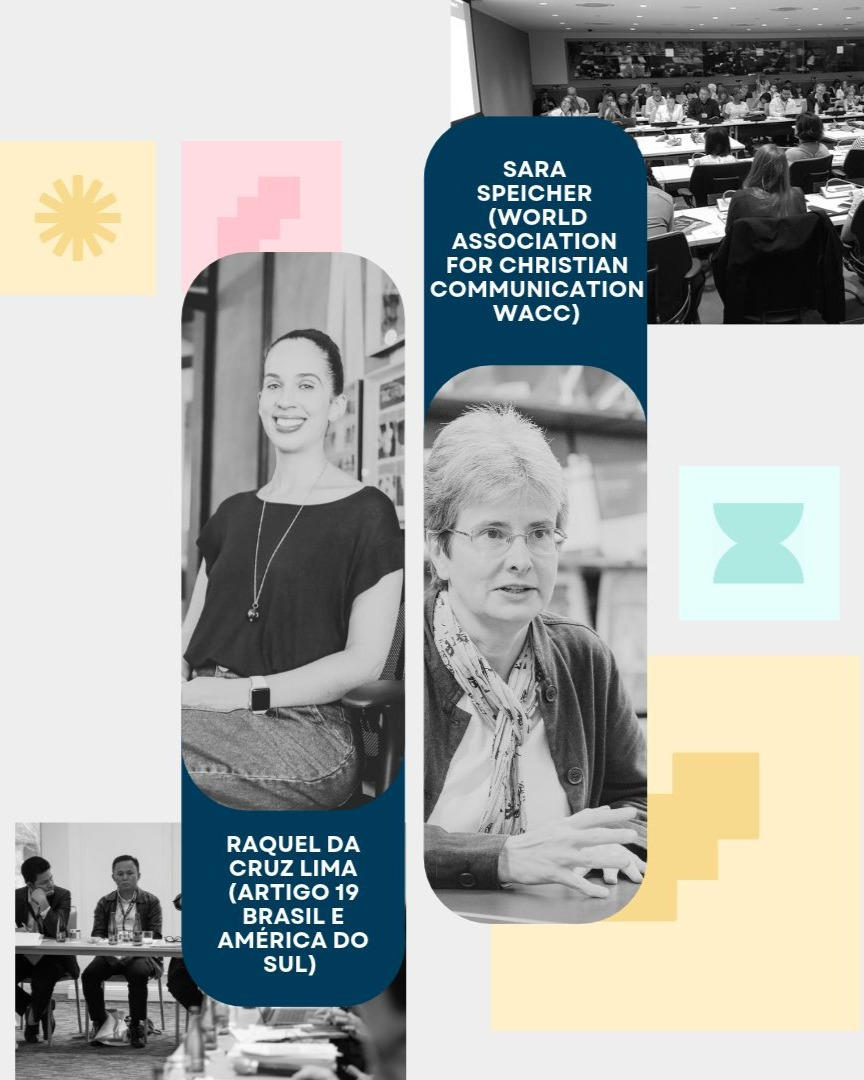
Raquel da Cruz Lima (ARTIGO 19 Brasil e América do Sul) + Sara Speicher (World Association for Christian Communication WACC)
AI governance is being decided in venues and vocabularies that exclude the constituencies who face its consequences. Both Artigo 19 and WACC work with non-specialist constituencies that hold real moral and communication authority but have largely been absent in the spaces where AI policy issues and accountability are being discussed and decided. The shared challenge is how civil society can help convert broad-based constituencies into engaged and effective actors in AI governance, rather than ceding that ground to a narrow technical and corporate elite, mostly located in the North. Together they will look at how to engage national, regional and international church-based organizations and communities into advocacy partners for digital rights and AI accountability.
Shaping Responses to Technology-Facilitated Abuse Through Youth Perspectives
Timothy Wafula (KELIN) + Molly Pugh-Jones (STOPAIDS)
Over six years of collaboration as co-founders of the Digital Health and Rights Project Consortium, STOPAIDS and KELIN have generated evidence on digital harms, including more expansive and nuanced understanding of how technology-facilitated abuse is experienced by women and girls, young men, transgender people and people living with HIV. Recognizing these diverse realities requires governance responses that are intersectional and rights-based. Over three days, members of KELIN’s Community Advisory Team (K-CAT) - a group of young digital advocates - will work with both organizations to identify specific advocacy opportunities to respond to and prevent technology-facilitated abuse in Kenya. The exchange will develop the skills of young digital advocates, provide an opportunity to plan advocacy strategies, and enable this to be put into practice at the IGF.

In practice
The Digital Rights Exchange Programme supports selected organisation pairs to explore a shared digital challenge—such as AI governance, digital inclusion, privacy, encryption, or freedom of expression—through a funded three-day in-person exchange. Participants will compare experiences across regions, strengthen their advocacy strategies, and develop joint policy recommendations and concrete follow-up actions. Keep an eye on this page to learn more about the impact of the programme and how it creates space for peer learning, trust-building, and strategic collaboration to address global digital challenges while amplifying diverse perspectives in internet governance processes.

Our Campaigns on Digitalisation


Learn more about CADE
Join us in advacing digital rights
We invite donors, civil society leaders, advocates, partners, allies, and supporters to join us in bringing this vision to life. Interested in collaborating? Contact [email protected] and [email protected] for partnership opportunities.
