2026-08-25
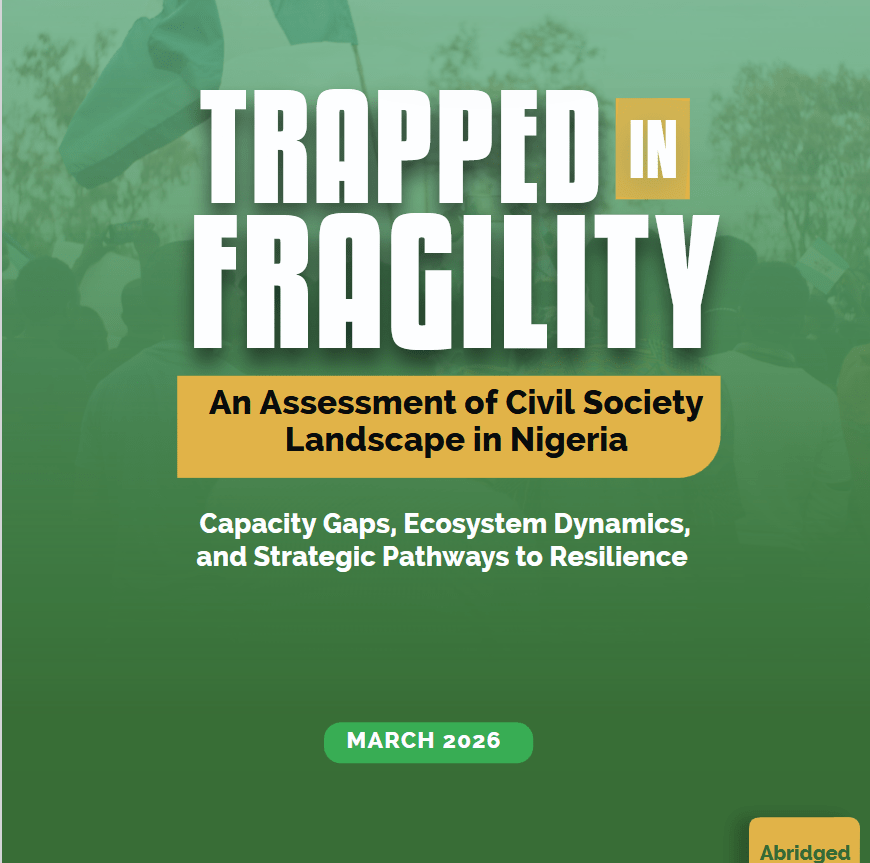
Trapped in Fragility – An Assessment of Civil Society Landscape in Nigeria (Abridged Version) – WACSICommissioned by WACSI NODE Nigeria and led by the Nigeria Network of NGOs, this report provides a snapshot of Nigeria’s civil society ecosystem, a vital force for democratic governance facing significant structural challenges. It reveals a “starvation cycle” where persistent underfunding weakens organisational capacity and limits impact. Based on a 2025 mixed-methods study, the report examines key capacity areas and highlights the interconnected vulnerabilities affecting over 19,000 CSOs, raising critical questions about the sector’s sustainability and future.
2026-08-24
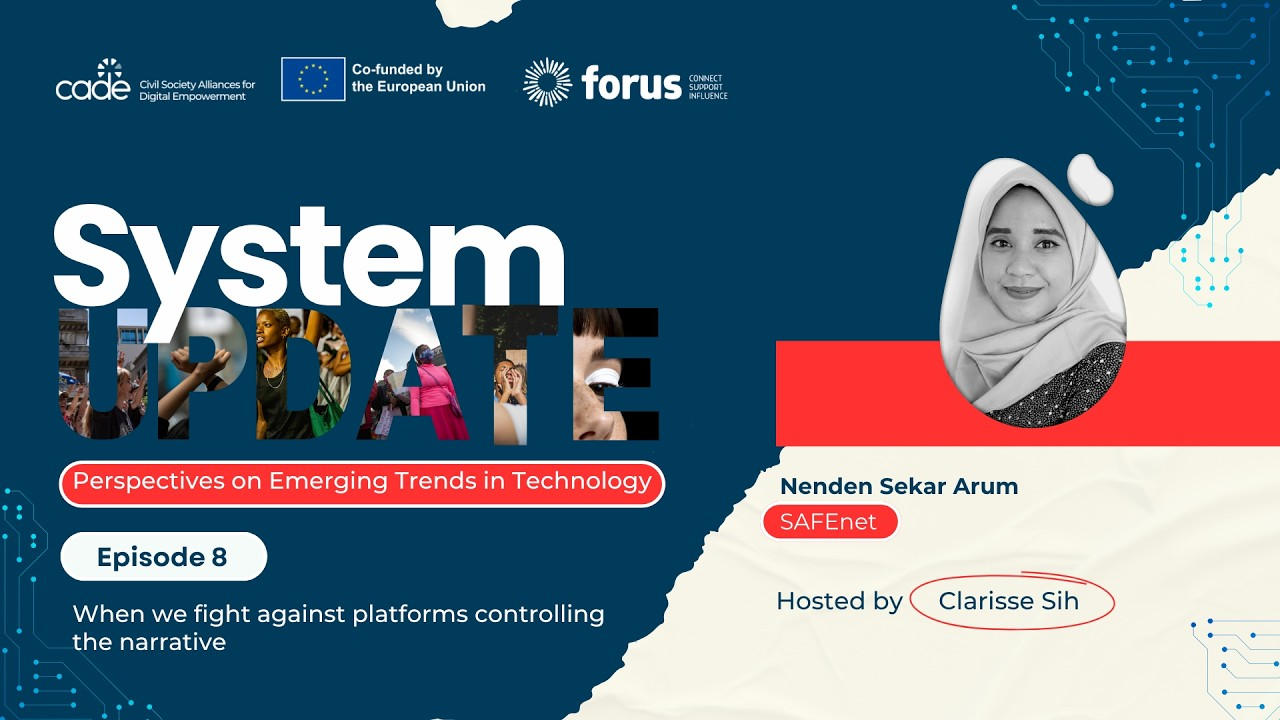
System Update - Episode 8: When we fight against platforms controlling the narrativeSocial media platforms have become central to public discourse: shaping what we see, what we say and ultimately, what we believe. Yet behind this influence lies a system that is often opaque, where content can be restricted, amplified or removed without clear accountability. These dynamics raise urgent questions about who controls online narratives and how. Platform governance, the rules and systems that shape visibility and operations online - from algorithmic amplification to content moderation - can deepen inequalities, restrict freedom of expression, and weaken democratic participation, particularly in contexts where oversight is limited or inconsistent. In this episode, we speak with Nenden Sekar Arum, Executive Director of the Southeast Asia Freedom of Expression Network (SAFEnet). Together, we explore how platforms shape socio-political discourse, the risks of arbitrary content moderation and what it will take to ensure transparency, accountability, and the protection of free speech in the digital age. "System Update", is produced by Forus as part of CADE - the Civil Society Alliances for Digital Empowerment - a project co-funded by the European Union. CADE’s objective is to support the capacity of civil society organisations for effective advocacy in multilateral and multistakeholder internet governance processes. https://cadeproject.org/ https://www.forus-international.org/en/campaign/let-s-talk-digital https://safenet.or.id/ This podcast was co-funded by the European Union. Its contents are the sole responsibility of Forus and do not necessarily reflect the views of the European Union.
2026-08-18
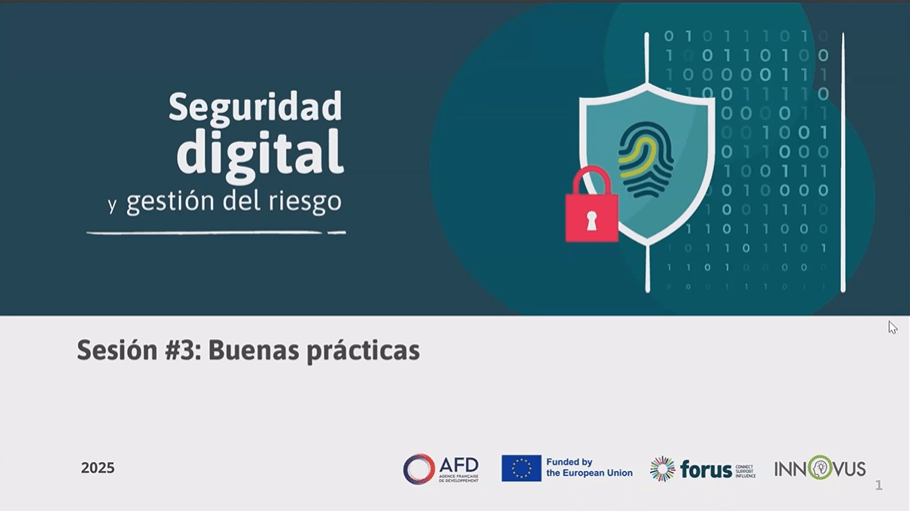
MÓDULO 1 – SEGURIDAD DIGITAL PARA LA SOCIEDAD CIVIL - Sesión 3: Buenas prácticasTEMAS
- Repasamos los conceptos básicos del análisis de riesgos, identificando vulnerabilidades, ataques frecuentes y los posibles riesgos que pueden generar. También abordamos buenas prácticas para reducir estos riesgos, como utilizar contraseñas fuertes y únicas, activar la autenticación de dos factores, mantener los programas actualizados, realizar copias de seguridad periódicas, cifrar la información sensible y utilizar herramientas de comunicación seguras.
- La sesión presenta también 10 pasos básicos para mejorar nuestra seguridad digital, entre ellos proteger nuestra identidad, identificar el phishing y los virus, pensar cuidadosamente qué publicamos en internet, realizar copias de seguridad, utilizar chats con cifrado de extremo a extremo, configurar grupos y cuentas de forma segura, denunciar abusos y crear redes de apoyo.
- La seguridad digital es un proceso continuo. Se trata de aprender a tomar mejores decisiones, conocer nuestras vulnerabilidades y desarrollar una mirada crítica y reflexiva sobre la tecnología.
2026-08-17
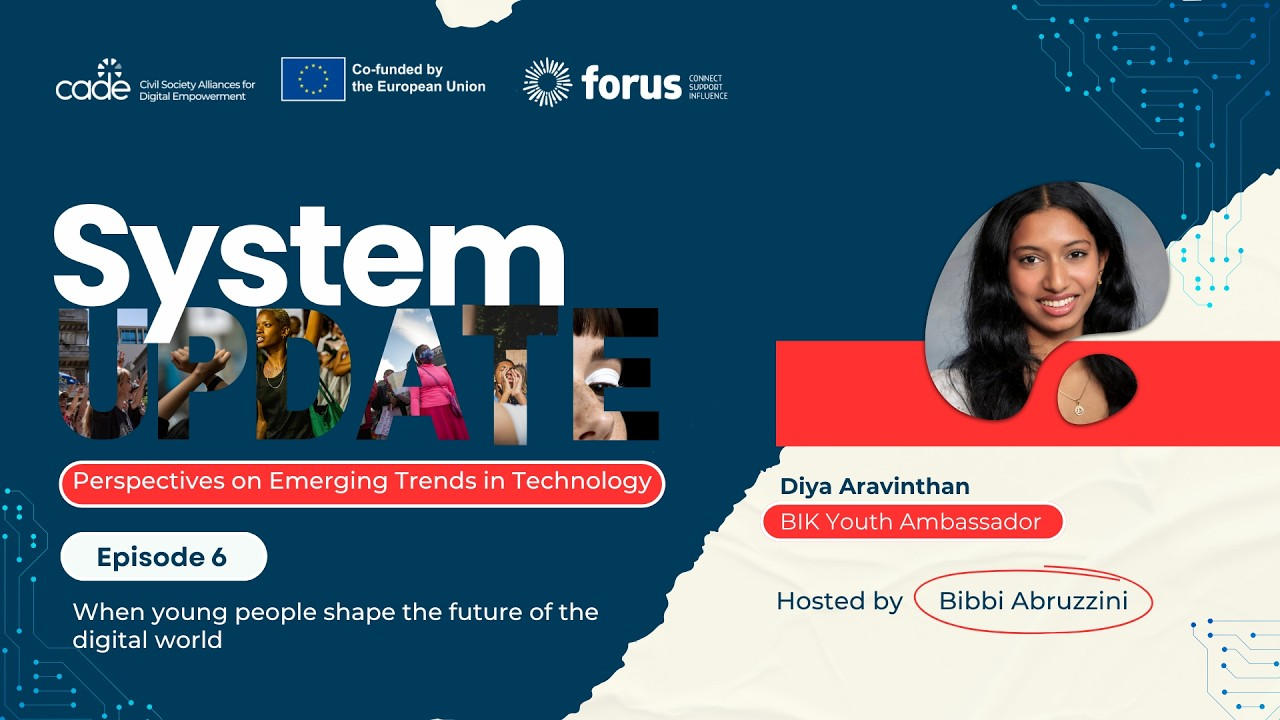
System Update - Episode 6: When young people shape the future of the digital worldAs younger generations spend increasing amounts of time online, issues such as youth participation in digital policy, online safety, misinformation, and digital literacy have become central to building a safer and more inclusive internet. These topics are important because they address the need to ensure that young people are not only protected from digital risks but are also recognised as active participants in shaping the future of the online environment. Involving youth in decision-making processes allows governments, regulators, and technology companies to better understand the challenges they face and develop solutions that reflect the needs of different communities. Online safety remains a critical concern as young people encounter risks such as harmful content, cyberbullying, privacy threats, and online exploitation. The growing spread of misinformation and disinformation also presents significant challenges, particularly as digital platforms become major sources of news and information. Strengthening media literacy is therefore essential to help young people critically evaluate online content, identify unreliable sources, and engage responsibly in digital and democratic spaces. Today we are joined by Diya Aravinthan an active BIK Youth Ambassador and panelist for the Better Internet for Kids (BIK) initiative, where she advocates for youth participation, digital citizenship, and online child safety. "System Update", is produced by Forus as part of CADE - the Civil Society Alliances for Digital Empowerment - a project co-funded by the European Union. CADE’s objective is to support the capacity of civil society organisations for effective advocacy in multilateral and multistakeholder internet governance processes. https://cadeproject.org/ https://www.forus-international.org/en/campaign/let-s-talk-digital This podcast was co-funded by the European Union. Its contents are the sole responsibility of Forus and do not necessarily reflect the views of the European Union.
2026-08-17
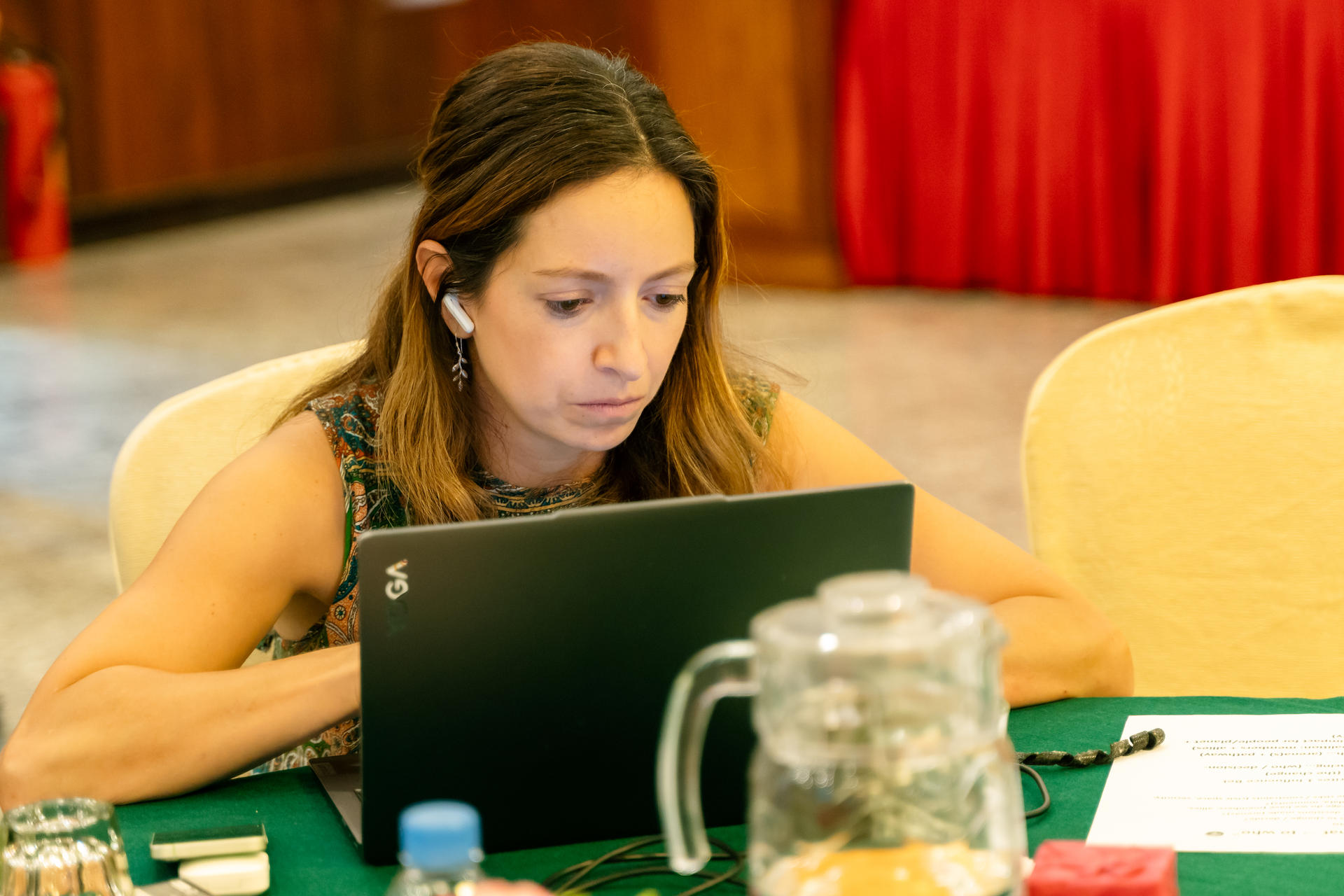
FORUS DIGITAL VISIBILITY PACK FOR NATIONAL PLATFORMSWe are pleased to offer a new opportunity for Forus members to strengthen their digital presence and make their work easier to find, access and share online.
2026-08-15
System Update - Episode 5: When digital policies need to reflect a changing ecosystemHow is the Internet Corporation for Assigned Names and Numbers ICANN responding to the current challenges and future direction of internet governance, responding to major shifts in the digital ecosystem? Emerging technologies such as artificial intelligence are influencing online behaviour, cybersecurity threats, domain name management, and policy-making processes. There is a need to look at how internet governance organisations balance the need for security, accessibility, innovation, and stability while coordinating decisions among diverse stakeholders. Policies are now being developed, when new rules are required while existing commitments need to be upheld, so which issues are likely to shape the evolution of the internet ecosystem in the years ahead? Today we are joined by Rafik Dammak engineer currently the chair of the Non-Commercial Stakeholder Group in ICANN, the Internet Corporation for Assigned Names and Numbers. He has been involved in ICANN community for many years, works in Japan and improves awareness and capacity building about Internet Governance in Tunisia and the MENA region in general. "System Update", is produced by Forus as part of CADE - the Civil Society Alliances for Digital Empowerment - a project co-funded by the European Union. CADE’s objective is to support the capacity of civil society organisations for effective advocacy in multilateral and multistakeholder internet governance processes. https://cadeproject.org/ https://www.forus-international.org/en/campaign/let-s-talk-digital This podcast was co-funded by the European Union. Its contents are the sole responsibility of Forus and do not necessarily reflect the views of the European Union.
2026-08-14
System Update - Episode 4: When AI Ethics Come FirstWhat is the role of civil society, governments, startups, and technology developers in shaping responsible AI governance, particularly within the African context? A central theme of this debate is the gap between policy and implementation. While many countries are beginning to introduce legal frameworks and strategies for AI governance, enforcement remains a significant challenge: stronger institutions and greater public engagement are necessary to translate ethical principles into real-world protections. This also comes with a practical definition of AI ethics: the safeguards, accountability mechanisms, and values that guide how AI systems are designed, deployed, and governed. In this episode we are joined by Mapalo Lukashi is Head of AI Lab and Data and Artificial Intelligence Lead at BongoHive - Zambia's first and leading technology and innovation hub. Mapalo works at the cutting edge of AI development and application on the continent, bringing a grounded, Africa-first perspective. "System Update", is produced by Forus as part of CADE - the Civil Society Alliances for Digital Empowerment - a project co-funded by the European Union. CADE’s objective is to support the capacity of civil society organisations for effective advocacy in multilateral and multistakeholder internet governance processes. https://cadeproject.org/ https://www.forus-international.org/en/pdf/civil-society-manifesto-for-ethical-ai-106205 https://bongohive.co.zm/ This podcast was co-funded by the European Union. Its contents are the sole responsibility of Forus and do not necessarily reflect the views of the European Union.
2026-08-12
System Update - Episode 3: When AI Meets Planetary JusticeThe infrastructure behind AI—from data centers to resource extraction—has tangible consequences for communities, ecosystems, and livelihoods. While many users experience AI as an "invisible digital tool", there are physical realities that make these technologies possible, including land use, energy consumption, displacement of communities, and pressure on local resources. As governments and corporations increasingly promote "green" technology initiatives, environmental and social justice cannot be separated from conversations about technology, particularly when local communities are asked to absorb the impacts of projects that primarily serve global markets and powerful actors. In this episode we are joined by Sara Marcucci who works with AI + Planetary Justice Alliance, an organisation that centres ecological and social justice in conversations about artificial intelligence - pushing back against narratives that treat AI as a neutral or inevitable force, and insisting that the choices we make about this technology are deeply political ones. "System Update", is produced by Forus as part of CADE - the Civil Society Alliances for Digital Empowerment - a project co-funded by the European Union. CADE’s objective is to support the capacity of civil society organisations for effective advocacy in multilateral and multistakeholder internet governance processes. This podcast was co-funded by the European Union. Its contents are the sole responsibility of Forus and do not necessarily reflect the views of the European Union.
2026-08-12
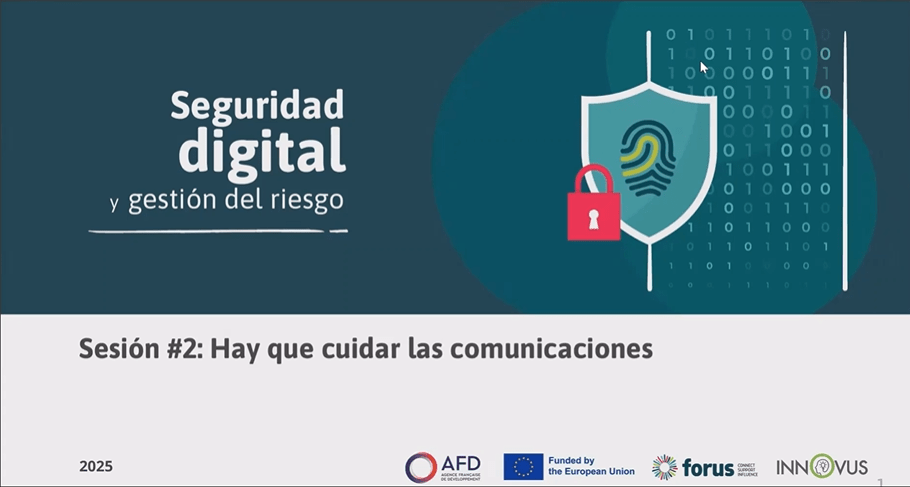
MÓDULO 1 – SEGURIDAD DIGITAL PARA LA SOCIEDAD CIVIL -Sesión 2: Hay que cuidar las comunicacionesTEMAS
- Analizamos el ciclo de vida de la información, amenazas frecuentes como el phishing, el spyware, el doxxing y el acoso en línea, así como algunas vulnerabilidades que pueden poner nuestras comunicaciones en riesgo. También presentamos buenas prácticas, como utilizar contraseñas seguras, activar la autenticación de dos factores, mantener el software actualizado, realizar copias de seguridad, configurar la privacidad y utilizar herramientas de comunicación seguras.
- La sesión destaca la importancia del cifrado, especialmente del cifrado de extremo a extremo, y muestra cómo los ajustes de seguridad y privacidad pueden ayudarnos a comunicarnos de forma más segura.
2026-08-12
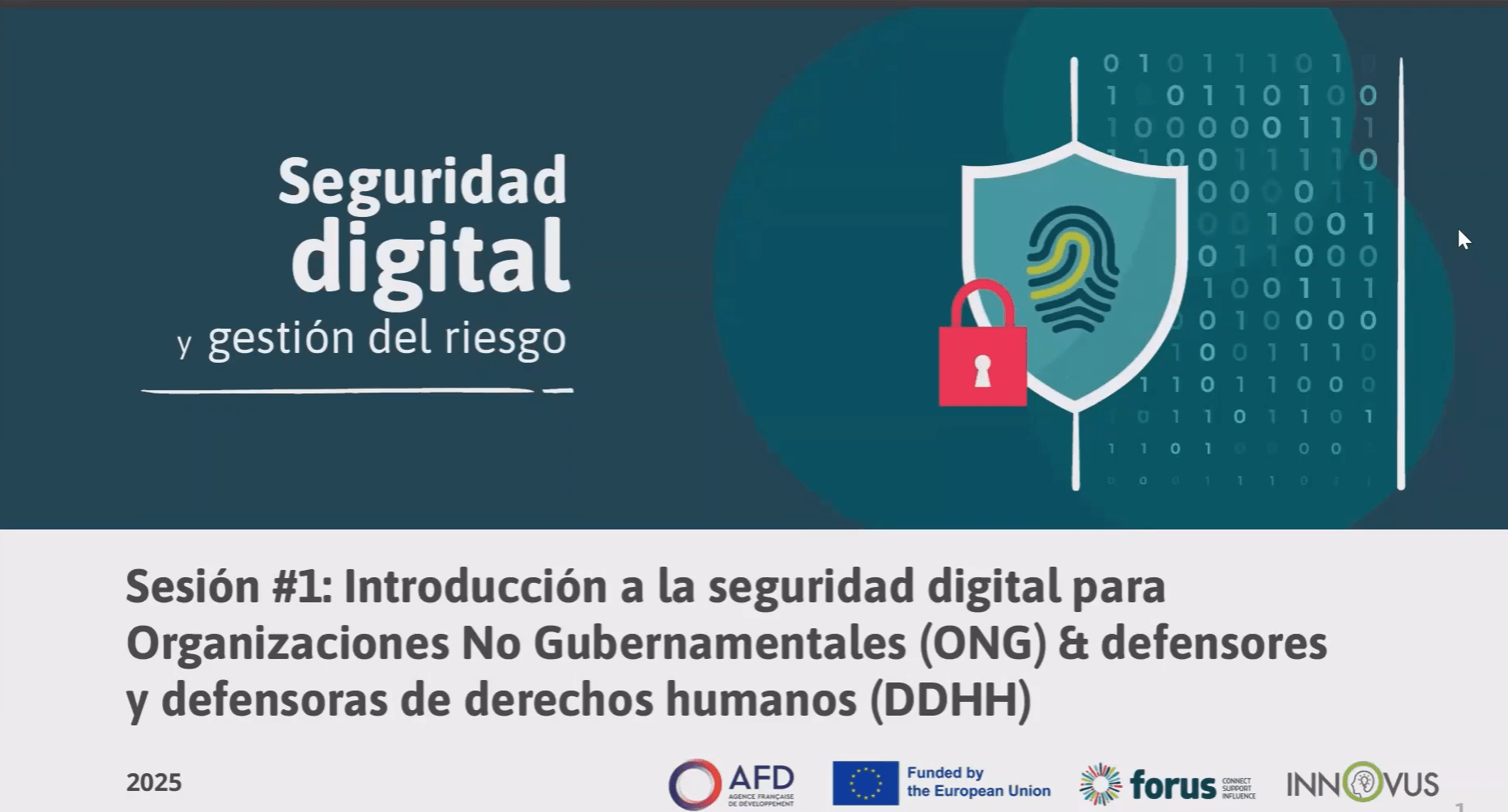
MÓDULO 1 - SEGURIDAD DIGITAL PARA LA SOCIEDAD CIVIL - Sesión 1: Introducción a la seguridad digital para organizaciones no gubernamentales (ONG) y defensores de derechos humanosTEMAS
- Cómo funciona internet: entendemos el rol de los intermediarios digitales (proveedores de acceso, fabricantes de hardware, motores de búsqueda, redes sociales, entre otros) y cómo estas empresas influyen en nuestra seguridad e información.
- Inventario de herramientas digitales: identificamos las aplicaciones y servicios que usamos a diario para la comunicación, la productividad y la participación, y reflexionamos sobre nuestros niveles de apropiación digital.
- Análisis de riesgos: revisamos los riesgos, ataques y vulnerabilidades más comunes que enfrentan las organizaciones (como phishing, spyware, doxxing, acoso en línea, violencia de género facilitada por la tecnología, entre otros) y las mejores prácticas para proteger nuestra información y nuestros equipos.
Digital Systems
2026-08-10
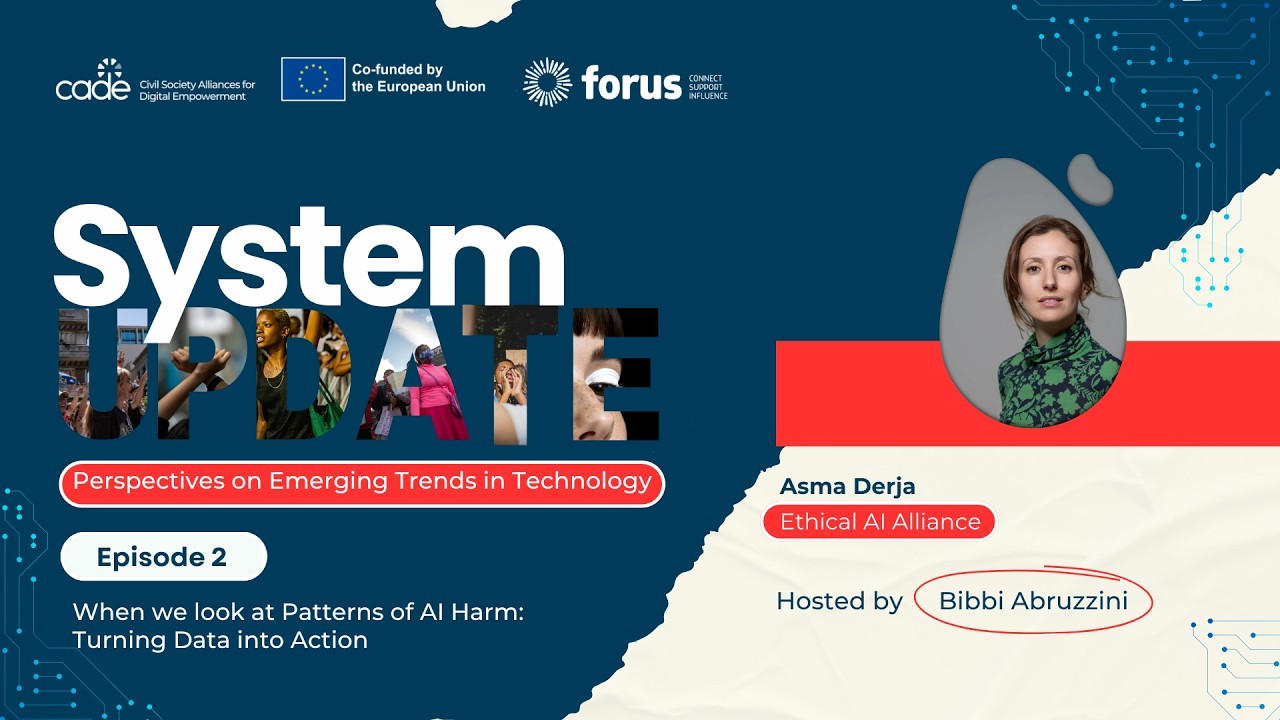
System Update - Episode 2: When we look at patterns of AI harm: turning data into actionCommunities with less power bear the costs of AI systems without adequate safeguards, consent, or accountability. How can we effectively address this issue and not just by pointing out the problem? Identifying and making visible the patterns behind AI harms is important not only for reporting, but also as a practical tool for civil society, journalists, researchers, and legal teams. In this episode we talk with Asma Derja, founder and director of the Ethical AI Alliance, an organization working to ensure that artificial intelligence is developed and governed in ways that are fair, transparent, and accountable. "System Update", is produced by Forus as part of CADE - the Civil Society Alliances for Digital Empowerment - a project co-funded by the European Union. CADE’s objective is to support the capacity of civil society organisations for effective advocacy in multilateral and multistakeholder internet governance processes. https://cadeproject.org/ https://www.forus-international.org/en/pdf/civil-society-manifesto-for-ethical-ai-106205 https://ethicalaialliance.org/ This podcast was co-funded by the European Union. Its contents are the sole responsibility of Forus and do not necessarily reflect the views of the European Union.
2026-08-10
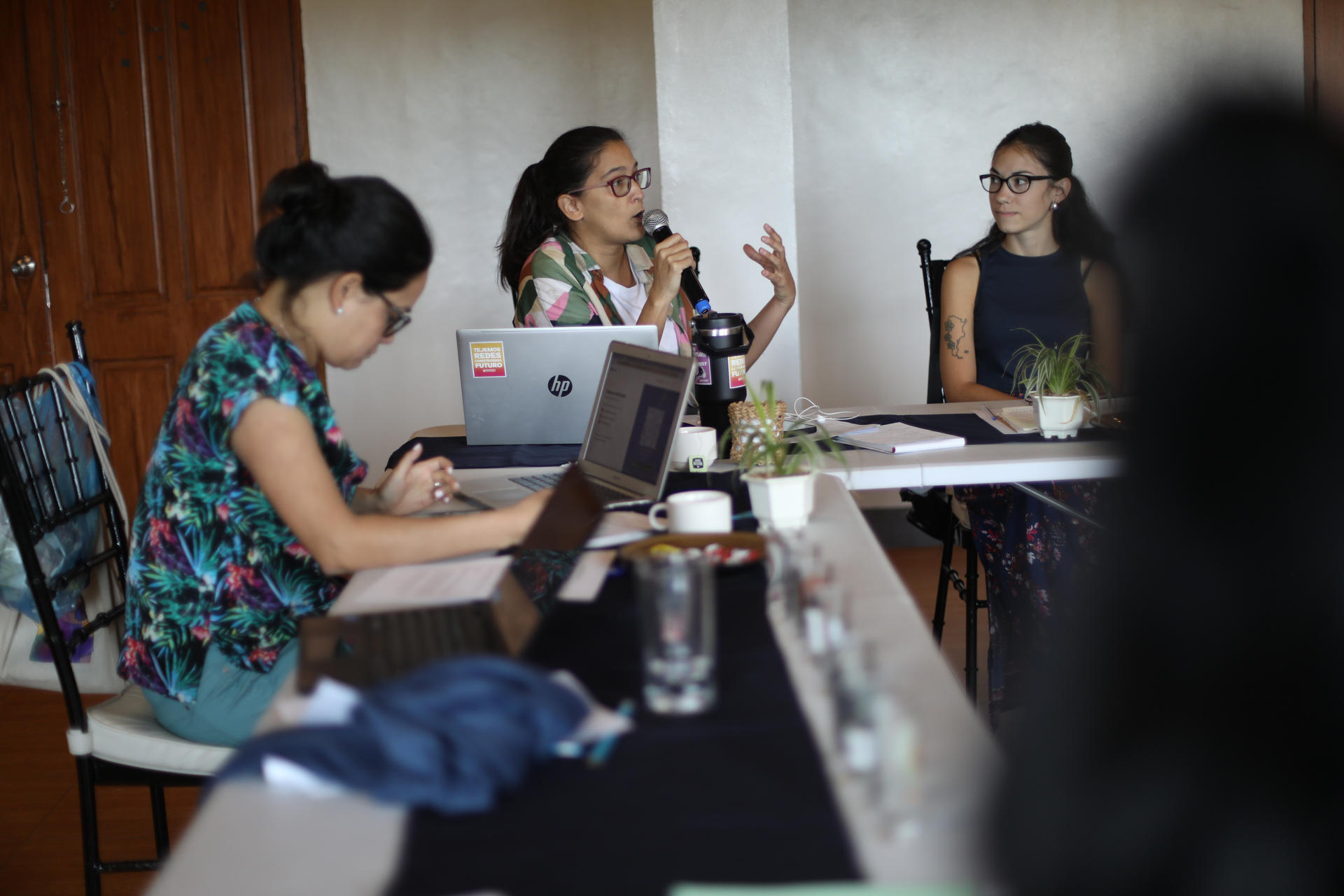
Position, Story, Pitch: How Civil Society Platforms Can Strengthen Their Voice and VisibilityWhat makes a civil society platform matter — and how can it communicate that value more clearly? This question was at the heart of the first session of the Forus Communicators’ Series, bringing together communications and advocacy colleagues from across the Forus network to explore positioning, storytelling and messaging.
2026-08-08
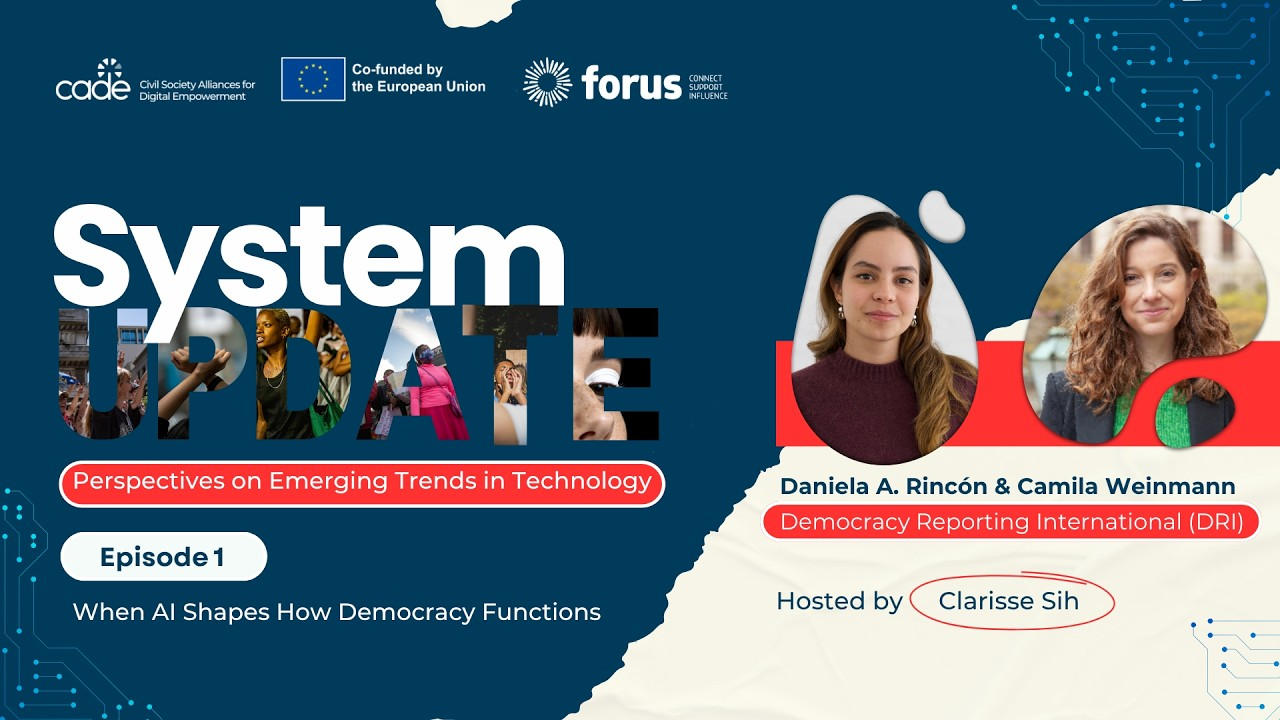
System Update - Episode 1: When AI Shapes How Democracy FunctionsArtificial intelligence is already reshaping how information flows, how decisions are made and how democracy functions. From disinformation to biased algorithms, the risks are social and political, often reinforcing existing inequalities and silencing voices that have already been marginalised. Governing AI is thus also about power, accountability and rights. Ensuring democratic oversight requires transparency, access to data and strong collaboration between governments, private actors and civil society - across regions and beyond existing legal frameworks. In this episode, we speak with Camila Weinmann and Daniela Rincón from Democracy Reporting International. Together, we explore how AI is impacting democratic processes, the challenges of regulating platforms and accessing data and what it will take to build accountable, rights-based AI systems at a global scale.
2026-08-03
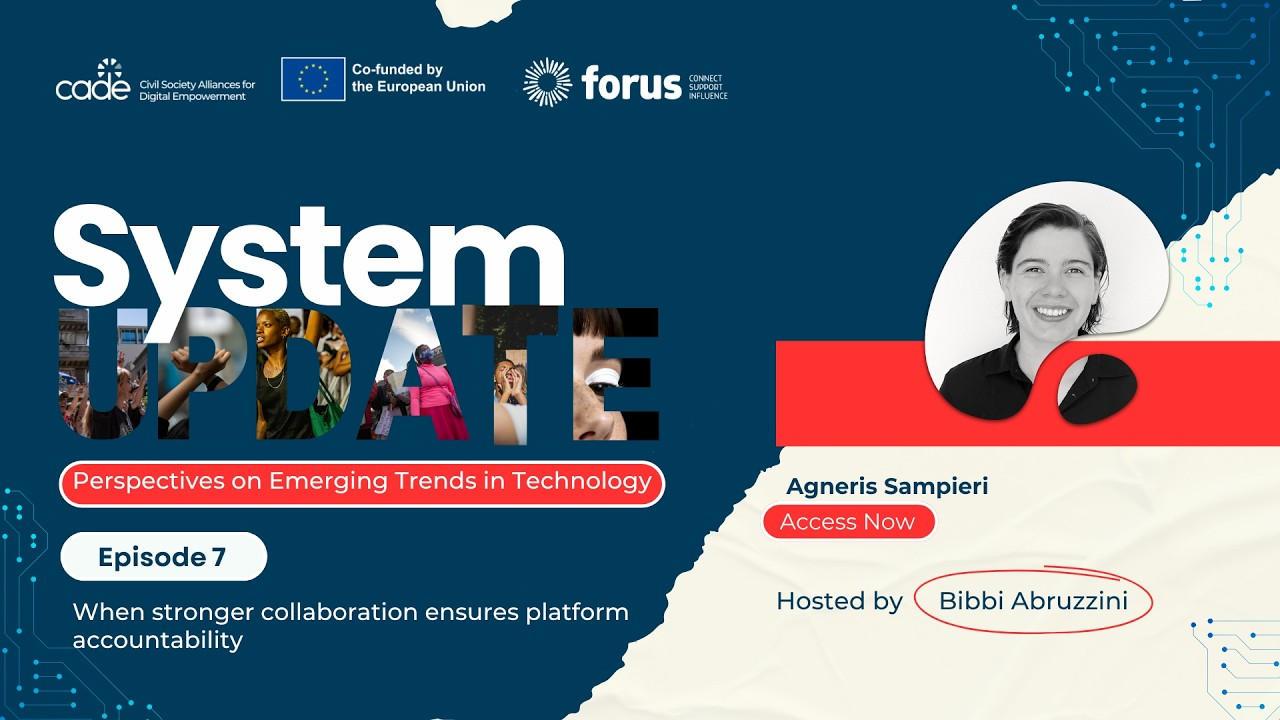
System Update - Episode 7: When stronger collaboration ensures platform accountabilityAs digital platforms increasingly influence how information is created, shared, and accessed, issues such as freedom of expression, algorithmic transparency, content moderation, and platform accountability have become central to ensuring a fair and open digital environment. Decisions made by online platforms about what content is promoted, removed, or restricted can have significant impacts on public debate, access to information, and individual rights. As a result, the importance of independent oversight, effective regulatory frameworks, and stronger engagement between platforms, civil society organisations, and affected communities ensures that digital governance protects freedom of expression while addressing online harms. Today we are joined by Agneris Sampieri Policy Analyst at Access Now where she focuses on freedom of expression and related issues. Together we are going to explore how algorithms, platform governance, and emerging technologies shape public discourse, and what role civil society, regulators, and digital platforms should play in ensuring transparency, accountability, and the protection of fundamental rights online. "System Update", is produced by Forus as part of CADE - the Civil Society Alliances for Digital Empowerment - a project co-funded by the European Union. CADE’s objective is to support the capacity of civil society organisations for effective advocacy in multilateral and multistakeholder internet governance processes. https://cadeproject.org/ https://www.forus-international.org/en/campaign/let-s-talk-digital https://www.accessnow.org/ This podcast was co-funded by the European Union. Its contents are the sole responsibility of Forus and do not necessarily reflect the views of the European Union.
2026-08-03
System Update: A New Podcast Series Exploring Emerging Trends in Technology is Out!From elections and public services to online platforms and access to information, digital technologies are reshaping our democracies, economies, collective and private existences at an unprecedented pace. Yet one critical question remains: who gets to shape the rules that govern these technologies? To help answer that question and trigger new forms of collaboration, Forus is launching System Update, a new 12-episode podcast series produced as part of CADE - a project co-funded by the European Union.

2026-07-29
What civil society wants, and what donors and governments should do about it – inside 1,218 EU SEE recommendations – EU SEEEvery year, EU SEE country focus reports do more than diagnose the state of the enabling environment around the world. Country by country, we collect something rarer: a record of what civil society itself believes needs to change and who should be doing the changing by documenting civil society’s perspective on what constitutes an enabling environment, outlining the reforms and actions required to support effective, independent, and sustainable civil society work. Taken together, these recommendations provide a practical reform agenda, led by global civil society’s actual wishes.
Influence
2026-07-27
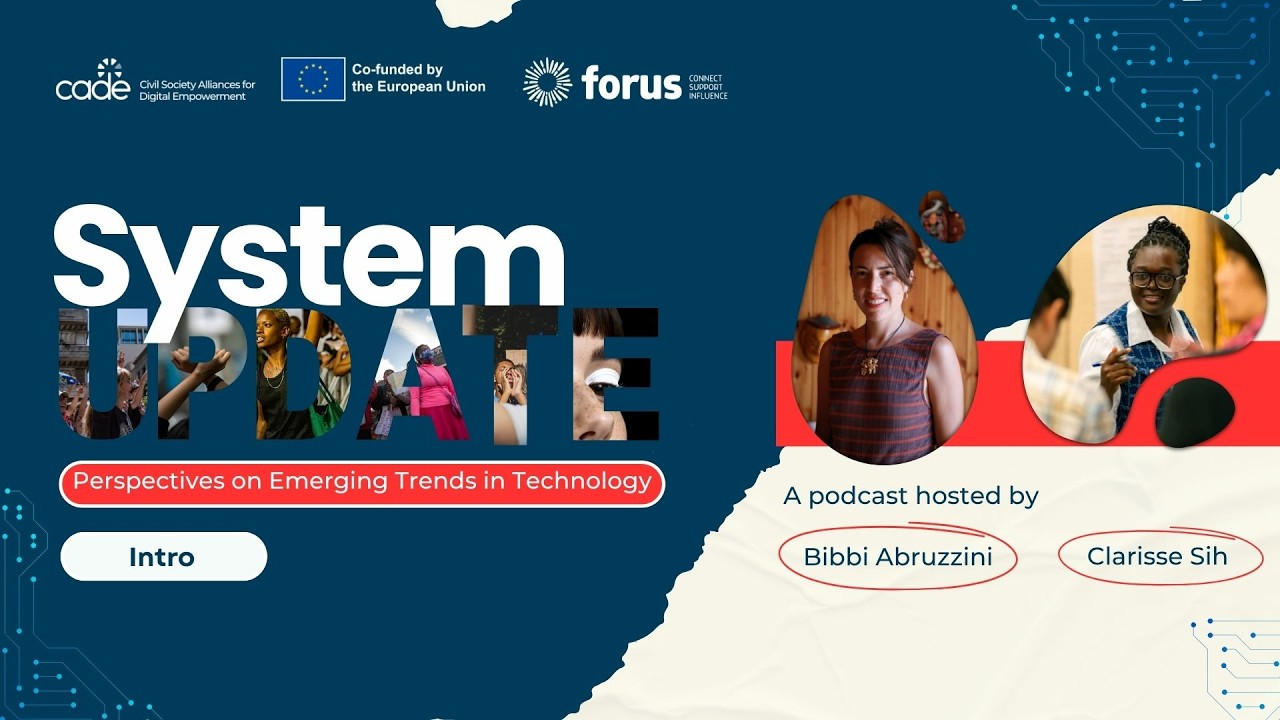
System Update - IntroductionAre emerging trends in technology fast, inevitable, and neutral? No, there are complex political, social, environmental and intersectional dynamics behind them. They are constantly being shaped by decisions about power, governance, infrastructure, and access and these decisions in turn are already reshaping democracy, levels of inequality, and the ways we participate in public action and live our private lives. System Update is a podcast series brough to you by Forus as part of the Civil Society Alliances for Digital empowerment a programme co-funded by the European Union. Bibbi Abruzzini and Clarisse Sih from Forus are hosting this podcast, that follows the digital transformation across three interconnected levels: the global governance of emerging technologies in particular AI, its regional translation into policy and infrastructure, and its national and local impact on communities. The series moves from questions of regulation and rights to the realities of digital systems slowly tracing how digital governance is built, contested, and reimagined across the globe and in different regions. “System update” is usually a quiet background process a patch, a fix, an invisible improvement running in the background of devices we rely on. Yet through this series we see how there is no single update, no final version, no universally accepted patch. Instead, there are competing visions of what the system should be — and competing actors deciding what gets fixed, what gets ignored, and what gets permanently embedded. This podcast series, episode after episode shows how digital governance is shaped by infrastructure and ideology, by regulation and resistance, by global frameworks and local realities. And at every level, civil society emerges. Join us and be a part of the System Update! "System Update", is produced by Forus as part of CADE - the Civil Society Alliances for Digital Empowerment - a project co-funded by the European Union. CADE’s objective is to support the capacity of civil society organisations for effective advocacy in multilateral and multistakeholder internet governance processes. This podcast was co-funded by the European Union. Its contents are the sole responsibility of Forus and do not necessarily reflect the views of the European Union. Learn more about CADE: https://cadeproject.org/ Discover the Let's Talk Digital campaign: https://www.forus-international.org/en/campaign/let-s-talk-digital #CADE #D4D #Forus #digitalrights #ai #digitalgovernance #letstalkdigital