© NGO Forum on ABD

2026-08-10
Position, Story, Pitch: How Civil Society Platforms Can Strengthen Their Voice and Visibility
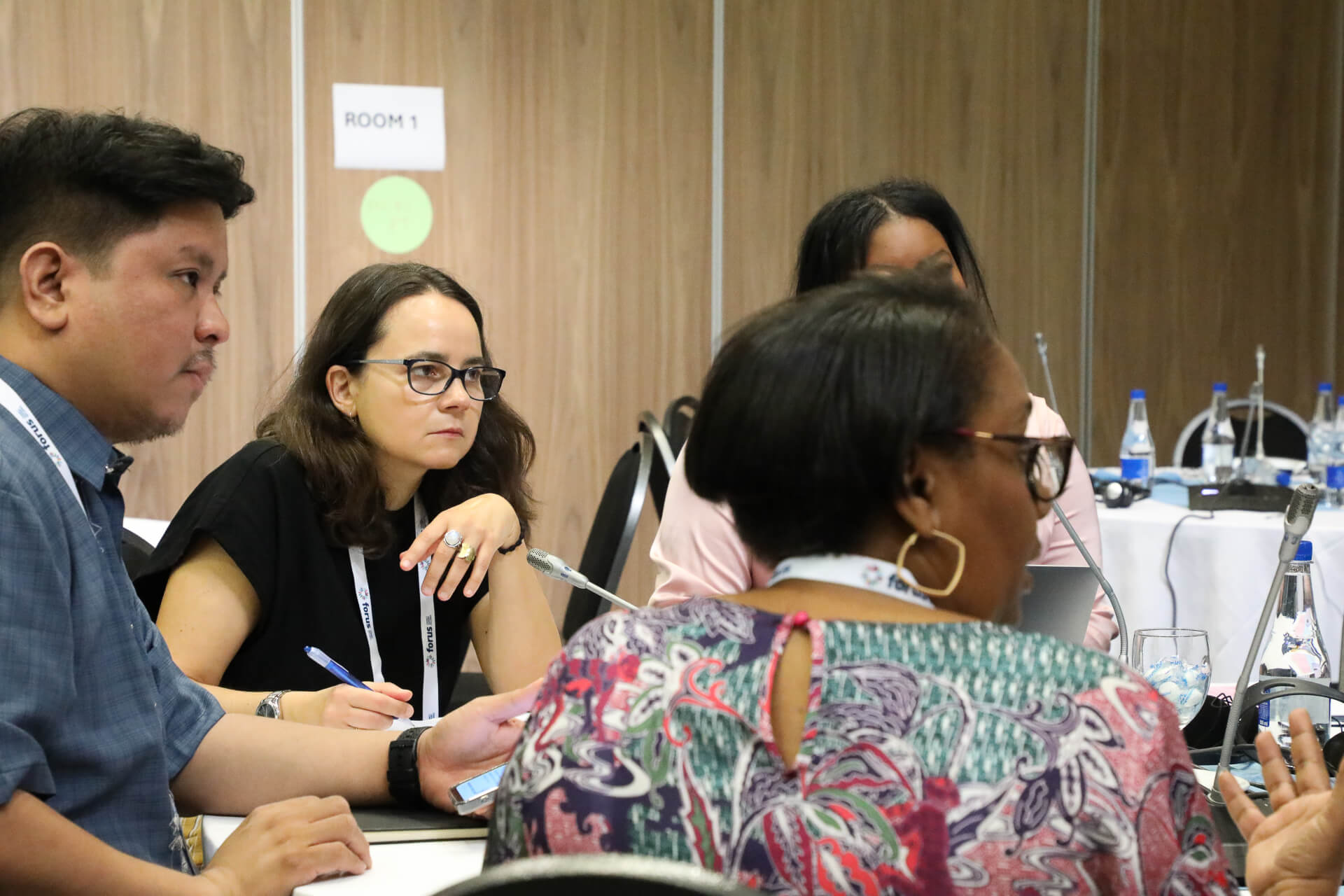
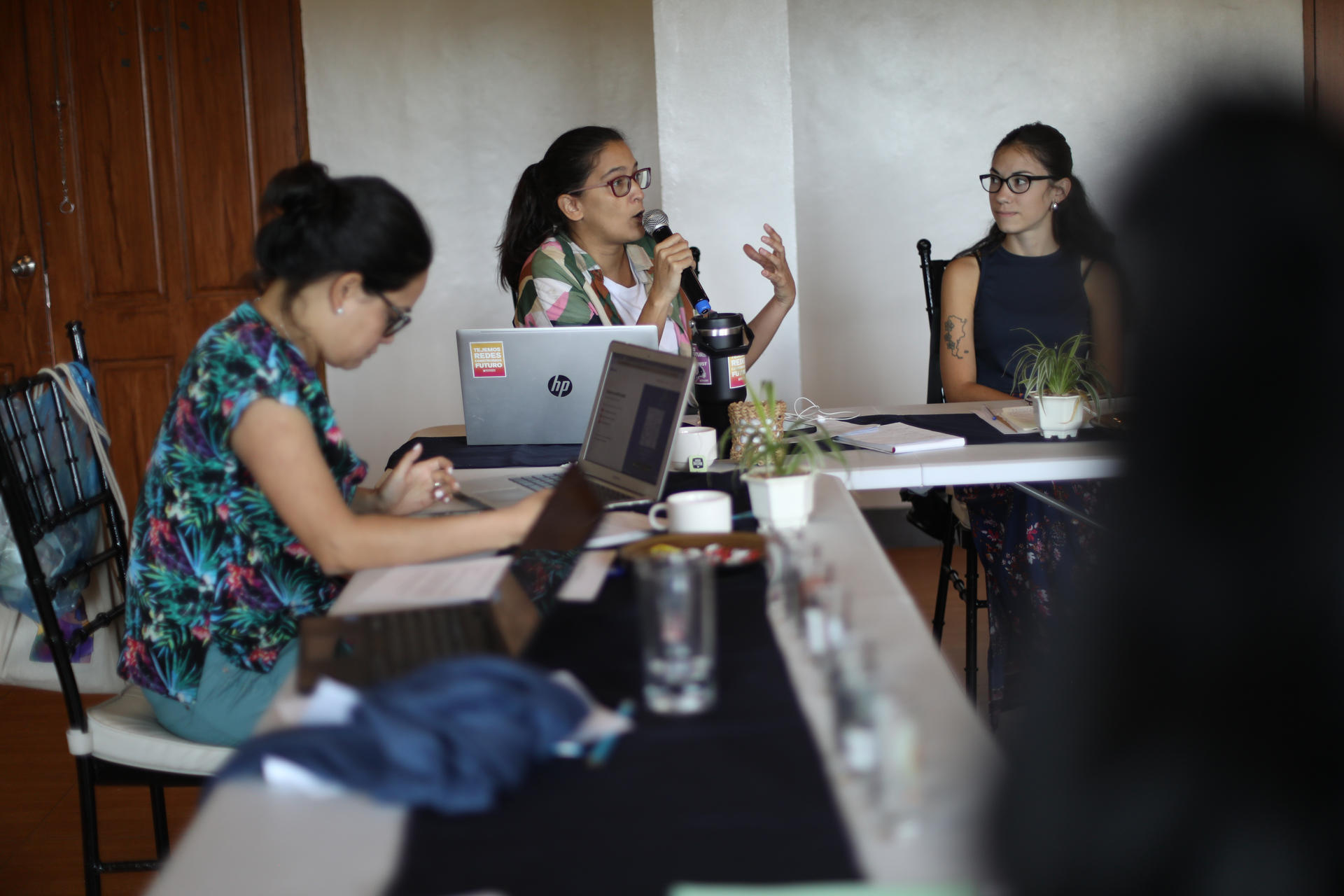
What makes a civil society platform matter — and how can it communicate that value more clearly? This question was at the heart of the first session of the Forus Communicators’ Series, bringing together communications and advocacy colleagues from across the Forus network to explore positioning, storytelling and messaging.
The session created space for members to share practical experiences and approaches, while giving participants the opportunity to reflect on their own platforms and sharpen how they communicate their value. The event brought together three different perspectives from INFID in Indonesia, ASONOG in Honduras and PIANGO in the Pacific, showing how context, identity and collective action can shape effective communications strategies.
The conversation comes at a time when civil society organisations are navigating shrinking civic space, disinformation, negative narratives, limited resources and growing challenges around visibility. An opening exercise with participants highlighted a range of communications challenges, including visibility, intergenerational challenges, internal communications, influence and restrictions, while the general public, governments and donors were identified among the audiences that can be hardest to reach and engage.
For INFID, the International NGO Forum on Indonesian Development, communications and advocacy are closely intertwined. With 80 member organisations across Indonesia, INFID works across issues including democracy and gender justice, climate governance, human rights and inclusive development.
Its experience demonstrates the value of creating spaces where members can share emerging issues and coordinate responses. A dedicated WhatsApp group, for example, allows members to share developments and urgent concerns in real time, while the Secretariat can help coordinate joint responses when needed. INFID also uses national coalitions, research and policy briefs, collective public statements and peer-to-peer learning to connect members' work and strengthen their collective voice.
This approach has helped INFID move from what it described as a fragmented and reactive space towards a more coordinated, evidence-based movement, contributing to stronger policy influence, media attention and opportunities to bring domestic issues into international policy discussions.
INFID has also contributed to important policy and legislative change, including advocacy that supported the adoption of Indonesia's Sexual Violence Crime Law (UU TPKS) in 2022. The platform also gained a non-government seat on Indonesia's National Task Force on Business and Human Rights, while its coordinated advocacy around civic space generated significant media attention.
Its communication strategy adapts to different audiences, using annual reports and member spaces for its members; policy papers, briefs and high-level dialogue for stakeholders and government; and news articles, opinion pieces, digital campaigns and joint press releases to engage the wider public. The platform's recommendations are to develop a strategic branding framework, combine short- and long-term communication strategies, co-create communications approaches with members and partners, and ensure that communication reflects organisational values and collective advocacy goals.
If there is one big takeaway I want to leave with you, it's this: advocacy and communication are inseparable. They reinforce each other," shared Fikriyah Nurshafa, who serves as the Strategic Communication Officer at INFID.
For ASONOG, the Honduran national platform, the challenge is also about bringing together experiences that can otherwise remain isolated.
Its 17 member organisations work with communities defending their territories, protecting water and forests, promoting human rights and responding to inequality and climate change. Yet, as the ASONOG team explained, organisations often communicate from their own territories, with their own resources and capacities. The result can be fragmented messaging, technical or institutional language and limited collective visibility.
ASONOG has therefore sought to play an articulating role: listening to the voices of its members, identifying what their experiences have in common and helping turn these experiences into a broader collective narrative. This allows local stories to connect with national and international debates around human rights, environmental justice, citizen participation and sustainable development.
A key part of this approach is storytelling with purpose.
Instead of beginning with an institution or a problem, ASONOG starts with people. Communities themselves understand the challenges they face, the changes they want to see and the solutions they are developing. Communication can then help accompany, connect and amplify those voices.
“We always put the person first, before any institution, before any problem," shared Maby Santos and Benjamin Rodriguez from ASONOG.
This also means moving beyond portraying communities simply as victims or beneficiaries. ASONOG seeks to present women, men, young people and community leaders as people with knowledge, agency and proposals of their own.
As the team emphasised, data and technical information remain important — particularly for reports, advocacy and engagement with partners — but storytelling can help audiences understand the human dimension behind the data.
The approach can be summed up in three principles: start with people, create coherence "without uniformity", and give every story a purpose.
The experience shared by PIANGO, Forus' regional platform in the Pacific Islands, offered another perspective: the importance of understanding and communicating why an organisation exists.
PIANGO's mandate places the well-being of Pacific people at the centre of its work. Its storytelling therefore starts not simply with what the organisation does, but with the purpose behind that work — why it takes particular approaches and why certain issues matter to Pacific communities.
This purpose-led approach can help organisations connect with audiences in a more meaningful way: it creates a story around the rationale, values and people behind the work.
For PIANGO, this also means using communication to build a common voice while maintaining the diversity and identity of its members. Its strategic approach places people at the centre and seeks to strengthen partnerships, coalition-building and collective influence. The platform is also working to shift from data towards value, from responses towards results, and from functioning primarily as a network towards building broader coalitions.
“The money that actually comes in to support us in terms of revenue is actually coming from fishing. So when you're talking about deep-sea mining, think about what it can actually impact — the core of your revenue. This is giving people that ownership: ‘I need to get involved in the budget process, because that is where my money's going,’” shared Emeline Siale Ilolahia, Executive Director of PIANGO.
"The Pacific people well-being is the standard of our work. It must drive a policy, it must drive our budget allocation to impact people".
For PIANGO, communicating the value of civil society also means showing how civil society can help shape long-term regional priorities. Siale highlighted the Pacific’s 2050 Strategy for the Blue Pacific Continent, which sets out seven key thematic areas, including governance, political leadership and regionalism, people-centred development, peace and security, climate change and disaster resilience, oceans and the natural environment, and information and communication technologies. PIANGO has worked to help civil society understand where and how it can contribute with a mapping which has helped identify opportunities for coalition-building around specific thematic areas. Instead of presenting civil society as a collection of individual organisations working separately, PIANGO has increasingly framed its role around bringing different actors together to work collectively. As Siale explained, the shift is “from a network to a coalition” — expanding beyond PIANGO’s membership through what the organisation calls “PIANGO Plus”, bringing additional partners into collective action to identify spaces for collaboration while maintaining an independent civil society voice. On issues such as climate justice, loss and damage, and the Pacific’s nuclear legacy, civil society can engage with regional policy processes while continuing to raise historical and structural concerns that might otherwise be overlooked.
For PIANGO, this is about ensuring that Pacific communities have ownership over the decisions shaping their future. As Siale put it, the 2050 Strategy is not something people should feel separate from: “If you don't feel like that you are part of it, you have to be part of it, because that is where our priorities are set, and it is our Pacific shared values.”
Participants were invited to reflect on their own platform's mission, audiences, the change it contributes to and its unique value, before developing a short pitch explaining that contribution via a Positioning Canva.
The exercise reflects the wider purpose of the Forus Communicators’ Series: to promote practical tools and collective learning, drawing on real experiences from across the network. The series will continue complemented by the Forus Learning Mondays on digital presence followed by the "Spot It, Stop It, Tell It" Misinformation Response Lab which focuses on how civil society understands and responds to misinformation and harmful narratives; for Forus members wanting to go deep on contested information environments civil society now operates in with trust decline, polarisation, shrinking attention.
2026-07-20
News
The Forus Communicators' Series: communicating platform value, building strategies and countering misinformation How can strategic communication build relationships, engage audiences and create meaningful pathways for action? What innovative storytelling practices can we use for transformational social change? Explore the Forus Communicators' series.