
Wed 27 May 2026
Women's Fight Against Technology - Facilitated Gender-Based Violence
In the era of social media, digital spaces have become a platform for civic activism. Around the world, especially in Africa, the internet has become a communication tool. Women mobilise, advocate, and call for solidarity. Some defend human rights; others denounce gender-based violence, while others raise awareness about inequalities as they build communities that influence public debates.
But behind the scenes of this engagement lies a rather dark reality, and we are going to name it: the invisible cost of women’s digital engagement. Today, we talk about digital rights, but what about women who use digital spaces as arenas for struggle and advocacy?
This article aims to highlight digital rights and technology - facilitated gender-based violence (TFGBV).
Today, digital spaces have become highly destructive, and women no longer feel safe there. Technology - facilitated gender-based violence is undermining women’s engagement. Many women use TikTok, Facebook, X, YouTube, Instagram, podcasts, and blogs to raise awareness, denounce injustices, promote causes, and defend rights.
These social networks have given many women a level of visibility that was not easily attainable in the past. Today, however, this visibility comes at a price, and that price is technology-facilitating gender-based violence.
These forms of violence silence women and reduce their civic space
Technology-facilitated gender-based violence, called TFGBV (Technology-Facilitated Gender-Based Violence), encompasses all forms of violence against women through digital tools. It should be noted that this online violence very often targets women: journalists, content creators, human rights defenders, or community leaders.
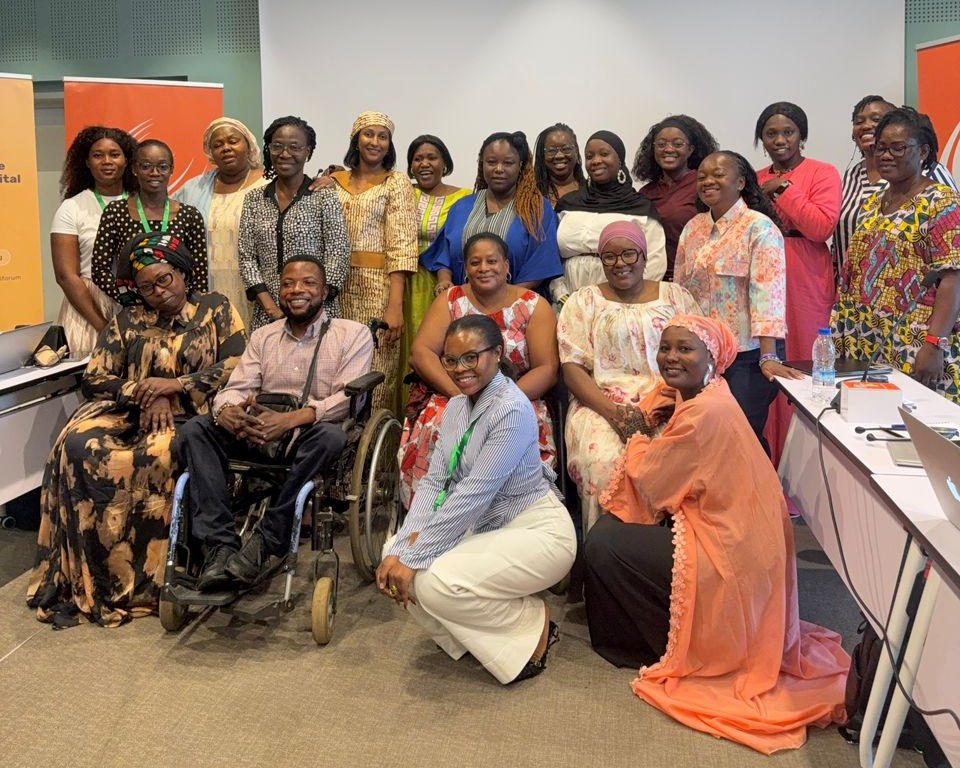
Recently, CIPESA organised a regional skills-sharing workshop on digital security and resilience with women human rights defenders, journalists, and activists, in which I actively participated. They contribute greatly to demystifying TFGBV.
The slogan of the CIPESA workshop was: SAFE BY DESIGN, which consists of building safeguards from the design stage of platforms to better protect users.
For CIPESA, digital rights go beyond access to devices or connectivity. According to them, they include safety, dignity, bodily autonomy, protection against technology-facilitated gender-based violence, meaningful participation, and access to remedies in case of violations.
Furthermore, CIPESA research has shown that women suffer from cyberharassment, blackmail, phishing, and the non-consensual sharing of personal information.
For Aminata Samassekou, the president of Kominitas, the network of bloggers in Mali whom I interviewed as part of the Forus journalism program, these forms of violence can be emotionally exhausting, but they also strengthen my conviction that women must continue to occupy these digital spaces. If we do not tell our own truths, someone else will do it in our place.
She states that she has been a victim of online violence: like many publicly engaged women, I have already faced attacks, insults, smear campaigns, and intimidation. Especially when I take positions on sensitive topics such as governance or issues related to the place of women in society. I have already deleted two accounts and twice shut down my current account for months.
Today, she protects herself by being careful in managing her account. She blocks, reports, and tries to build a supportive community around her.
As part of the Forus March With Us campaign, it is essential to remember that “meaningful connectivity” is real.
“Technology is the new face of gender inequality. It widens gaps rather than reducing them,” explains Catalina Escobar, co-founder and Strategy Director of MAKAIA. A mechanical engineer, she has herself faced the stereotypes and barriers that women encounter in the tech sector. Beyond the low number of women in decision-making spaces, even in emerging fields such as AI, another worrying trend is that digital spaces are becoming increasingly dangerous.
“Technology facilitates gender-based violence; it amplifies it. The women most targeted online are those in leadership positions, women politicians, or those seeking to transform society. This is a threat to democracy.”
Women’s engagement has an invisible and destructive cost. Online violence leads to emotional exhaustion but also to a loss of desire to engage.
Women must be able to express themselves both in person and online, and they have the right to protection.
This article was written as part of the Forus journalism program.