Abong - Associaçao Brasileira de ONGs
Brazil
National NGO Platforms
Abong – Brazilian Association of NGOs is a national association created in 1991 with the aim of strengthening Brazilian Civil Society Organizations (CSOs) that work in the defense and promotion of rights and common goods. We work in partnership with social movements and dialogue with governments for an environmentally fair world, with equal rights and free from all forms of discrimination. We understand that, in formulating and monitoring public policies, everyone's participation is essential.
/ Members
/ Articles & News
Thu 9 Jul 2026
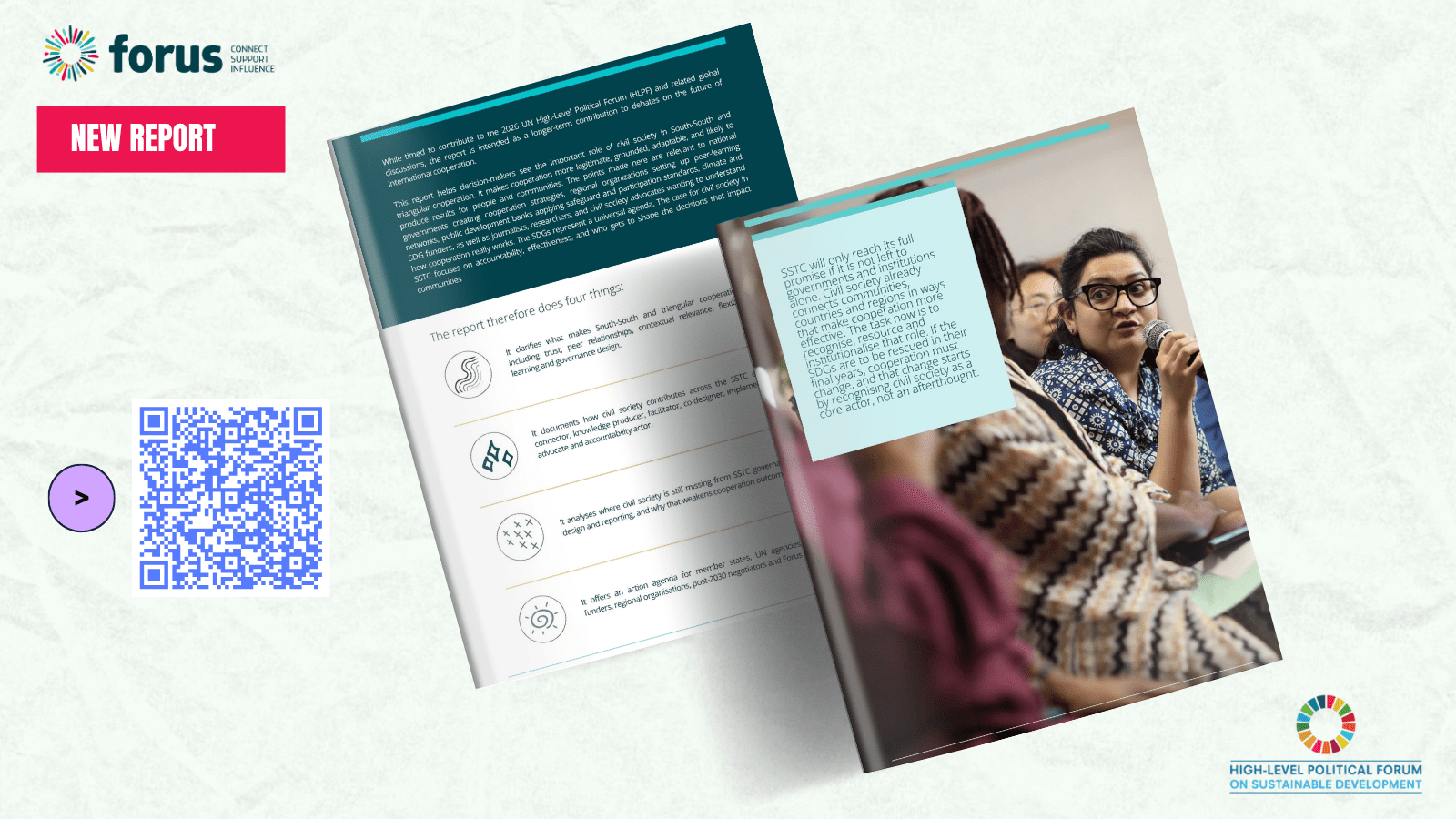
From evidence to influence civil society claims its place in South-South and triangular cooperationInfluence
/ Projects

/ Podcasts
Wed 1 Jul 2026
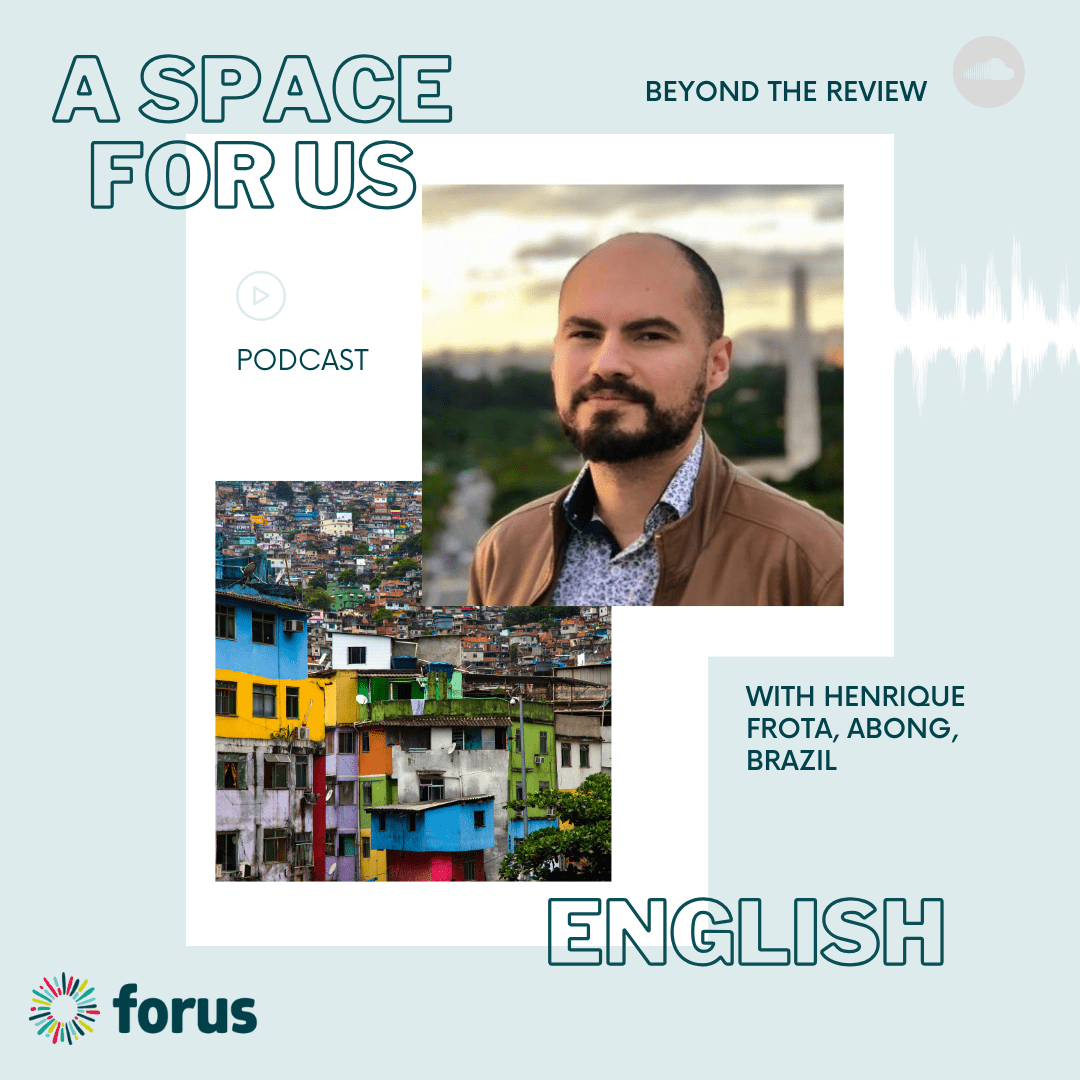
EN - Beyond the Review: Lessons from Brazil on occupying multilateral spaces with concrete proposals and an independent voice
Welcome to A Space For Us, the Forus podcast that brings together civil society national platforms, activists, thinkers and changemakers fighting for justice across the globe. Today’s episode is part of our “Beyond the Review” series, recorded on the sidelines of the High-Level Political Forum taking place in New York from 7 to 15 July 2026. Brazil is presenting its third Voluntary National Review this year—a country of continental dimensions, profound inequalities, and an extraordinarily vibrant civil society that has shown the world what it means to occupy multilateral spaces with concrete proposals and an independent voice. Joining us today is Henrique Frota, President of ABONG—the Brazilian Association of Non-Governmental Organizations—one of the most influential civil society platforms in Latin America, and a central figure in coordinating global civil society engagement during Brazil’s G20 Presidency in 2024, serving as Chair of the C20. This episode was developed with the support of the European Union and the Agence Française de Développement (AFD). Its contents are the sole responsibility of Forus and the guests featured in this episode and do not necessarily reflect the views of the European Union or the Agence Française de Développement (AFD).
Mon 23 Mar 2026
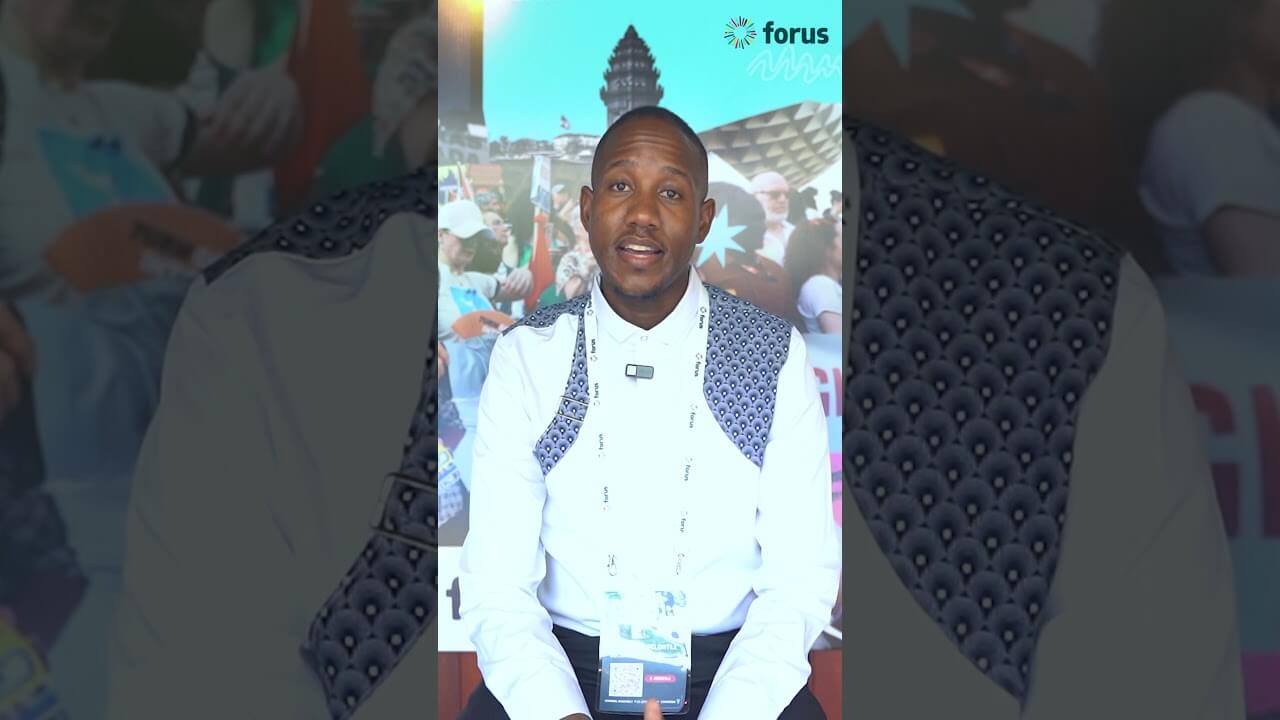
#ForusGA2026 - Day 1 Forus General Assembly
✨ Day 1 of the Forus general assembly is just the beginning! Today we came together with energy, ideas, and a shared purpose, exploring the challenges shaping our world and how we can respond united, weaving our unique network 🌍🤝 There’s so much more ahead. Watch the recap and stay inspired for what’s next! 🚀💬 #ForusGA2026 [FR] ✨ Jour 1 de l’assemblée générale de Forus, et ce n’est que le début ! Aujourd’hui, nous nous sommes réunis avec énergie, idées et un objectif commun, en explorant les défis qui façonnent notre monde et la manière d’y répondre ensemble, en tissant notre réseau unique 🌍🤝 Il y a encore tant à venir. Regardez le récapitulatif et restez inspirés pour la suite ! 🚀💬 #ForusGA2026 [ES] ✨ Día 1 de la asamblea general de Forus… ¡y esto es solo el comienzo! Hoy nos reunimos con energía, ideas y un propósito compartido, explorando los desafíos que están dando forma a nuestro mundo y cómo podemos responder unidos, tejiendo nuestra red única 🌍🤝 Aún queda mucho por venir. ¡Mira el resumen y mantente inspirado para lo que sigue! 🚀💬 #ForusGA2026
/ Events
/ Resources
Thu 6 Jul 2023
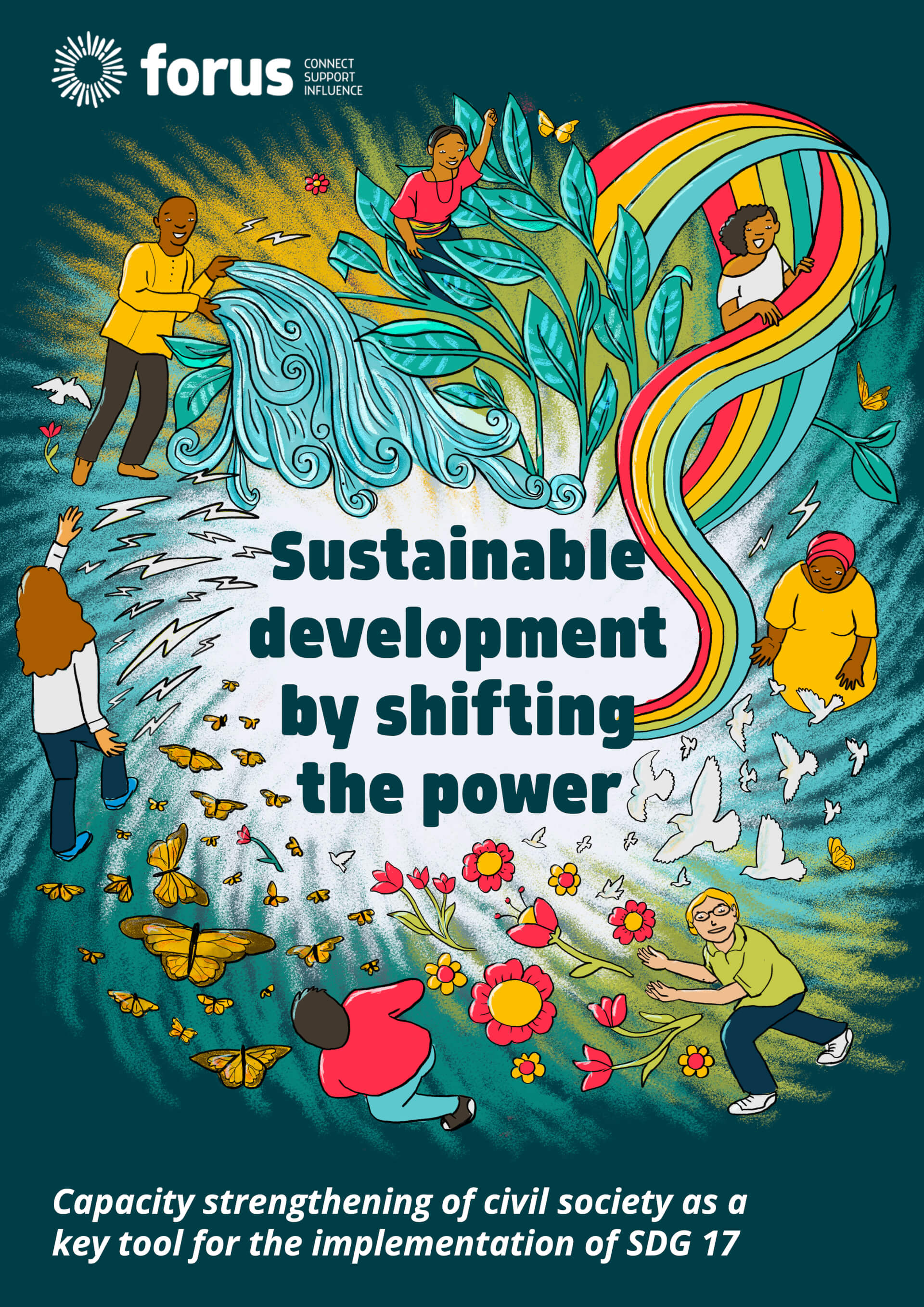
Sustainable Development by Shifting the Power: Capacity Strengthening of Civil Society as a Key Tool for the Implementation of SDG 17Developed collaboratively with 14 national and regional CSO platforms, this report provides an analysis of the transformative potential of capacity-strengthening initiatives for civil society and a review of its representation in the 2022 Voluntary National Reviews (VNRs). With a focus on changing power dynamics, ensuring localization, and decolonizing practices, the report underscores the pivotal role that civil society organizations can play in delivering the Sustainable Development Goals (SDGs) when appropriately supported.
Thu 31 Dec 2020
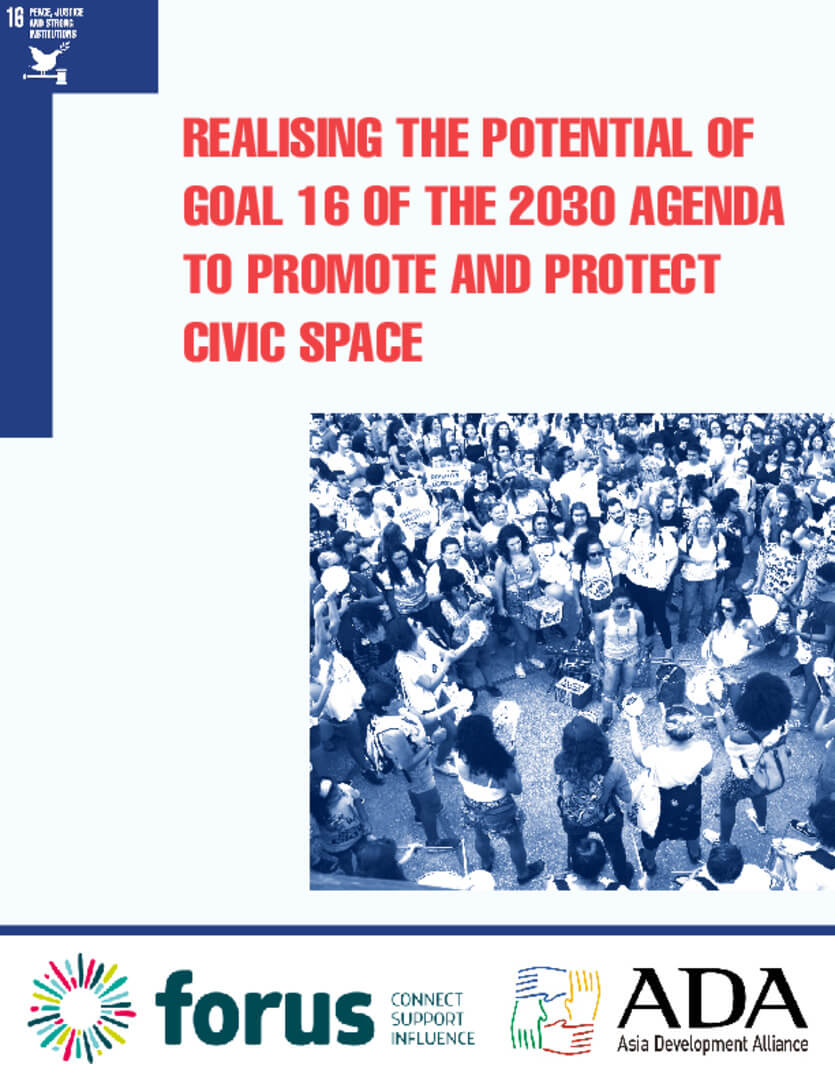
Realizing the potential of Goal 16 to promote and protect civic spaceCivil society will face significant challenges in fulfilling the role it has been mandated by the 2030 Agenda without access to adequate civic space, and an enabling environment in which to operate. Current research suggests that civil society in over half of the countries of the world is facing serious restrictions on its freedom to engage, express itself and be heard. This report based on 18 case studies raises the awareness of members of the potential of Goal 16 of the 2030 Agenda to be used as a lever for creating greater political space for civil society, and to enable it to contribute more effectively to monitoring and implementing the 2030 Agenda. Finally the results of these case studies are likely to contribute to the development of new civic space indicators which will measure the efforts of UN Member States to “protect fundamental freedoms” in accordance with international human rights standards and national human rights laws.
Forus Publication
/ Forus in the media