










Thu 9 Jul 2026
From evidence to influence civil society claims its place in South-South and triangular cooperation
As governments gather in New York for the 2026 UN High-Level Political Forum (HLPF), Forus is bringing a clear message to the table: South-South and triangular cooperation will only deliver on its promise if civil society is recognized, resourced and included from the start.
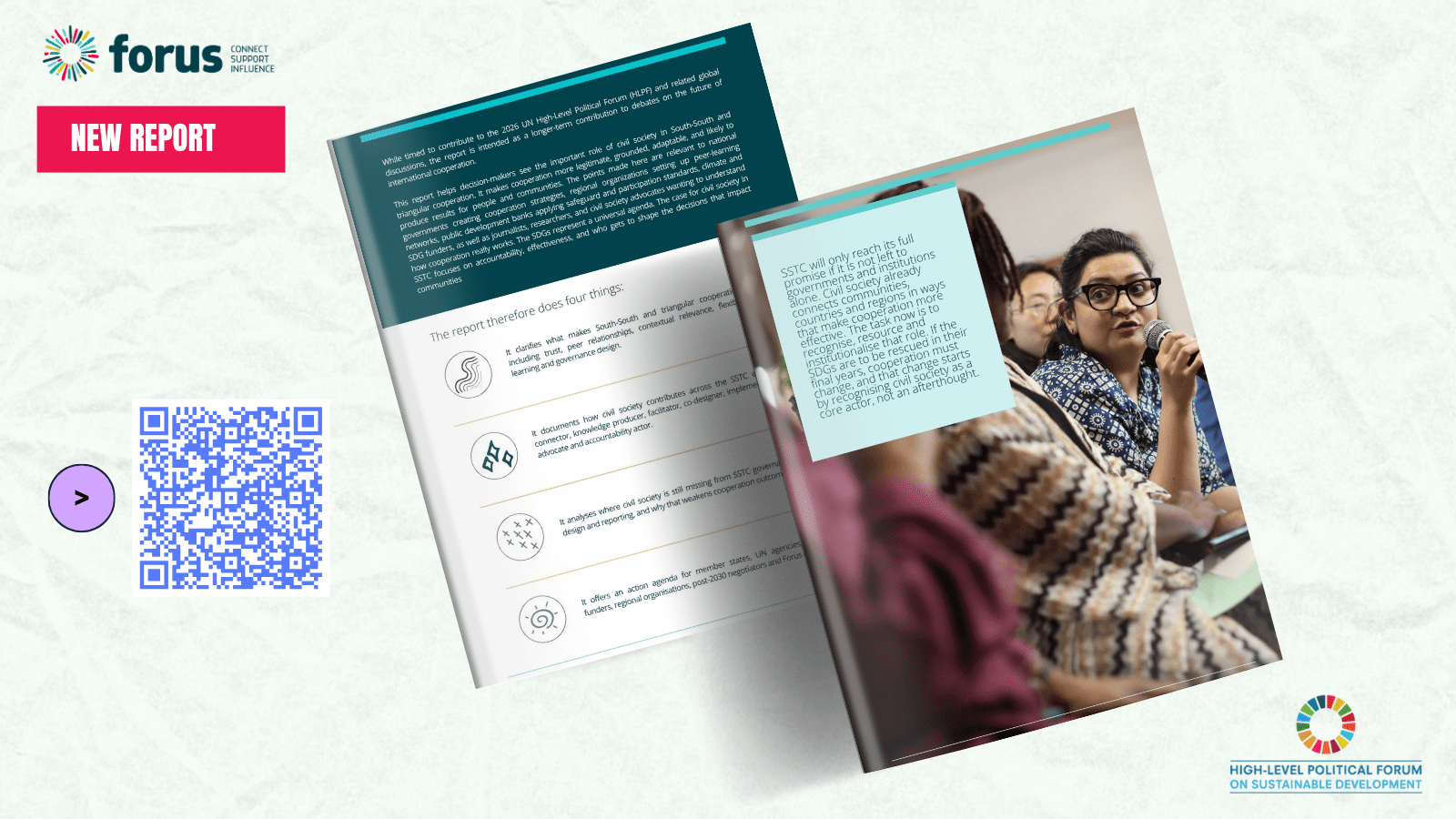
Forus launched its new global report "Cooperation That Works: Civil Society in South-South and Triangular Cooperation" in a virtual side event on 7 July, marking the opening of the HLPF 2026. The launch brought together the Forus network and partners from across regions to highlight how civil society is already shaping South-South and triangular cooperation — often without being formally recognized by the systems it helps strengthen.
The timing is critical. With the 2030 Agenda entering its final years, SDG 17 under review this year, and global cooperation facing deep political and financial pressures, the report makes a simple but powerful argument: civil society is already cooperating across borders — not waiting for permission — sharing knowledge, building solidarity, supporting communities and connecting local realities to global debates. The challenge now is to make this work recognized, financed, and institutionalized.
Drawing on 26 case studies from five regions, the report shows how national platforms and civil society networks are advancing peer learning, technical exchange, community accountability and regional solidarity. From inclusive SDG monitoring in Senegal, to regional knowledge-sharing across the Pacific, to institutionalized civil society participation in Korea, the evidence is clear: civil society is not a side actor in South-South and triangular cooperation. It is one of the conditions for its success.
But the report also shows what happens when communities and civil society are excluded. The ProSAVANA case in Mozambique — a triangular cooperation initiative involving Brazil, Mozambique and Japan — illustrates the risks of designing cooperation without meaningful participation from the people most affected. When local concerns, land rights and community realities are ignored, trust erodes and cooperation itself becomes weaker.
Forus’ message is therefore not only about inclusion as a principle. It is about effectiveness, accountability, and sustainability.
During the launch, speakers from Brazil, India, China, Ethiopia and the Democratic Republic of Congo shared concrete experiences of civil society-led cooperation, while also pointing to persistent gaps in governance, financing and political recognition.
Henrique Frota, Executive Director of ABONG (Brazilian Association of NGOs) in Brazil, stressed that the issue is not whether civil society has knowledge to contribute. The real question is whether cooperation systems are ready to listen from the beginning — before decisions are made and before projects are designed :
"The question isn't whether civil society can provide evidence or knowledge to help governments design better programs. That's not the question. The question is whether those government infrastructures are ready to hear from us from the very beginning."
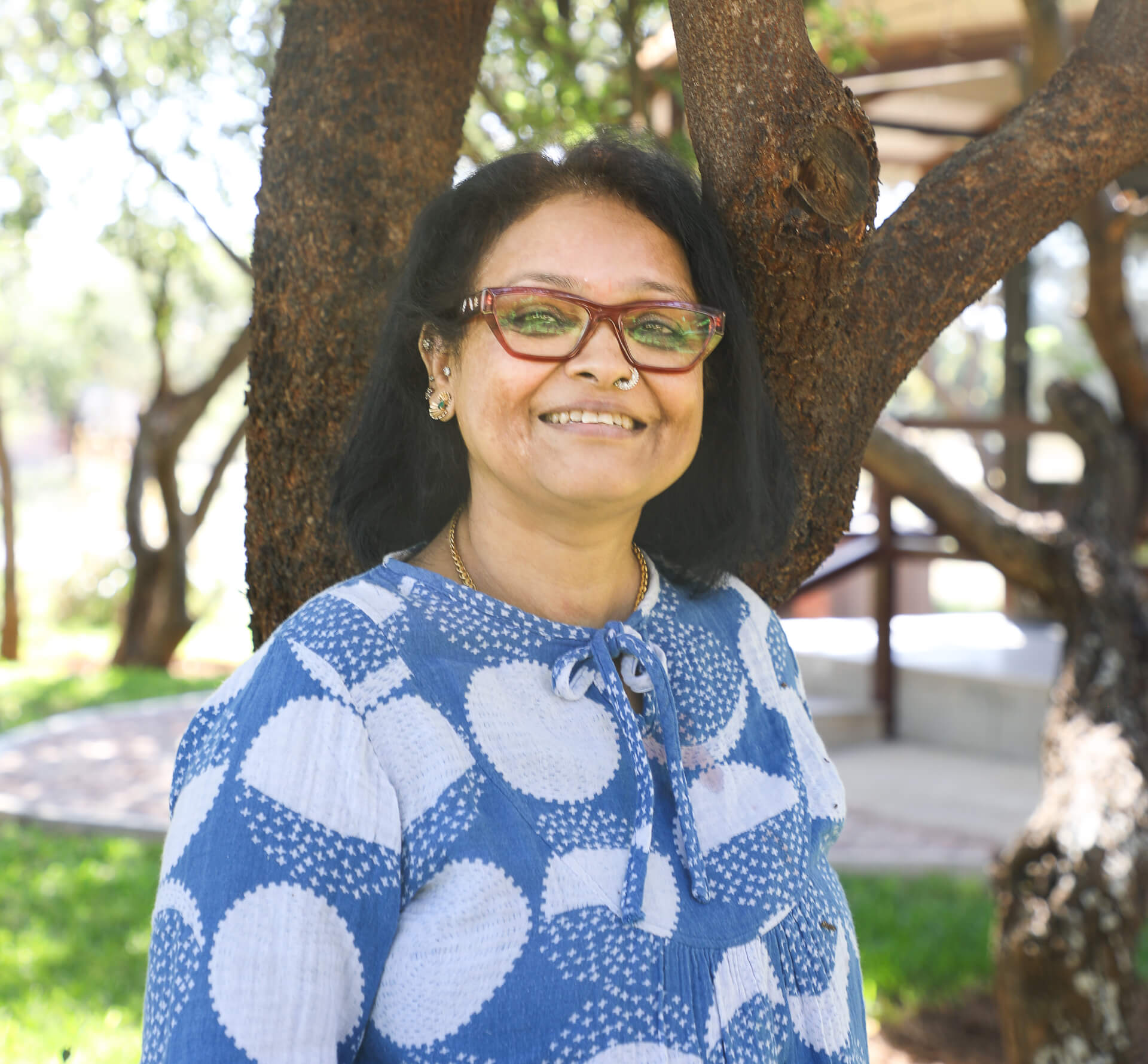
Harsh Jaitli, Chief Executive Officer of VANI (Voluntary Action Network India), highlighted the importance of civil society building its own spaces for South-South exchange, rather than relying only on government-led platforms.
Wang Xiangyi from CANGO representative (China Association for NGO Cooperation) called for more formal mechanisms to bring civil society into South-South and triangular cooperation decision-making.
Other speakers pointed to practical solutions already being tested across the Forus network. Sale Getahun, from the Consortium of Christian Relief and Development Associations (CCRDA) in Ethiopia, d shared how peer-to-peer cooperation between civil society platforms can support more locally owned and flexible approaches. Rigo Gene, from CNONGD (Conseil National des ONG de Développement) in the Democratic Republic of Congo, emphasized that South-South cooperation must go beyond economic exchange and translate into concrete development outcomes for communities.
Across the discussion, one message came clearly: civil society is already doing the work. What is missing is the political and financial architecture to recognize it.
Ahead of today’s HLPF discussions in New York, Forus is calling for five concrete shifts:
-
South-South and triangular cooperation must be adapted to national, regional and local contexts — not copied or imposed from one setting to another.
-
The formal inclusion of civil society in SSTC governance must become the norm, not the exception.
-
Civil society-led peer learning must be recognized as a real form of cooperation and supported with dedicated resources.
-
SSTC governance must become more transparent, participatory, and accountable.
-
The future post-2030 development framework should learn from the strengths of South-South cooperation — especially horizontality, mutual learning and solidarity — while also addressing its political tensions and power imbalances.
For Forus, this report is not only a research contribution. It is part of a broader advocacy effort to ensure that civil society, especially national platforms and regional coalitions, has a stronger voice in the future of international cooperation.
As HLPF debates continue in New York, the report offers both evidence and a call to action: civil society must not be treated as an afterthought in cooperation systems. It must be recognized as a strategic partner, a source of accountability, and a driver of more inclusive, grounded, and effective development.
Civil society is already helping with cooperation work. It is time for institutions to recognize, finance, and build on that leadership.
Download the full report, here. Share it with their communities and join the conversations that will continue throughout the HLPF in New York. Find more information on how to join here!