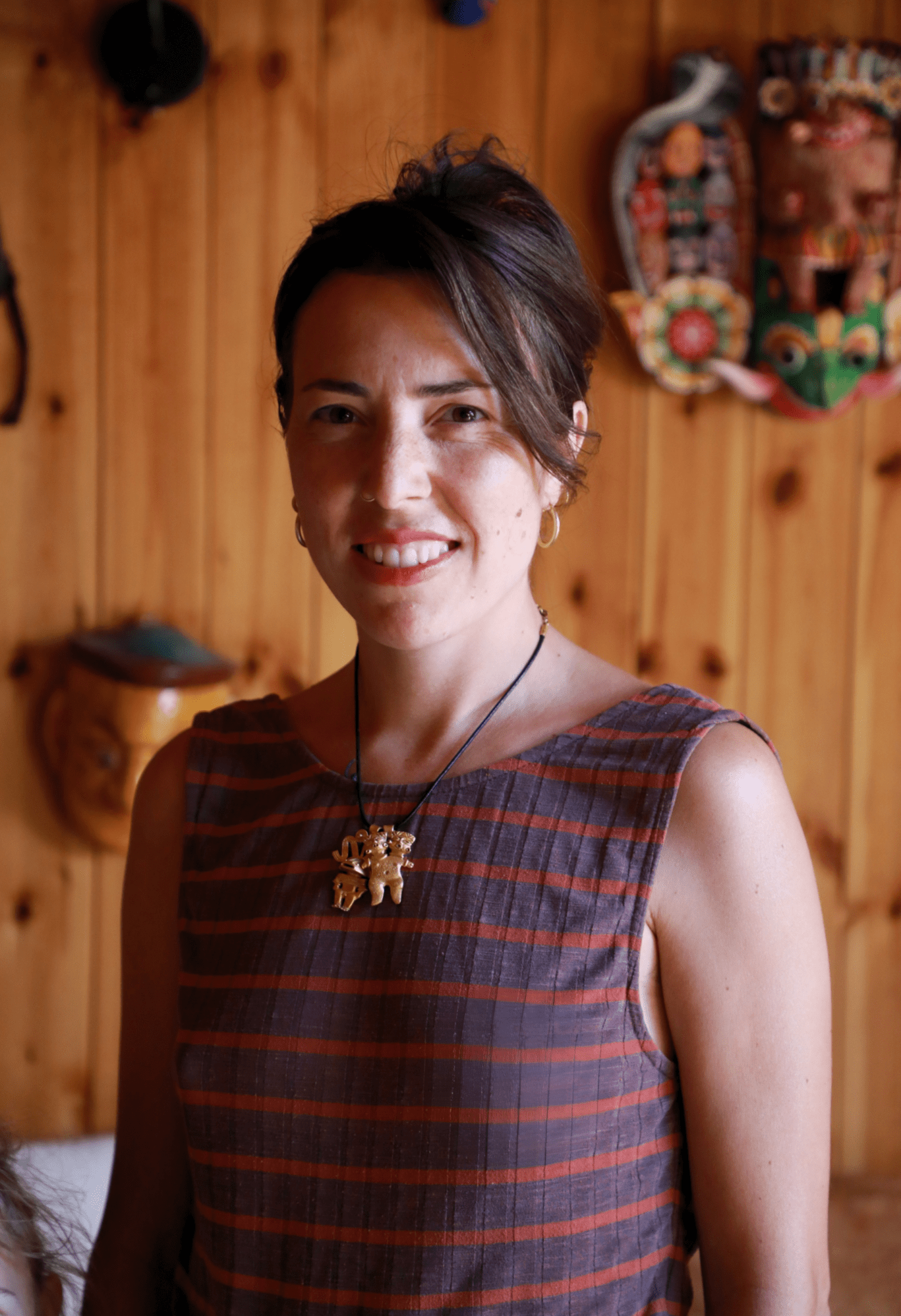
Bibbi Abruzzini
Belgium
Coordinatrice de la communication et des campagnes
Bibbi est la coordinatrice de la communication de Forus. Elle a rejoint l'équipe en 2020 (italien, anglais, français, népalais et espagnol). Outre son rôle au sein de Forus, Bibbi est également documentariste et cofondatrice de Both Nomads, un collectif multimédia créatif spécialisé dans l'utilisation de techniques documentaires, de pratiques participatives, de technologies émergentes et de principes issus du journalisme de solutions. Avant de rejoindre Forus, Bibbi a travaillé pendant plus de 8 ans pour ZoominTV et diverses agences de presse en Asie du Sud, au Liban, en Belgique, aux États-Unis et en Colombie. Ses compétences en tant que créatrice et éditrice multimédia ont été développées au cours de ses années en tant que correspondante au Népal, au bureau de l'UNESCO à Katmandou, et en tant que vidéographe à l'Institut pour le développement humain en Arizona. L'expérience professionnelle de Bibbi s'étend à des organisations telles que la délégation de l'UE au Népal, l'unité audiovisuelle du Parlement européen, le Forum européen de la jeunesse et TedX Brussels.
/ Articles et actualités
jeu. 22 oct. 2026
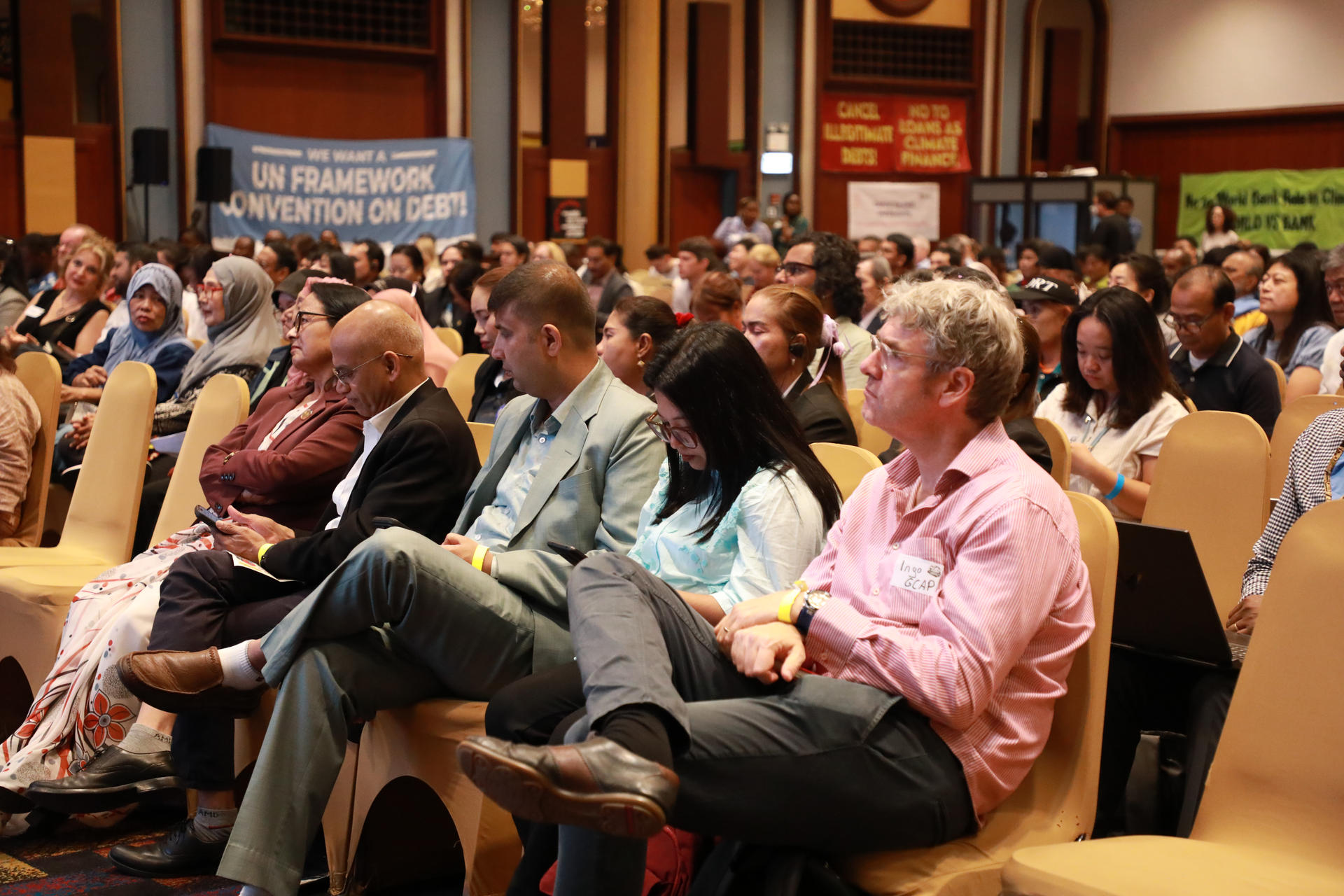
Au-delà des salles de réunion : ceux qui s'interrogent sur les véritables bénéficiaires du financement du développement lors des Assemblées annuelles 2026 du FMI et de la Banque mondialeInfluence

mer. 7 oct. 2026
#NousSommesForus - Série de podcasts « Quand les mouvements se rencontrent »Connect - Influence - Support
/ Podcasts
mer. 30 sept. 2026
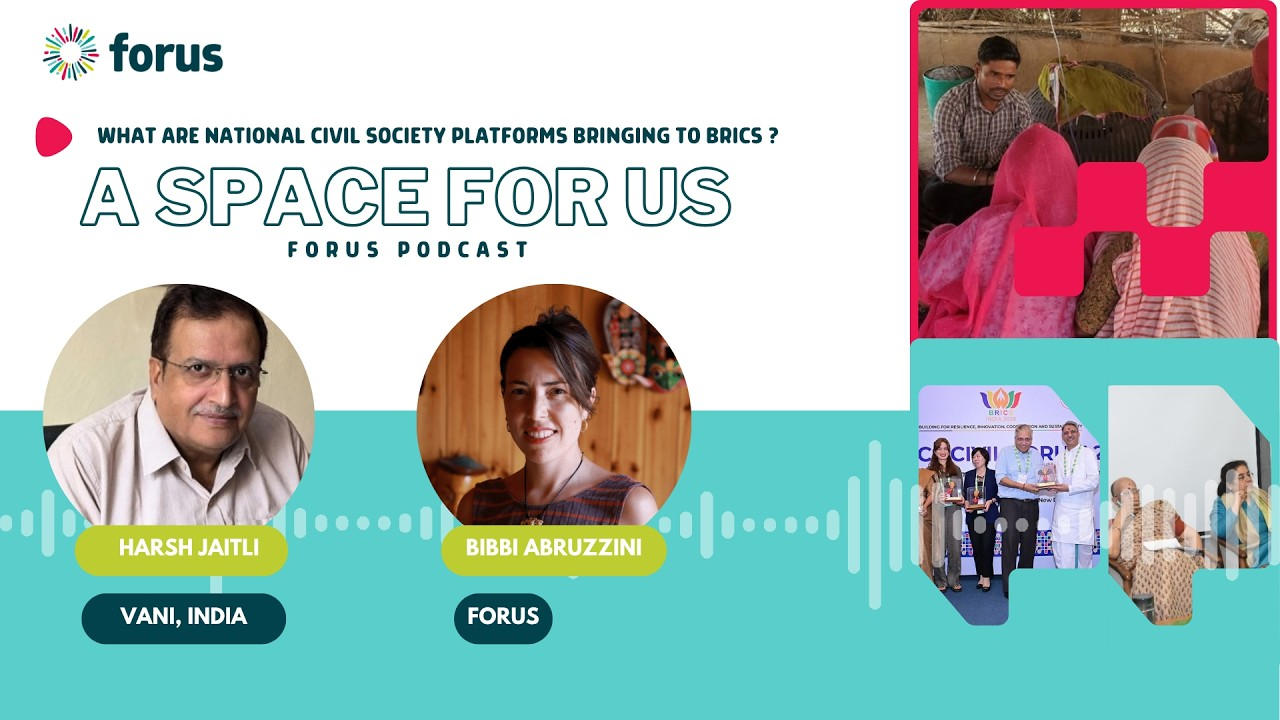
#WeAreForus - What are national civil society platforms Bringing to BRICS? A conversation with VANI.
Welcome to a new episode of A Space for Us, the Forus podcast with National Civil Society platforms & regional coalitions who are part of our network and their allies. In this episode, we’re looking at the key conversations and ideas that emerged from the Civil BRICS Forum 2026 in New Delhi, where civil society leaders and policymakers came together to discuss how development can become more inclusive, resilient and locally led. We’re joined by Harsh Jaitli, CEO of VANI in India who brought important perspectives to these conversations. We’ll hear from Harsh about what stood out at the Forum, what civil society is calling for, and what it will take to turn commitments around localisation, participation and people-centred development into practice. Learn more about VANI: https://vaniindia.org/ Listen to more episodes: https://www.forus-international.org/en/a-space-for-us Host: Bibbi Abruzzini, Forus.
mar. 29 sept. 2026
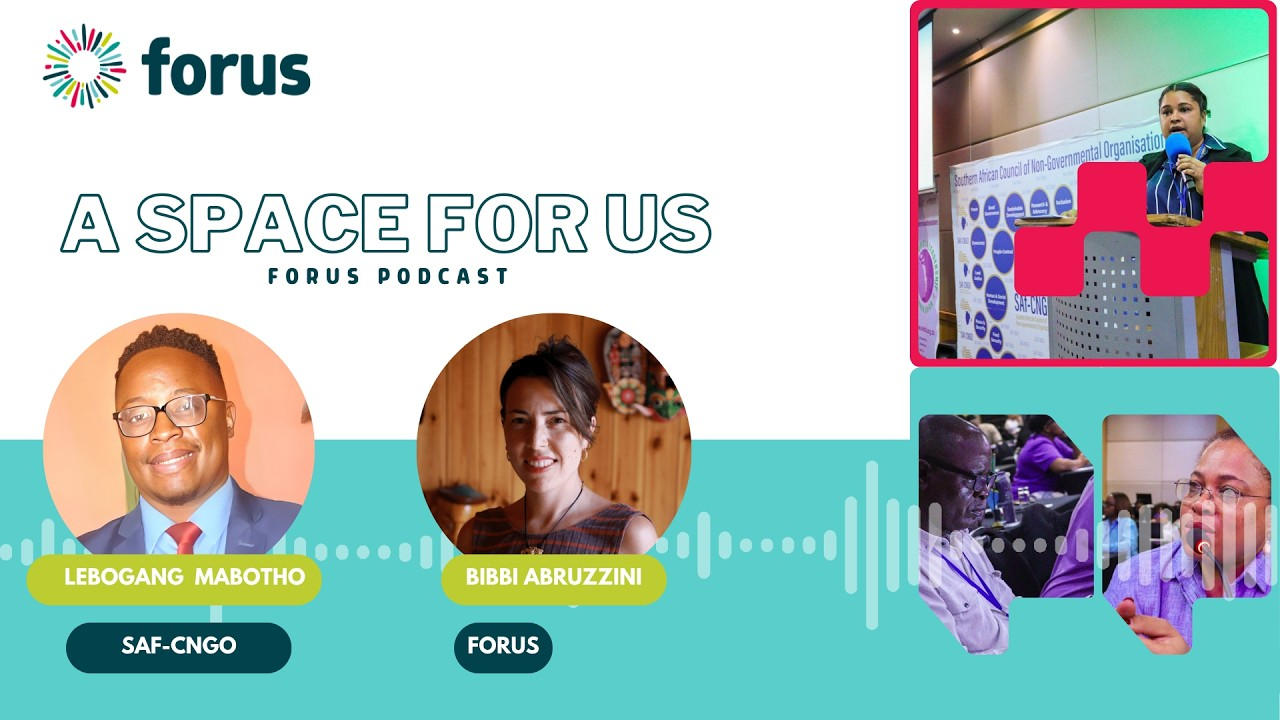
#WeAreForus - Who gets to shape the rules of development finance? A conversation with SAf-CNGO.
How can communities have greater say over the rules that shape their development? And what does it mean for Africa to move from being a “rule-taker to a rule-maker"? In this episode of A Space for Us, Forus series with National Civil Society Platforms and Regional Coalitions as well as their partners, we speak with Lebogang Kenneth Mabotho, Executive Director of the Southern African Council of Non-Governmental Organisations (SAf-CNGO), about debt, accountability and the role of civil society platforms in shaping development finance. Following his participation as a speaker at 6th African Conference on Debt and Development, AFRODAD’s annual flagship conference bringing together African and international stakeholders to discuss debt, development finance and reform of the global financial architecture, Lebogang will share his reflections on the role of parliaments, citizens and civil society in how debt is legislated, managed and scrutinised, and on what greater African ownership of development financing could look like. Together today, we also explore the role of regional coalitions, and how national civil society platforms across Southern Africa are coming together to influence the decisions and systems that shape their futures – at both national and regional levels. Learn more about the work of SAf-CNGO: https://saf-cngo.org/ Find more episodes: https://www.forus-international.org/en/a-space-for-us
/ Forus dans les médias