

Mon 9 Nov 2026
From commitments to action: seven priorities for a stronger enabling environment for civil society
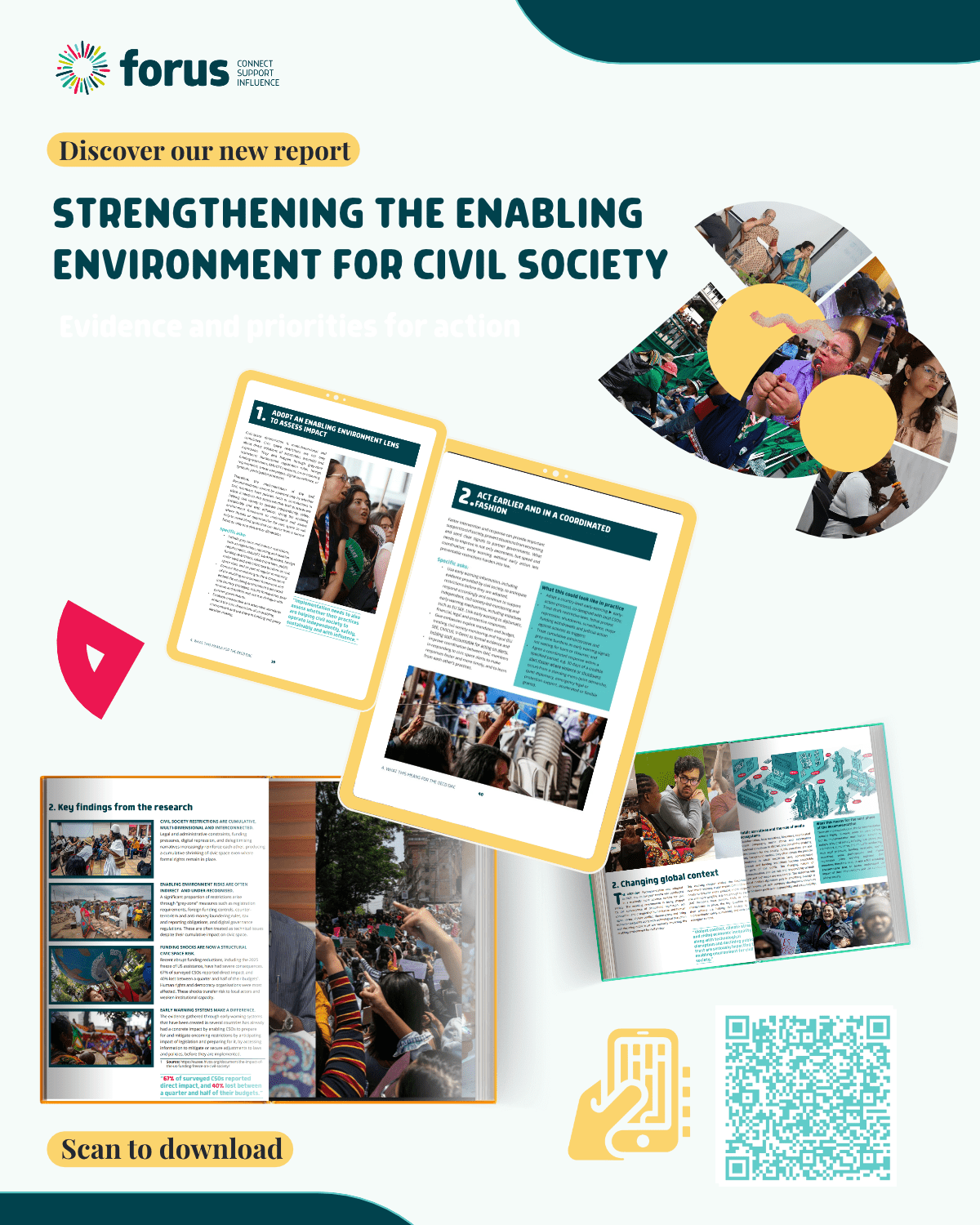
Strengthening the Enabling Environment for Civil Society - Evidence and Priorities for Action
Grounded in consultations with Forus members and regional coalitions, a multilingual survey, a final validation workshop, EU System for an Enabling Environment for Civil Society monitoring across 86 countries, and wider civil society evidence assembled for the OECD-DAC five-year review, find the Forus perspective on the next stage of implementation for the OECD-DAC Recommendation on Enabling Civil Society.
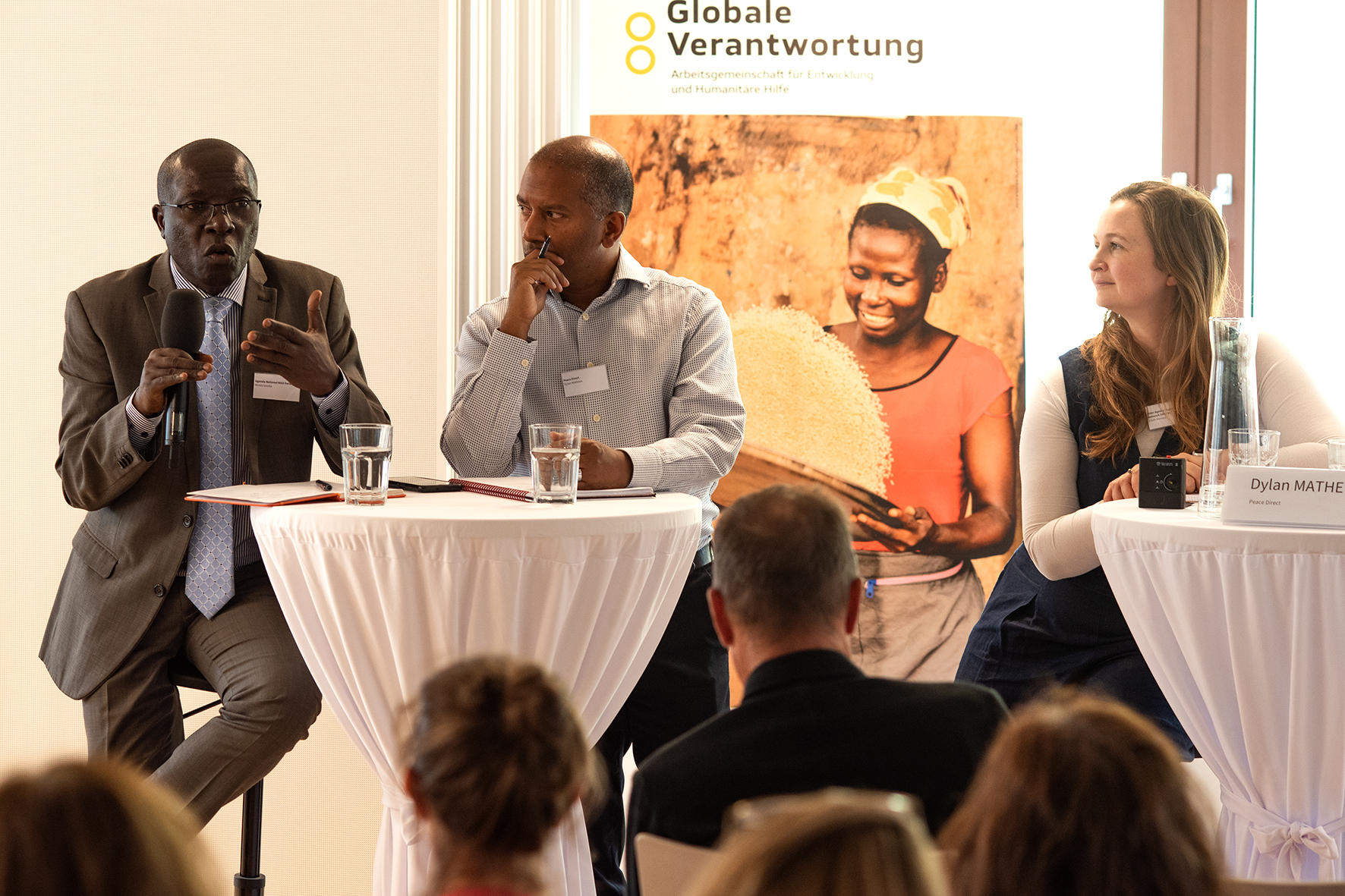
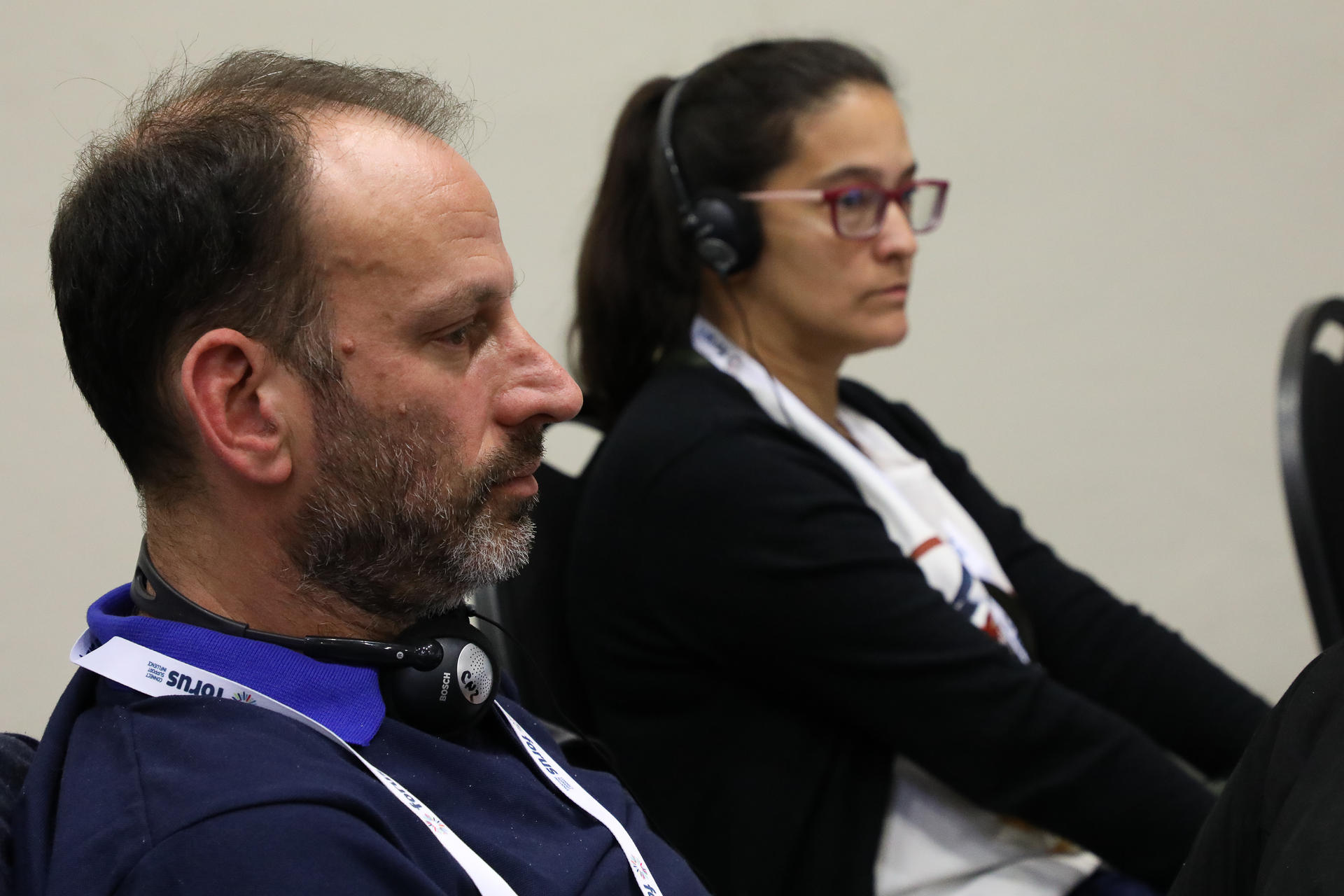
On 29 October, Forus launched its report, Strengthening the Enabling Environment for Civil Society: Evidence and Priorities for Action, in a global discussion bringing together national NGO platforms, regional coalitions, representatives of the OECD-DAC and development cooperation institutions, foundations and civil society partners.
Together, we explored a shared challenge: how can we translate commitments to enabling civil society into meaningful action?
The central message was clear: supportive policies and formal commitments matter, but they are are not enough. An enabling environment is measured by whether civil society can organise safely, act independently, access sustainable resources and influence decisions — and whether partners respond when civic space comes under pressure.
The launch connected the report’s evidence and recommendations with national experiences and a practical discussion about what governments, development partners, civil society and other funders can do next.
Key findings and priorities from the report
1. The implementation gap is the central challenge
Developed by researchers Mónica Sánchez de Ocaña and Nicole Walshe, the Forus report draws on consultations across our global network, member surveys and wider civil society evidence, including EU SEE monitoring from more than 86 countries, and wider civil society evidence collected through the OECD-DAC Civil Society Reference Group.
The report's central finding is that pressures on civil society are increasing, overlapping and evolving faster than responses. Legal and administrative restrictions, funding shocks, digital repression and hostile narratives increasingly reinforce one another, weakening civil society's ability to operate safely, independently and effectively.
The research examines these pressures across six interconnected dimensions of an enabling environment: fundamental freedoms; legal and regulatory frameworks; resources and funding; the responsiveness of states; public discourse and narratives; and the digital environment. Looking across all six shows how measures that may appear routine can cumulatively restrict civic space.
Nicole Walshe stressed that restrictions do not always take the form of explicit attacks on civic freedoms. Registration requirements, banking rules, transparency obligations, public order regulations and cyber laws can be used to constrain organisations and operate in the "grey zones"— often before the cumulative impact is recognised and addressed.
Funding cuts not only a threat to individual projects. In 2025, 26 of 34 DAC members reduced their ODA, sharpening the funding squeeze on civil society. Funding cuts weaken monitoring, advocacy, coalitions and networks, while eroding the protective relationships that help civil society challenge power. As Nicole put it, “Without the resourcing, there is no civil society.”
The report treats digital repression as a core civic space issue, not a technical add-on. “Digital repression is a core accelerator of civic space restrictions,” Nicole stressed, pointing to online harassment, surveillance, shutdowns and attacks that spill over into the offline world, w putting people at risk and limiting organisations’ ability to work.
Formal consultation spaces do not necessarily translate into influence. The test is whether civil society's contributions shape policies, priorities and outcomes. As Nicole underlined: “It's important to measure participation by influence, not by attendance.”
The report sets out seven priorities for DAC members and development partners:
- Assess the real impact of policies through a comprehensive enabling environment lens. Look beyond individual restrictions and understand how different pressures interact and impact civil society's ability to operate safely, independently, sustainably and with influence .
- Move from early warning systems to earlier, more coordinated action. Local alerts from civil society actors should trigger timely responses through diplomatic, legal, protection and funding channels.
- Invest in sustainable civil society funding. Provide predictable, flexible, multi-year core support; make advocacy fundable; apply proportionate compliance; manage funding cuts and exits responsibly; and resource platforms and coalitions as civic infrastructure.
- Treat digital repression as a core civic space issue. Address surveillance, shutdowns, platform restrictions and misuse of cyber laws through political engagement, digital security, legal defence and rights-based digital governance.
- Strengthen narratives that recognise and protect civil society. Challenge hostile narratives that undermine the legitimacy of organisations and activists. Use public diplomacy and sustained narrative work to recognise civil society’s role in development, humanitarian response, democracy and accountability, and counter delegitimisation and defamation.
- Measure civil society participation by influence, safety and inclusion — not simply attendance. Assess whether whether civil society contributions actually shapes decisions, budgets and policies, and whether participation is safe and inclusive.
- Strengthen policy coherence across development cooperation, foreign affairs, security, trade and other areas. Avoid commitments in one policy area being undermined by decisions in another.
2. National experiences show why implementation matters
Colleagues from three Forus national civil society platforms in Uganda, Venezuela and Morocco showed how these pressures play out in different contexts — and why national civil society organisations and platforms need partners to respond to the realities they face.
Uganda – Chris Nkwatsibwe (UNNGOF)
Chris highlighted the weakening of the political and institutional consensus that once recognised independent civil society as an essential part of democratic governance and development.
In Uganda, he described how organisations can comply with the legal framework governing NGOs and still face operational restrictions, including decisions taken by security agencies or intelligence bodies. He also pointed to the growing securitisation of civic life and the fragmentation of institutional authority.
He also cautioned against treating the current crisis as just replacing lost funding. The more important question, he argued, is what kind of financing can enable civil society to remain independent and continue working in restrictive environments.
Chris called for predictable, multi-institutional financing, but also for organisations to have reserves that allow them to withstand political pressure and financial shocks. He stressed the importance of domestic resources and alternative forms of ownership that give civil society greater independence from accusations of foreign influence.
National platforms, he argued, have a particularly important role to play in building this collective infrastructure: not only monitoring funding trends, but strengthening locally owned and locally controlled organisations and networks that can challenge decisions and hold governments accountable.
He also made three concrete recommendations for development partners:
- Proactive action. Responses to deteriorating civic space should be coordinated and timely, rather than fragmented or limited to expressions of concern after restrictions have already taken hold.
- Protect collective institutional capacity. Abrupt donor exits can leave organisations fragile and undermine the civic agency and public accountability that civil society provides.
- Reaffirm the political commitment behind enabling civil society. Donors and partners need to defend the principles that underpin independent civil society, including when these commitments become politically difficult.
Looking ahead, Chris challenged to think beyond how civil society can survive the current crisis: “We need to start examining what kind of civil society will emerge from this crisis” and whether organisations, national platforms and partners are equipped to support new forms of collective action that can thrive even in constrained civic environments.
Venezuela – Luisa Rodríguez Táriba (Sinergia)
Luisa described how civic space restrictions in Venezuela have accumulated over nearly three decades. Her intervention traced a gradual shift: from attempts to control and supervise the funding received by civil society organisations to increasingly restrictive regulatory measures and pressure that makes it harder for organisations to operate.
She also highlighted the consequences of shrinking international funding. As resources become scarcer, organisations face greater difficulties maintaining teams and sustaining the work needed to defend civic space. The reduction in international support has also affected organisations responding to Venezuela's complex humanitarian emergency, with the limited funding that remains increasingly concentrated on humanitarian needs.
For Luisa, this creates a difficult situation in which civil society must respond to multiple pressures at once. She described the impact of economic, political, emotional and geopolitical factors on organisations' ability to continue working, and the need to understand how these different forces interact.
Her intervention also contained an important reflection on the way civil society responds to restrictions. She acknowledged that organisations have often had opportunities to improve their approaches, but that responses can become too reactive. Her message was that civil society needs to understand the different interests and forces shaping civic space — not only those of the government, but also wider economic and political interests, both inside and outside the country.
This calls for greater strategic thinking, stronger coordination and the ability to learn from previous experiences. It also means finding ways to sustain organisations that provide essential social and humanitarian support while continuing to defend democratic participation and the possibility of future democratic recovery.
“The most important thing is people,” she shared.
Despite the difficult circumstances, Luisa emphasised that Venezuelan civil society has accumulated valuable experience and lessons that could be shared with organisations elsewhere. She closed with a simple but powerful reminder:
Her contribution also underlined the importance of national platforms such as Sinergia in connecting organisations, sharing learning and helping civil society adapt to a changing environment. The challenge is not to find one formula for working in restrictive contexts, but to develop strategies that respond to the realities organisations face while keeping people's needs at the centre.
Morocco – Latifa Soufiani (Espace Associatif)
Latifa focused on the gap between legal guarantees and administrative practice. In Morocco, the legal framework governing associations is based on freedom of association and a declarative registration system. Under the law, authorities should issue a provisional receipt immediately after an association submits its declaration, followed by a definitive receipt within a maximum of 60 days.
In practice, however, some local authorities refuse to accept associations' legally submitted files or fail to issue the required documentation. Latifa described this as a gap between what the law guarantees and how administrative procedures are implemented at local level.
Without a definitive receipt, associations can face difficulties opening or updating bank accounts, signing partnership agreements, accessing public and international funding, proving the legal status of their representatives and participating in certain spaces and services.
As Latifa explained, “The non-issuance of a definitive receipt can turn legal recognition into an effective obstacle to associative action.”
She stressed that when associations cannot obtain the documentation they are legally entitled to, their ability to operate, access resources and participate in public life is undermined.
Latifa also highlighted how donor requirements can unintentionally reinforce these barriers. Many funding institutions require a definitive receipt as a compulsory document when assessing an organisation's eligibility. This means that associations can be excluded from funding opportunities because of administrative delays or refusals for which they are not responsible.
She therefore called on donors, financial institutions and international partners to adapt their procedures. In particular, she recommended that the absence of a definitive receipt should not automatically disqualify an association if it can provide evidence that its complete legal file has been submitted to the authorities.
She also proposed that partnership agreements include alternative provisions, particularly for organisations that have already worked with the donor. Such measures would allow partners to continue cooperating with associations while respecting the legal framework and avoiding the unintended consequences of administrative obstruction.
“We are not only defending our own organisational interests. We are defending a broader principle: an administration that respects the law, and citizens who enjoy equal rights when dealing with public services.”
3. Turning shared commitments into practical implementation
The second part of the discussion brought together Carla Musi and Matilde Ferretti from the OECD's Development Co-operation Directorate, Brian Tomlinson from the DAC-CSO Reference Group, and David Kode from EU SEE, in a panel moderated by Akio Takayanagi of JANIC, Japan.
The OECD Secretariat highlighted the strong convergence between the official five-year review of the DAC Recommendation and the findings of the Forus report report — creating a shared basis for the next phase of implementation.
Matilde Ferretti explained that the five-year review identified two distinct phases of implementation, including stronger recognition of civil society, more targeted support for marginalised groups, wider use of civic-space risk assessments and some advances in flexible, multi-year funding. In 2025, ODA cuts, shifting priorities and growing restrictions slowed or even reversed some of the progress already made.
She also highlighted persistent gaps: the share of ODA allocated to partner-country CSOs rose from 7% in 2020 to 10% in 2024, but most funding still goes to provider-country or international organisations. Dialogue with civil society remains ad hoc, with few feedback loops and insufficient reach to partner-country organisations.
Carla Musi stressed that the priority now is implementation. The OECD's Community of Practice on Enabling Civil Society would meet again at the end of November to look at the findings from a forward-looking perspective, discuss how DAC members can advance the priorities and explore what additional tools or materials could support implementation.
She also called for a wider conversation involving non-DAC members to include non-DAC development providers, philanthropy, the private sector, and, particularly, civil society organisations and networks in partner countries.
Brian Tomlinson underlined the importance of the DAC as a space for setting shared norms and reviewing how members put them into practice. However, he stressed that the OECD-DAC itself does not implement the Recommendation. Its role is to provide a space for dialogue, peer learning and accountability. “Really the action happens at country level,” he explained, both in donor countries and in partner countries.
Brian also warned that the current funding crisis reflects a deeper shift in the purpose of development cooperation. “It's not just that we're having less money. We're having less money for fundamentally different purposes.”
As aid is increasingly used to pursue foreign policy, economic, trade and investment interests, he argued, civil society and development partners need to consider how to defend independent action as political priorities shift.
Brian called for stronger links between civil society networks in donor and partner countries to identify practical entry points, build alliances and generate political momentum for the enabling-environment agenda.
David Kode shared emerging findings from EU SEE research on the effects of funding cuts, drawing on around 800 civil society organisations.
He stressed that the crisis extends beyond lost funding: it is also eroding trust, relationships, organisational autonomy and civil society’s ability to influence decisions. He pointed to more burdensome funding and compliance processes, less flexible funding and less core support, and short-term coping strategies that are not sustainable. He urged donors to use existing early-warning evidence, provide faster and more flexible in-country grants and bridge funding, protect independent voices and communicate funding changes early. “The crisis facing civil society at the moment is more than a decline in funding. It entails an erosion of relationships. There's an issue where trust is broken.”
This reinforces the need to rebuild the relationships that allow civil society to operate independently, engage with institutions and influence decisions. Monitoring and evidence are essential, but they need to lead to dialogue, coordinated responses and practical changes in the way development partners work with civil society.
Together, the panel highlighted several opportunities for the next phase of implementation:
- Use the DAC Community of Practice to turn recommendations into action. The upcoming discussions on 30 November–1 December 2026 offer an opportunity for DAC members to identify practical steps and exchange experiences.
- Strengthen country-level engagement. Civil society networks, national platforms and development partners need to work together where policies and funding decisions are implemented.
- Connect monitoring with political and practical responses. Evidence of restrictions should help trigger earlier action, rather than simply document deterioration after the fact.
- Improve donor practices and relationships. Funding should support independent organisations, collective infrastructure and locally led action, rather than create dependency or undermine trust.
- Bring more actors into the conversation. Non-DAC development providers, philanthropic organisations, the private sector and partner-country civil society all have a role to play.
4. An enabling environment must be experienced in practice
Closing the event, Marie L'Hostis, Forus' Director of Programmes and Advocacy, highlighted three reflections.
First, the official OECD-DAC five-year review and independent civil society evidence reinforce one another. Together, they provide a stronger basis for dialogue and coordinated action.
Second, implementation needs to be experienced in practice. As Marie must be visible in the everyday conditions in which civil society works:
“An enabling environment is not simply the existence of a supportive policy. It is being able to register without unnecessary obstacles, access resources without compromising independence, speak and organise safely and meaningfully, influence decisions that affect communities — and knowing that when risks emerge there are institutions and partners willing and able to respond.”
Finally, there are channels to take this work forward: the DAC Community of Practice, continued DAC–civil society dialogue, country-level engagement and the work already underway across civil society networks. Forus and its members are ready to contribute evidence, convene dialogue and support collective learning and action.
Next steps: taking the conversation forward
Forus will continue bringing bring the report’s findings and our members' perspectives into dialogue with DAC members and other development partners, including through the upcoming DAC Community of Practice meetings on 30 November–1 December 2026.
Looking further ahead, the OECD Civil Society Days in June 2027 will offer another opportunity to advance joint reflections on implementation and bring a broader range of stakeholders into the discussion.
Civil society colleagues interested in contributing are encouraged to engage with the DAC-CSO Reference Group's Working Group on Enabling Environment. Feel free to contact us if you'd like to learn more.
Forus is also developing a practical guide for public development banks on how they can support an enabling environment for civil society. The forthcoming publication will build on the report’s wider message: protecting civic space requires action across the development cooperation ecosystem.
We'd love to expand this work with you! Please reach out if you'd like to explore how the report's recommendations could inform your work, share relevant resources or discuss opportunities for collaboration.
Key resources
Forus report: Strengthening the Enabling Environment for Civil Society
- OECD-DAC official five-year implementation review, and abridged version created by the OECD-DAC Civil Society Working Group on Enabling Environment.