© NGO Forum on ABD
©Marcha pela Democracia - Midia Ninja


Wed 14 Oct 2026
Why civil society networks matter more than ever: lessons from Sam Worthington’s Wellington keynote
What happens when the assumptions that have underpinned international development cooperation for decades can no longer be taken for granted? And what does this mean for international NGOs, civil society and the networks that connect them?
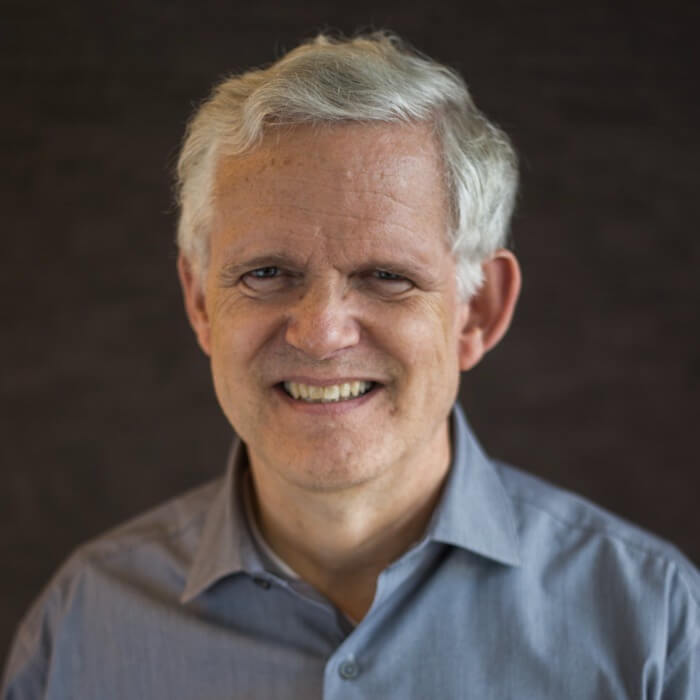
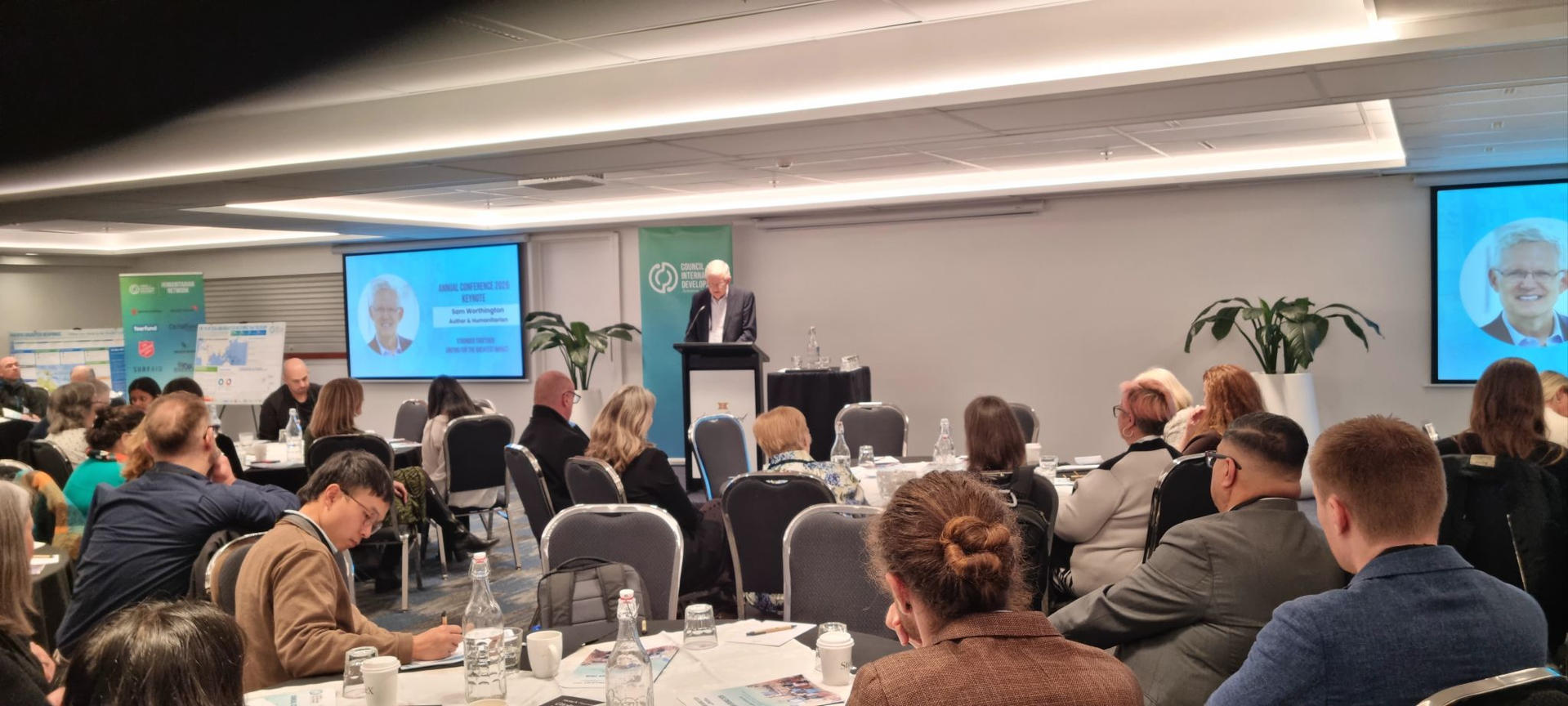
These were among the questions raised by Sam Worthington, Forus senior fellow, former CEO of InterAction and a leading voice on the future of international NGOs, in a keynote delivered at the Forus member Council for International Development (CID) Annual Conference under the theme "Stronger Together: Uniting for the Greatest Impact", which took place on September 9th and 10th in Wellington, New Zealand.
Under the title “Collaboration and the Evolving Role of International NGOs in an Era of Democratic Retreat,” Worthington reflected on the profound changes facing the international NGO sector following the dismantling of USAID and the wider retreat from international cooperation in the United States. But his message went well beyond the US context.
His keynote asks international NGOs and civil society organisations everywhere to reconsider some of the assumptions on which their institutions have been built and to prepare for a world of shrinking civic space, growing political pressure, more transactional international cooperation and increasing uncertainty around traditional funding models.
For Forus, this echoes many of our areas of action: how can civil society protect its space to act, shift power towards locally rooted organisations, strengthen collective influence and build more resilient organisations and networks?
From survival to resilience
Worthington begins from a stark observation about the experience of US NGOs following the dismantling of USAID.
“Fear replaced confidence,” he says. NGO leaders who had once asked “How do we change the world?” were increasingly asking “How will we survive?”
But he argues that resilience does not simply mean surviving the next funding crisis.
The challenge is much deeper: international NGOs need to reconsider their values, roles and identity in a changing political environment. Traditional assumptions about government partnerships, funding and international cooperation can no longer be treated as permanent.
As Forus members operate in increasingly complex and contested environments, building resilient civil society becomes about protecting the ability of organisations to organise, advocate, participate and hold power accountable.
As Worthington puts it later in his keynote: “Resilience is not the same as survival.”
Shift power to locally rooted partners
One of Worthington's three proposed transformations for international NGOs is to “shift power to locally rooted partners.”
He argues that the future role of international NGOs should increasingly be that of “facilitator, connector, advocate, investor, and partner”, rather than implementing programmes themselves.
This connects directly with the growing movement for locally led development and with Forus' work to strengthen National Civil Society Platforms and the wider ecosystems in which local organisations operate.
Worthington makes an important distinction: “Localization is fundamentally about power, not projects.”
Changing who implements a project is not enough if the fundamental decisions about priorities, resources, governance and accountability remain elsewhere.
Instead, he calls for approaches that allow community partners to become “co-creators”, with greater influence over governance, leadership and decision-making.
Civil society needs a collective voice
The second transformation Worthington proposes is “Use your voice and build collective power.”
For him, this means international NGOs need to see themselves not only as service providers or development organisations, but as civic actors.
He makes a clear distinction between being non-partisan and being values-neutral: “Nonpartisanship does not mean that you are values neutral.”
He calls on NGOs to remain principled advocates for the SDGs, democracy, human rights, humanitarian law and the rule of law, while defending the rights of local partners to organise and speak out.
Worthington makes this point particularly clearly towards the end of the keynote: “If people cannot organize, journalists cannot report, communities cannot challenge power, and organizations cannot advocate, every development gain becomes more fragile.”
Forus has been working with evidence and monitoring with its members to link civic space and an enabling environment with development. It is part of the infrastructure that makes inclusive, accountable and sustainable development possible.
Networks are strategic infrastructure
Worthington also turned to the importance of networks.
“Networks or platforms like InterAction, CID, and Forus are strategic infrastructure that can drive change, and they are essential for collective influence.”
Forus was created precisely around this idea: that National Civil Society Platforms can achieve greater influence by connecting across borders, sharing knowledge, building collective positions and acting together.
Worthington argues that “in an era of institutional retreat, networks are investments that leverage your voice and collective power. They are not an overhead cost.”
This is particularly relevant at a time when civil society is facing pressures that cross national boundaries, from shrinking civic space and restrictions on funding to democratic backsliding, misinformation, inequality and the changing architecture of development cooperation. No single organisation can respond to all of these challenges alone and collective action is itself a form of resilience.
Funding architecture is political architecture
Another of Worthington's central arguments concerns the relationship between funding and independence.
He warns that “funding architecture eventually becomes political architecture.” When too much of an organisation's income depends on a single government, its ability to challenge that government can become increasingly constrained.
For Worthington, diversification is part of protecting civic independence.
His argument also reinforces the importance of investing in civil society institutions themselves, not only in individual projects or services. In his closing questions to the sector, he asks:
“Are you willing to invest in civil society itself, including your own? Not only projects. Not only services. But the institutions that allow citizens to organize, advocate, and solve problems together.”
Preparing for an uncertain future
Worthington ultimately challenges the sector to stop waiting for a return to an earlier version of the international development system.
“The institutional model that shaped the golden age of international NGOs is ending,” he argues.
The response, he suggests, is transformation where international NGOs need to shift power, use their voice and build resilience.
For Forus, these transformations reinforce the importance of building a strong and connected civil society ecosystem: one where local and national organisations have greater influence, where platforms can amplify collective voices, and where networks can help organisations navigate an increasingly challenging environment.
It also raises a question that is central to Forus' work:
What kind of civil society infrastructure do we need to ensure that people can continue to organise, participate and influence the decisions that affect their lives?
A “prisoner of hope”
Worthington closes his keynote with a powerful reflection on the role of hope in uncertain times.
After almost four decades working alongside civil society organisations around the world, he returns to a simple observation: “Ordinary people, working together, continue to shape history.”
For him, this is a discipline — “the determination to build a better future even when today’s headlines suggest otherwise.”
And ultimately, he argues, the future of international NGOs will not be decided only in donor capitals.
“The future of international NGOs will not be determined in Washington, London, Brussels, or any donor capital. It will be determined in communities, through networks, and by organizations like yours, willing to evolve and stand together.”
Read the full keynote
Sam Worthington's full keynote, “Collaboration and the Evolving Role of International NGOs in an Era of Democratic Retreat,” was delivered at the Council for International Development in Wellington on 9 September 2026. Read the full keynote below.
Wed 14 Oct 2026
Other Resources
Collaboration and the Evolving Role of International NGOs in an Era of Democratic Retreat - Sam Worthington - CID Conference