
Thu 22 Oct 2026
Beyond the meeting rooms: The people asking who development finance really serves at the 2026 IMF–World Bank Annual Meetings
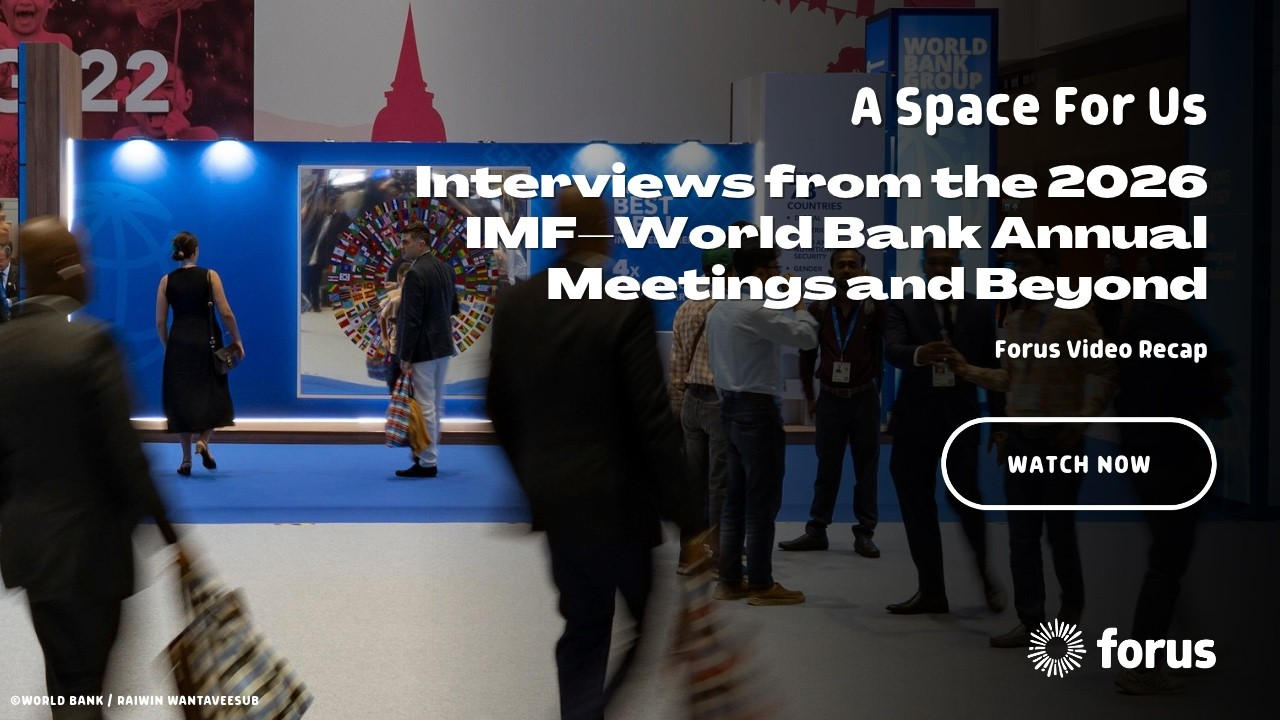
From debt and climate justice to feminist alternatives and young people’s futures, civil society organisations and social movements in Bangkok are challenging global financial institutions to look beyond economic figures and listen to the people living with the consequences of their decisions. Through a series of interviews and impressions live from Bangkok, this article explores Forus’s participation in the 2026 IMF–World Bank Annual Meetings and how the questions raised outside the meeting rooms connected with discussions taking place inside.
Who gets to shape the global economy? And what do decisions made by international financial institutions mean for the people who will live with their consequences?
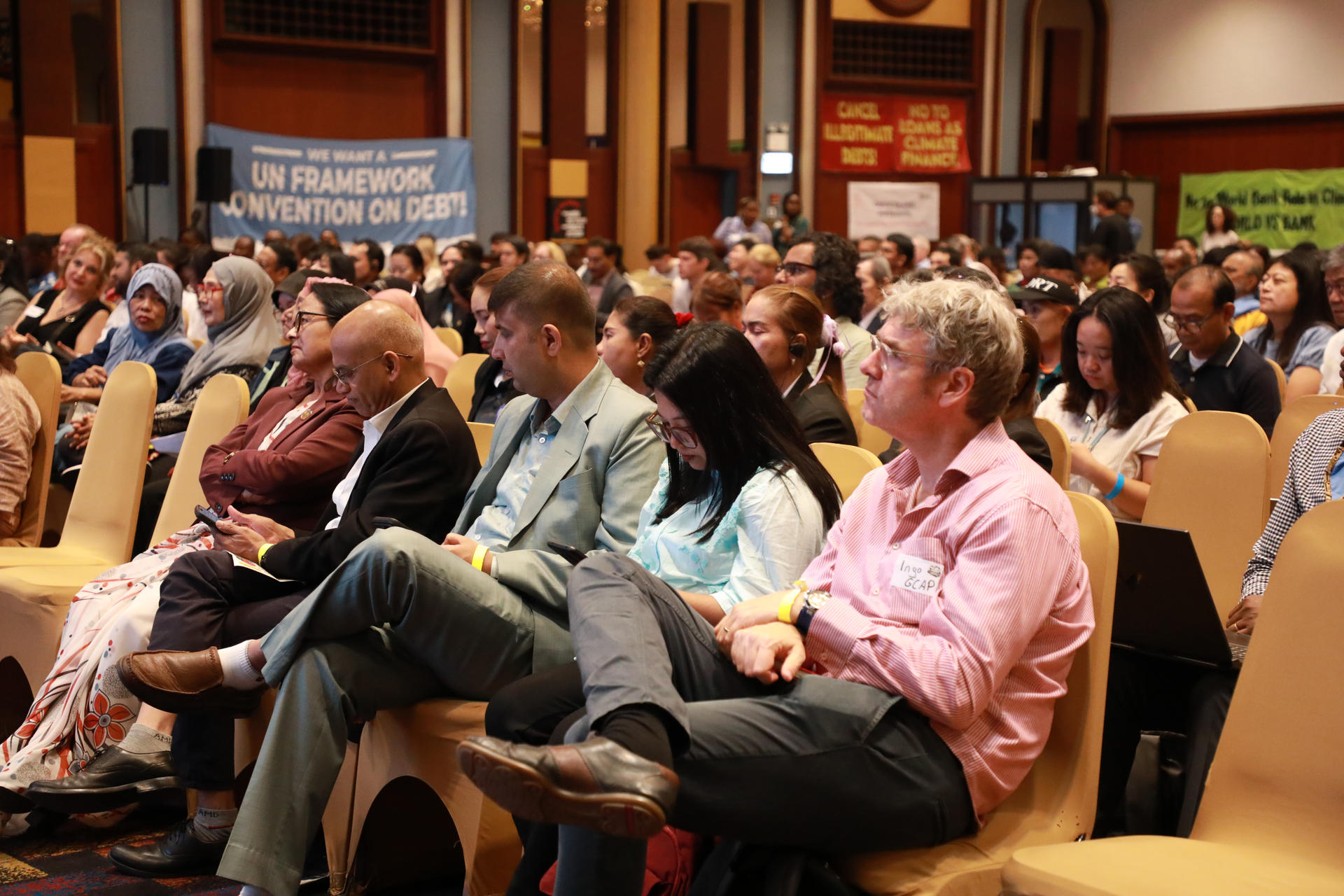
At the 2026 Annual Meetings of the International Monetary Fund (IMF) and the World Bank Group, held in Bangkok from 12 to 18 October, these questions echoed far beyond the conference halls. Across the city, civil society organisations, feminist movements, farmers, community representatives and young activists organised assemblies, public discussions and demonstrations to challenge the economic policies shaping their lives.
While government officials and financial leaders gathered to discuss global growth, investment and development, movements brought a different perspective: one centred on debt burdens, shrinking public resources, environmental destruction, gender inequality and the right of communities to shape their own futures.
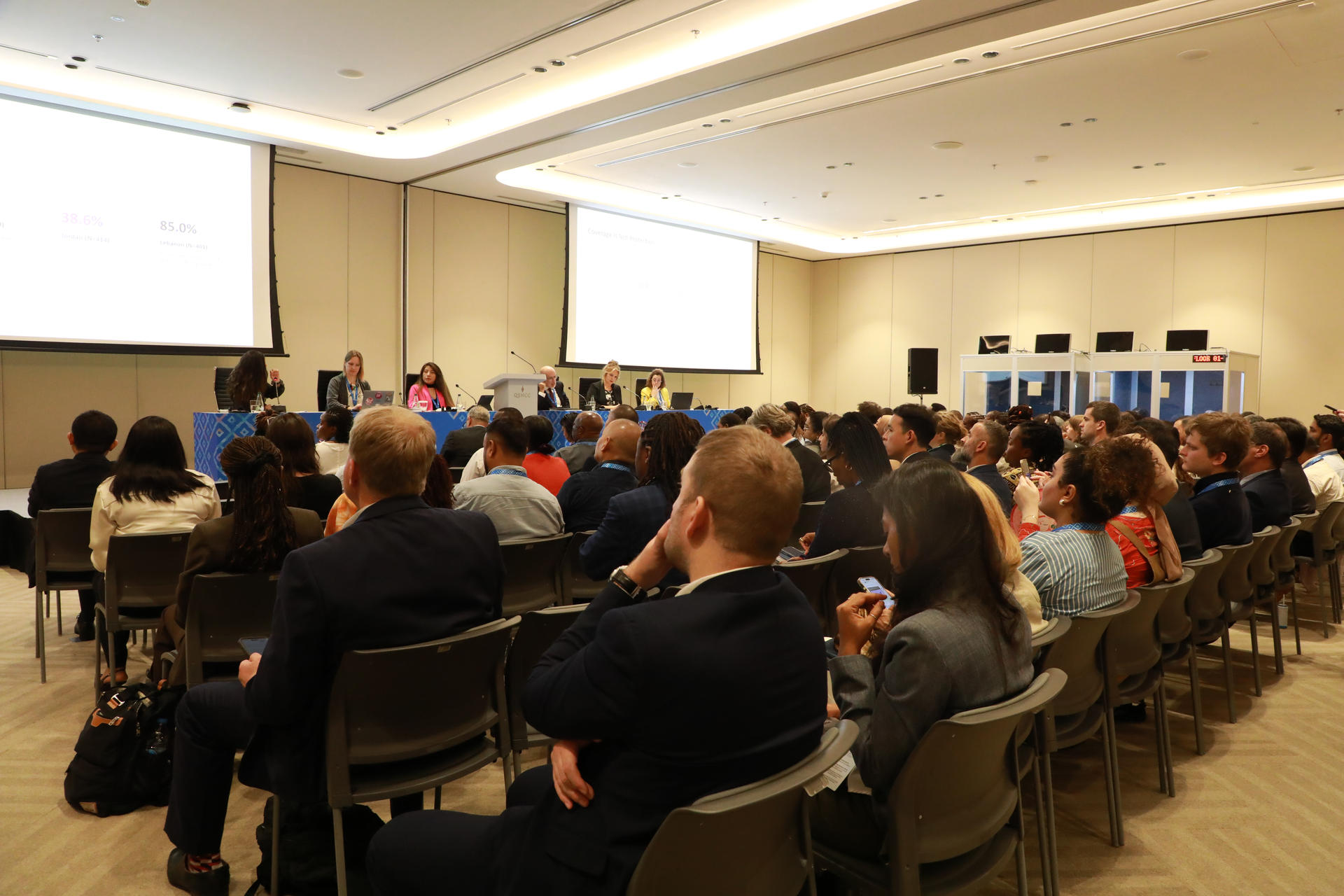
Several members and partners of the Forus network also participated in and organised sessions at the official Civil Society Policy Forum (CSPF), connecting local and regional experiences with global debates on development finance.
When debt takes resources away from people
For civil society, the impact of international financial institutions is not an abstract debate about economic indicators. Fiscal policies, debt repayments and government spending priorities directly affect the resources available for healthcare, education, social protection and gender justice.
As Zahra Bazzi, Programmes Director of Forus member the Arab NGO Network for Development (ANND), explains, civil society organisations working on social rights and youth participation repeatedly encounter the same obstacle: governments saying they lack the resources to act.
“Here comes the role of international financial institutions which are imposing and influencing policy choices on our governments and then limiting the fiscal space for social protection and social rights.”
Civil society organisations in the Arab region are working to engage the IMF and World Bank in policy dialogue, recognising how their decisions influence national priorities.
The question of debt becomes even more urgent when viewed from the perspective of countries struggling to finance essential services.
Juliet Nangamba, representing Akina Mama wa Afrika, makes a direct appeal to international financial institutions:
“My main message to the IMF and World Bank is that they should cancel the colonial debt that our countries in Africa are repaying for long periods of time because it is taking away resources from fundamental sectors like health, education, agriculture, and it is taking away resources from investing in people's needs.”
These concerns were echoed across Bangkok during the International People's Assembly, . Bringing together more than 120 national, regional and global organisations, networks and people's movements, the Assembly connected local struggles with collective strategies for economic, social and climate justice.
Coordinated by the Asian Peoples' Movement on Debt and Development (APMDD), with the Global Call to Action Against Poverty (GCAP) and Forus member Janic (Japan) among its international steering group members, the Assembly provided a space to challenge the international financial architecture and advance alternatives that put people and the planet before profit.
Discussions addressed climate finance, debt, taxation, the impacts of militarisation, fiscal justice and international finance, including the need to challenge unequal power relations and strengthen democratic participation in economic decision-making.
Climate justice cannot be separated from debt justice
The climate crisis adds another dimension to these concerns. Countries facing increasingly severe climate impacts often have limited resources to respond, while debt repayments can further constrain investment in adaptation, resilient infrastructure and social protection. Nepal offers a stark example: the devastating Bhotekoshi–Trishuli floods of August 2026 and those that followed across the country, destroyed homes, roads, bridges and livelihoods, leaving communities facing a long and difficult recovery.
The Forus network alongside partners urged the UN General Assembly to formally declare a Global Climate Emergency with the purpose of raising global awareness of escalating climate impacts and mobilising unified, immediate action to scale up mitigation and adaptation efforts against future climate risks, to rapidly expand access to loss and damage funds and to stand in solidarity with vulnerable communities who are most affected, including through compensation. We further emphasised that effective climate responses must be grounded in the experiences and leadership of affected communities and supported by local civil society organisations, which play a critical role in preparedness, emergency response, recovery and resilience-building
As Arjun Bhattarai, President of Forus member the NGO Federation of Nepal (NFN), highlighted, recovery requires much more than immediate relief. NFN as a National Civil Society Platform has brought civil society organisations together to mobilise and discuss humanitarian assistance, accountability and coordination, while calling for stronger climate finance, disaster preparedness and locally led action. As ahred by Bhattarai, climate-vulnerable communities need sustained investment in prevention and recovery, as well as a meaningful role in decisions affecting their futures.
Arjun's key message is that development must start with people and greater attention to local realities. He says “We need to ensure the people agenda like social development agenda, humanitarian agenda. For that I think very important to now invest to the ground. Localise the agenda.”
For civil society organisations, localisation means more than delivering programmes closer to communities. It means ensuring that people affected by development policies can influence priorities, financing decisions and outcomes.
As campaigners from Debt for Climate have argued, “Debt is also a main driver of the ecological and climate crisis.”
The relationship between development finance and environmental harm was also visible in discussions about individual projects. As shared by community activists, in Thailand, the Pak Mun Hydroelectric Dam, supported by the World Bank, has long been associated with damage to river ecosystems and the loss of fishing livelihoods. Villagers affected by the project have called for compensation for the impacts on their communities. Over one hundred civil society organisations in Bangkok call on the World Bank to halt high risk hydropower investments such as the Pak Mun Hyrdoelectric Dam.
Climate and environmental justice require transparency, accountability and safeguards that protect communities and ecosystems, alongside accessible mechanisms for remedy when projects cause harm, such as those initiated by the Asia Indigenous Peoples Network on Extractive Industries and Energy (AIPNEE). AIPNEE is a regional network supporting Indigenous communities affected by extractive and energy projects. It documents human rights impacts, supports community advocacy and helps affected communities pursue complaints through national and international mechanisms such as those involved in Nepal's Pathivara cable car project. Indigenous Limbu (Yakthung) organisations have challenged the project in the sacred Mukkumlung mountain area, raising concerns about Indigenous consent, cultural heritage, forests and wildlife. The project involves an advisory role by the World Bank Group's International Finance Corporation (IFC), and a complaint was submitted to its accountability mechanism.
These struggles highlight a broader question of intergenerational justice: decisions about development, public spending and natural resources have consequences that extend far beyond the present. How can economic decisions made today be accountable to young people who will inherit their consequences?
The burden passed on to younger generations
In Pakistan, debt servicing and climate vulnerability are colliding with the needs of a young population.
“Our annual budget almost half of it goes into debt servicing. We are one of the most vulnerable countries to climate change and we contribute less than 1%,” says Mahnoor Rashid, representing Youth and Environment Europe.
Rashid then turns to the people who will live with the consequences of decisions being made today:
“The 67% of our population which is under 30 is for decades going to face the brunt of the decisions that are being made in these meetings by the people who might not be alive for when we are going to see major climate issues that we are already seeing anyways.”
For young activists, climate finance, public debt and access to essential services cannot be treated as separate policy issues. They are interconnected questions about whose futures are prioritised, who carries the costs of economic decisions and who has a say in shaping the alternatives.
Feminist alternatives to the global economic system
Alongside the International People's Assembly, the Feminist Festival of Resistance & Alternatives brought feminist movements, grassroots activists, researchers, artists, trade unions and social justice advocates together.
Co-organised by MENAFem Movement, IBON International, the Women's Environment and Development Organization (WEDO), the International Network for Economic, Social and Cultural Rights (ESCR-Net) and other partners, the Festival called for “Shifting the Power” and examined how debt, taxation, corporate power, extraction and global economic governance affect women and marginalised communities.
Sessions explored why international financial institutions are a feminist issue, the real costs of debt, the relationship between climate and debt, and alternatives to economic models that concentrate wealth and power.
Economic policies are not gender-neutral. Debt repayments and austerity measures can place additional pressure on public services and care systems, while women and marginalised communities frequently bear disproportionate responsibility for filling the gaps left by reduced public investment.
The Festival created space not only to criticise existing systems but also to develop feminist visions of economic justice grounded in care, solidarity, ecological sustainability and collective decision-making.
The wider programme of movement-led activities also included feminist learning spaces and initiatives documenting communities' experiences of international financial institutions.
Taking the demands to the streets
Public mobilisation was featured in the streets of Bangkok, where communities and social movements sought to make the consequences of international financial institutions' policies visible beyond the official meeting rooms. Thai civil society organisations, including the Thai NGOs-COD, alongside wider people's networks and international movements such as La Via Campesina, brought demands for economic and social justice into public spaces across the city.
The Global Week of Action, held from 12 to 16 October under the call “People rising for justice and liberation! Reclaim our rights and future from the IMF and World Bank”, connected local struggles with a broader international mobilisation.
La Via Campesina, a global movement representing millions of peasants and small-scale food producers, challenged the IMF and World Bank over their role in economic policies affecting farmers and rural communities. Its demands included cancelling the debts of farmers and ordinary people, increasing public revenue through corporate and wealth taxes, and democratising financial institutions.
At a press conference in Bangkok, representatives also highlighted the effects of agricultural policies that they said had contributed to farmers' indebtedness and land loss. Villagers affected by the Pak Mun Dam as mentioned above, raised concerns about the destruction of fishing livelihoods and called for compensation.
On 15 October, dozens of demonstrators marched towards the Annual Meetings venue, the Queen Sirikit National Convention Centre with a symbolic pink pig float and masks depicting political and financial leaders. At the press conference attended by Forus, protesters highlighted poverty, household debt, environmental degradation and climate-related hardships.
The following day, La Via Campesina and allied movements had planned a further march from Lumpini Park to the convention centre. Their stated intention was not to stop the meetings, but to make the grievances of affected communities heard.
Bringing civil society perspectives into the official discussions
Alongside these independent spaces and public mobilisations, the Civil Society Policy Forum offered opportunities for organisations to engage with representatives of the IMF and World Bank Group and raise concerns directly.
Several Forus members and partners participated in and organised sessions addressing the social, economic and environmental implications of development finance.
ANND contributed to discussions on jobs, development projects and social protection in the Arab region. Africa Japan Forum, member of Janic, brought perspectives on Health Works, sustainable health financing, universal health coverage and national health systems.
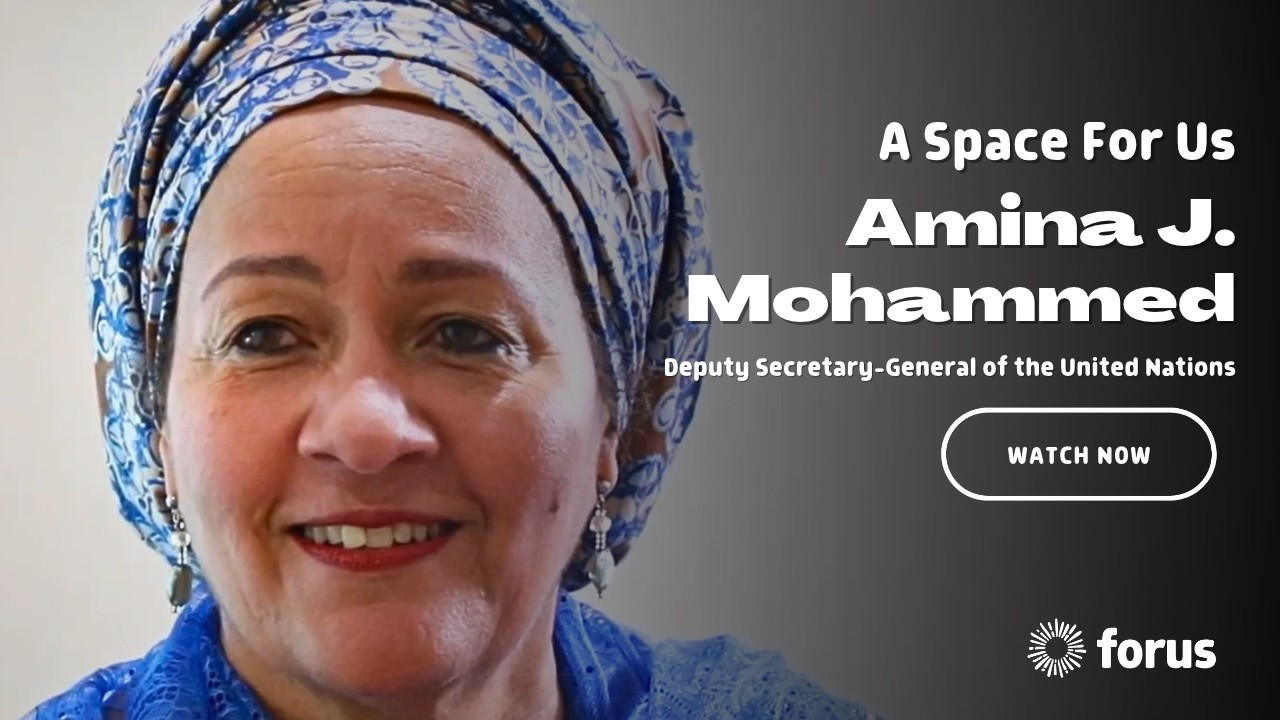
Forus also helped connect perspectives from across its network, including through an exclusive interview with Amina J. Mohammed, United Nations Deputy Secretary-General, conducted by Aoi Horiuchi, Senior Advocacy Officer at the Japan NGO Center for International Cooperation (JANIC) and Deputy Director of THINK Lobby, alongside Zahra Bazzi of ANND and the Forus team.
Mohammed stressed the importance of civil society voices in pushing for progress on issues where countries and regions are falling behind. She also highlighted the scale of resources needed to advance sustainable development, alongside the need to address debt and the cost of borrowing.
“Development will not happen without peace,” she said, connecting conflict with its consequences for communities, energy security and food security.
Her intervention reinforced the importance of viewing development finance within a wider picture of interconnected crises, where economic policy, peace, climate resilience and human wellbeing cannot be separated.
For organisations engaging with international financial institutions, however, participation in these discussions is only one part of the work.
As Zahra Bazzi reminds civil society organisations working on institutional advocacy: “The most important in this kind of advocacy is consistency.”
That consistency means continuing to monitor policies, follow up on recommendations and engage with the IMF and World Bank at national and regional levels long after the Annual Meetings have ended.
Beyond Bangkok: keeping the mic on
The meetings may have ended, but the questions raised across Bangkok remain.
Who benefits from development finance? Who bears the cost of debt and economic adjustment? How can climate and social justice be advanced when public resources are constrained? And how can communities gain real influence over decisions that affect their lives?
For the Forus network, this work is central to connecting national civil society platforms and regional coalitions with global policy debates. Their role is to bring the experiences of communities into spaces where economic and development priorities are shaped, while supporting members and partners to influence decisions in their own countries and regions.
The debates in Bangkok are only one part of a wider effort to reshape development finance. Looking ahead, the sixth Finance in Common Summit, taking place in Bangkok from 31 March to 2 April 2027, will bring together public development banks from around the world, alongside governments and civil society, to discuss their role in financing sustainable development. As the first edition hosted in Asia, it will offer another opportunity to push for greater transparency, accountability and meaningful civil society participation in investment decisions. Forus, which is the co-chair of the new Finance in Common PDB-CSO Coalition, will continue advocating for stronger links between public development banks and national civil society platforms, ensuring that communities’ priorities help shape the projects and policies affecting their lives. These discussions will remain critical across upcoming international economic and development forums.