

Thu 17 Sep 2026
AidWatch 2026: As ODA declines, who gets to shape the future of global cooperation and how?
AidWatch 2026
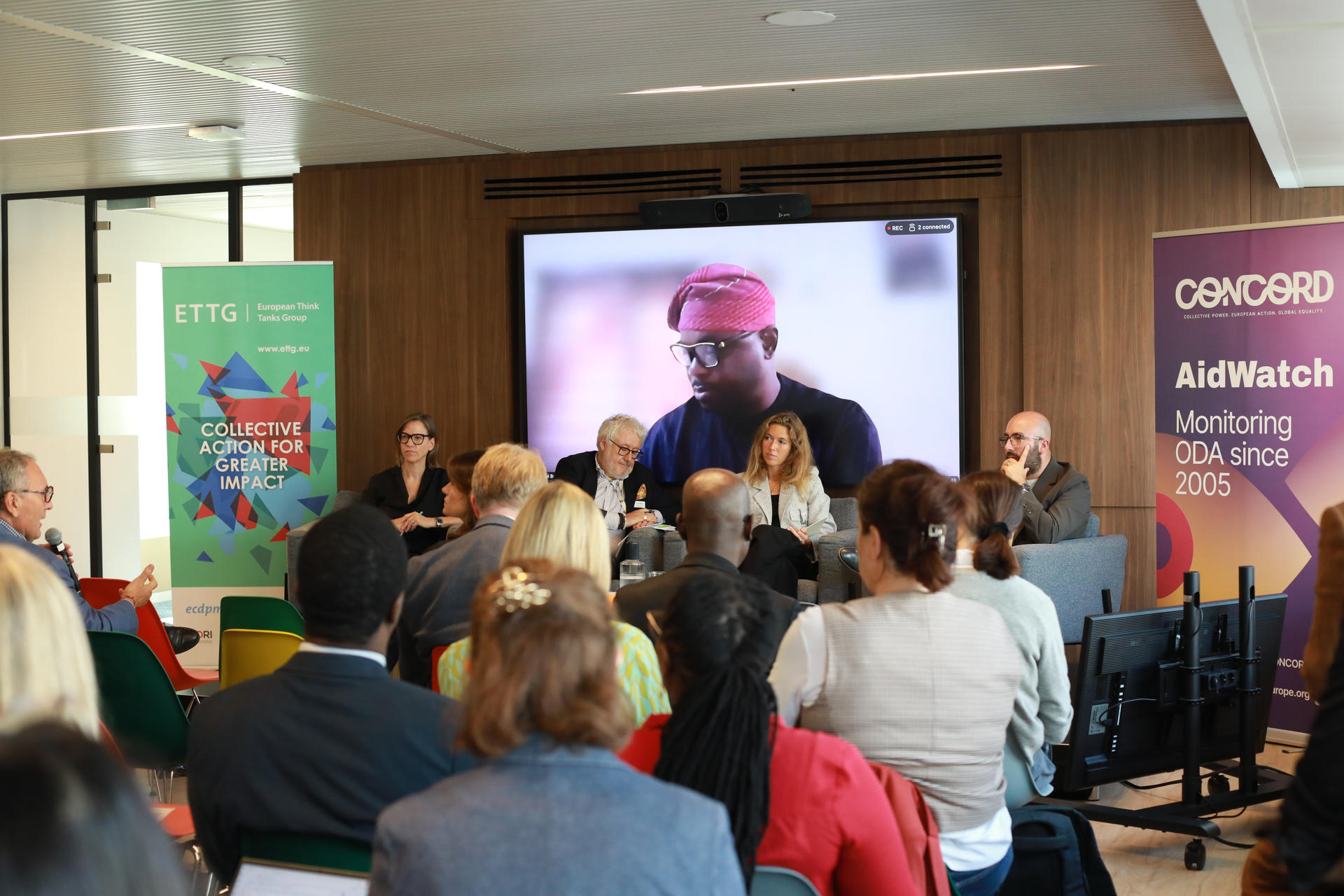
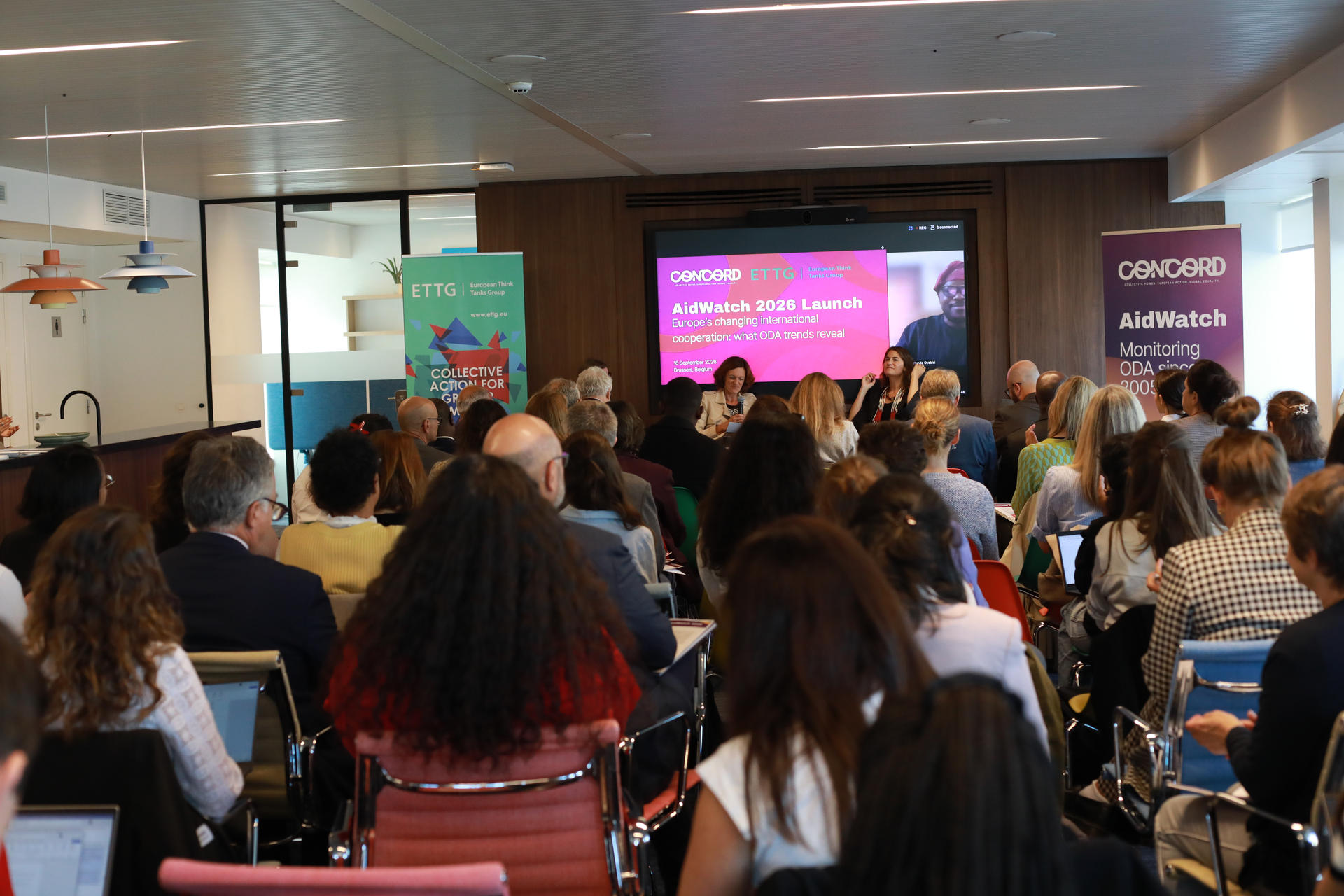
CONCORD's new AidWatch 2026 report, presented at a launch event co-hosted with the European Think Tanks Group (ETTG), takes stock of the latest trends in European ODA and asks what the future of development finance could look like as budgets come under increasing pressure.
The launch of CONCORD’s AidWatch 2026 report in Brussels raised several questions: as European ODA shrinks and international cooperation priorities shift, how can development objectives remain at the centre of international cooperation, and who gets to shape its future?
On one hand, there was recognition that Europe needs to combine different financial tools to respond to growing global challenges. On the other hand, various other dimensions emerged: can "strategic interests" be combined with the growing needs and vulnerabilities of communities worldwide? How can we talk about economic prosperity and "aid" when extreme poverty remains widespread, basic rights are under pressure, locally led development is still far from reality, and ODA declines globally at record speed?
According to CONCORD's AidWatch 2026 report, between 2024 and 2025, EU ODA decreased by 11.4% in real terms. EU Institutions’ ODA fell by 13.8% compared to 2024, the biggest decline in a decade. ODA from Member States has also been declining steadily since its 2022 peak, with ODA as a share of gross national income (GNI) falling from 0.47% in 2024 to 0.42% in 2025 — the third consecutive decrease since 2022 and the lowest level since 2018.
While the EU still accounts for 47% of global ODA, the report asks: can European institutions and Member States credibly claim global leadership on sustainable development while simultaneously cutting their ODA?
Falling aid, changing priorities
Only Denmark, Sweden and Luxembourg met or exceeded the long-standing 0.7% ODA target in 2025. But the issue is not only how much aid is being provided. It is also about what is counted as aid, the "quality of it", where it goes and what purpose it serves.
“Inflated aid” is on the rise: in 2025, more than one fifth of EU Member States' ODA — €16.5 billion, representing 22% of their total ODA, was considered inflated because it lacked a clear development objective and/or did not reach Majority World countries.
During the launch, Cristina Fernandez-Duran Gortazar, Head of the EU Advocacy Office at Oxfam International, stressed that even though EU ODA fell by 11.4% in real terms between 2024 and 2025, public support remains strong: "55% of people across 34 countries say their country should cooperate on global challenges, even when this means compromising on national interests.”
However, she argued that ODA is increasingly being used to advance strategic agendas rather than its core purpose of supporting development, and stressed that the landscape is changing and the system needs reform.
“There is a shrinking envelope to fight inequality and poverty," but at the same time "we need to look at what is working and highlight good practices.”
Keeping development needs at the centre
The discussion in fact deeply explored how European development cooperation can navigate a landscape where development objectives increasingly sit alongside economic and geopolitical interests – or contrasts.
Kickstarting the panel discussion, Luc Bagur, Director of Sustainable Development Policy and Coordination at DG INTPA, European Commission, stressed the importance of continuing to consider needs and vulnerabilities as well as the fundamentals of development cooperation.
“How to pursue strategic interests while respecting the fundamentals of development cooperation — from effectiveness to policy coherence and eradicating poverty?”
Yet as European development policy evolves towards a framework with multiple objectives, including economic interests, the challenge is to ensure that development objectives and ODA’s core mandate of poverty reduction remain central, rather than becoming secondary or geopolitical interests.
Development defined by those closest to it
For civil society in partner countries, the question of ownership is central. Who decides where ODA goes? Who controls the resources? And do communities and local organisations have a real say? The reality is that, much ODA still flows without direct and flexible funding for local civil society which remains limited.
Oyebisi Babatunde Oluseyi, Executive Director of the Nigeria Network of NGOs, a Forus member, framed the issue around locally defined development priorities and asked: "Is Europe truly delivering on its promise?”
He welcomed examples of progress, particularly where there is greater transparency and stronger engagement at national level. But for Oyebisi, meaningful development cooperation ultimately depends on the role of citizens, and those citizens must have a say in how resources intended for their communities are used.
“Citizens in the Majority World must define where the money goes.” ODA continues to be a crucial source of financial support for many countries, helping fund the budgets that provide essential public services, particularly in low-income countries that must spend significant proportions of their revenues on debt servicing, "often up to 20%," shared Oyebisi.
This points to the need for development cooperation strategies that enable partner countries, local communities and civil society organisations to influence priorities from the outset — including decisions about how resources are allocated and which programmes receive funding.
As discussions on the post-2030 agenda advance, these questions about financing, participation and accountability will also be central to shaping the future of global cooperation.
“We need a strategy that is clear and that properly defines where ODA support goes to.”
Good practices: protecting the integrity of ODA
Despite major cuts, the AidWatch report also highlights examples of good practice in ODA budgeting that other Member States can learn from.
These examples show that maintaining the quality and core development mandate of ODA requires political commitment to development objectives, transparency and safeguards to ensure that new instruments, private-sector engagement and strategic priorities complement rather than displace core development goals.
Luxembourg illustrates how specific budgetary safeguards can protect ODA’s development purpose. It allocates around 1% of GNI to ODA, excludes in-donor refugee costs, keeps climate finance additional to its development budget, provides almost all ODA as grants and maintains 100% untied aid, with a strong focus on poverty reduction, gender, and support to fragile countries and communities that have been historically marginalised.
Political commitment and long-term predictability
Charlotte Vernier, Attachée for Development Cooperation and Global Gateway at the Permanent Representation of Luxembourg to the EU, emphasised that political commitment is essential for maintaining development cooperation over time.
“Political commitment is the starting point.”
She pointed to Luxembourg's cross-coalition model as an example of how political commitment can be sustained. Public support is also crucial. Vernier highlighted the importance of demonstrating to citizens that ODA can deliver meaningful results both in Europe and in partner countries.
“ODA trickles down to the backing of citizens. There is a public awareness that ODA money is well spent and that it will have a positive impact in our country and partner countries.”
She emphasised the importance of strong relationships with local civil society organisations, particularly in a context of changing public narratives around development cooperation.
For Vernier, popular education has an important role to play in building and maintaining public support.
She also stressed the need for systems that can withstand political and budgetary changes:
“Clear budget processes so that these principles are resilient over time.”
Long-term and predictable financing is equally important for organisations working with communities and partners.
ODA: cooperation in a changing world
The discussion also looked beyond North-South development cooperation.
Camilo Gamba, Policy Analyst at the International Forum on TOSSD Secretariat at the OECD, spoke about ODA and the broader development finance landscape, including the role of South-South and triangular cooperation, highlighting the need to look at the wider architecture of international cooperation.
For Forus, one of the most important questions emerging from the discussion is what declining ODA means for civil society.
National and local civil society organisations are not simply implementers of externally designed programmes or service providers. They bring community knowledge, support participation, defend rights, connect citizens with decision-makers and help translate local realities into collective advocacy.
As budgets shrink, their independence and ability to participate meaningfully in development processes must be protected. This means protecting predictable and flexible funding for civil society organisations, including their institutional capacities, as well as ensuring that they can participate in setting priorities, monitoring development commitments and holding decision-makers accountable.
As development budgets shrink, European institutions face consequential decisions about what funding to protect and how to support civil society organisations in partner countries. Forus has consistently emphasised the importance of recognising these organisations as independent development actors, rather than simply as service providers.
This is particularly important as funding becomes increasingly linked to strategic and economic priorities. Civil society needs space to question policies, raise concerns and hold governments and institutions accountable, including when its views do not align with prevailing political or economic interests and for this the enabling environment for civil society needs to be protected and promoted.
Who gets to decide how aid is spent?
The decline in ODA also makes questions of power increasingly important. When there is less money available, decisions about what gets funded, what gets cut and what is protected become even more consequential.
For Forus, partner countries and civil society organisations must have a meaningful role in making those decisions.
The decline in European ODA is part of a much broader shift. Global ODA fell by around 23% in 2025, "a historic decline", Forus believes this is a moment to ask what kind of cooperation we want to build for the years ahead and what would a more equitable model look like from the perspective of partner countries and their civil societies.
The answers will require looking at who sets priorities, who controls resources, whose knowledge counts and who has a voice in decisions.
The AidWatch discussion showed that there are already lessons to draw from approaches that prioritise political commitment, clear and resilient budget processes, multi-annual and predictable funding, locally defined development, transparency, strong safeguards and meaningful civil society participation at national levels.
As highlighted in a recent Forus article featuring perspectives from the Lithuanian NGDO Platform, cooperation is not a luxury; “it is infrastructure”. It underpins everything from crisis response to peacebuilding. Cutting aid weakens trust, narrows space for collaboration and risks deepening the divisions development cooperation seeks to address.
In a November 2025 statement on ODA budgets, the Forus network called for renewed investment in development assistance, greater participation by local communities in decision-making, more direct support for local civil society, mutual accountability and sustained engagement in fragile and conflict-affected contexts.
-
Reinvestment in ODA: Meeting and exceeding the 0.7% GNI target must become an urgent priority, particularly in the context of global crises such as conflicts, climate change, and humanitarian emergencies as underlined in recent UN reports.
-
Shifting the Power for transparent and inclusive ODA: Decision-making processes must include local communities, with a shift towards more direct support for local civil society. Addressing these challenges requires not only mobilising resources and reforming the international financial system but also strengthening feminist, ecological and decolonial approaches.
-
Accountability reforms: Establish mutual accountability frameworks that uphold development effectiveness principles for both donors and recipient countries, ensuring that ODA benefits those it is intended to serve.
-
Sustained engagement in fragile states: Rather than pulling out of countries due to political tensions, donors must commit to maintaining support in conflict-affected regions, where it is most urgently needed.
-
Adaptation to a changing aid landscape: As traditional aid models evolve, including through initiatives like the EU Global Gateway, it is essential to align these projects with the genuine needs of local civil society and those directly impacted in the partner countries, and resist trends that prioritize geopolitical agendas.
-
Bold commitments: Leaders need to walk the talk by championing bold action and ambitious commitments when it comes to translating their promises into reality.
The AidWatch 2026 findings underline the importance of looking beyond the volume of development assistance to examine how resources are allocated, who participates in those decisions and whose priorities are reflected. Forus will continue bringing the perspectives of national civil society platforms and regional coalitions into these discussions, including as the international community considers the future of global cooperation beyond 2030.