© NGO Forum on ABD
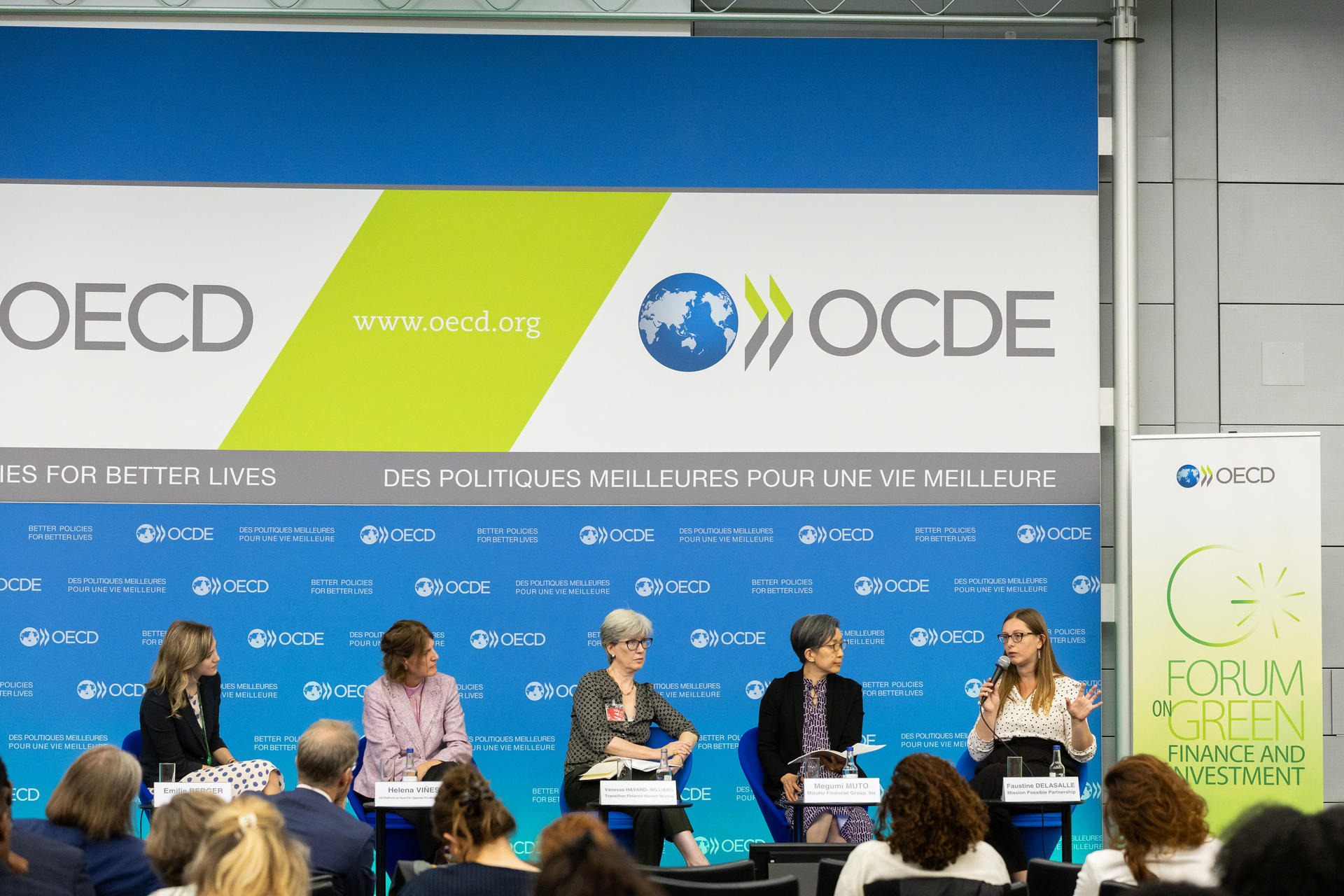
©OECD media hub





Mon 19 Oct 2026
Who decides, who benefits, who is accountable? Forus members bring civil society perspectives to OECD-DAC debates in Paris
From 7–9 October, Forus and members from across the network joined civil society partners, OECD-DAC delegates and development experts in Paris for three days of discussions on the future of development cooperation. Across the three days, conversations moved between the highly technical — data, ODA eligibility, locally led development metrics, financing flows — and the deeply political: who gets to shape development cooperation, who benefits from it, and who is accountable to whom?
That question is becoming more urgent by the week.
Development cooperation is undergoing profound change. Aid budgets are under pressure, geopolitical priorities are shifting, private finance has a growing role, and the OECD Development Assistance Committee (DAC) itself is undertaking a major review of its role, tools and ways of working. The review is expected to feed into a renewed DAC mandate in 2027 and its programme of work for 2027–2030.
Across Europe, governments are now negotiating the EU’s next long-term budget. Civil society organisations have warned that a 40% cut to Global Europe, the EU’s future external-action instrument for 2028–2034, is being considered — despite the European Commission having proposed a €200 billion envelope. Such cuts would directly affect Europe’s capacity to support international cooperation, humanitarian response, peacebuilding, human rights and long-term partnerships.
This is exactly why the questions discussed in Paris matter: ambitions for stronger partnerships, greater resilience and shared interests cannot be separated from the resources, power and accountability needed to make those partnerships real.
Against this backdrop, Forus joined several members and civil society partners in Paris for the OECD-DAC CSO strategy discussions, the Working Party on Development Finance Statistics’ Development Finance Data Forum, and the annual DAC-CSO Dialogue.
Forus members brought perspectives from different regions and policy contexts, including UNNGOF in Uganda, INFID in Indonesia, JANIC in Japan, CONCORD in Europe, Coordination SUD in France, Dóchas in Ireland, Globalt Fokus in Denmark, Cooperation Canada and Bond in the UK, alongside Forus and other civil society partners, helping bring country-level evidence and experiences on funding, locally led development and civic space - especially through the monitoring of the EU System for an Enabling Environment for Civil Society (EU SEE), directly into the OECD-DAC discussions.
Throughout the week, four messages guided Forus’s engagement: protecting the distinctive development purpose of ODA; ensuring that “mutual benefit” does not become a justification for shifting development cooperation towards provider-country interests; understanding locally led development as a transfer of power rather than simply delivery; and ensuring that civil society participation means real influence over decisions.
Protecting the purpose of development cooperation
Across the OECD-DAC discussions, one issue repeatedly surfaced: development cooperation is increasingly being asked to serve a wider range of commercial, geopolitical, migration and security objectives.
Forus’s message was straightforward: changing the vocabulary ulary from “aid” to “partnership”, “investment” or “mutual benefit” will not transform development cooperation if power remains concentrated in the same hands.
The key questions remain: Who defines the benefit? Who decides? Who controls the resources? Who bears the risks? And who can hold whom accountable?
ODA remains a distinctive public and concessional resource. Wider finance can complement it, but should not displace funding for poverty and inequality reduction, human rights, civic space, humanitarian action and fragile contexts where there may be little immediate commercial return.
And if cooperation is to be described as “mutual”, accountability must also run both ways: partner-country institutions, communities and civil society should be able to scrutinise providers and financing institutions, rather than accountability flowing primarily from recipients back to donors.
Locally led development must mean shifting power
The Development Finance Data Forum placed strong emphasis on improving measurement of resources reaching local actors.
That matters. Better data can make visible where funding actually goes and strengthen accountability. But better measurement is not the same thing as more locally led development.
Knowing where funding arrives does not tell us whether local actors have greater power over how resources are used. Locally led development must also ask who sets priorities, who makes decisions, who controls resources, who carries risk and who defines success.
Moses Isooba, Executive Director of the Uganda National NGO Forum (UNNGOF), highlights the wider context in which these shifts are taking place:
“At the just ended OECD Paris, there was a lot of attention on ‘Mutually Beneficial Partnership’ and ‘solidarity investments’. All this is happening at a time when not only is aid being trimmed but governments are taking the guillotine to it.”
Forus therefore argued that local leadership requires a real redistribution of power, resources, risk and accountability — not simply a redistribution of implementation responsibilities.
INFID brought a particularly concrete perspective from Indonesia, highlighting a “recipient-side” gap in development-finance statistics: DAC data can show what providers spend, but it is much harder to see whether resources reaching local civil society are retained sustainably, whether abrupt funding withdrawals weaken entire civic ecosystems, or whether local actors have alternative sources of finance.
This matters far beyond statistics. Data shapes policy decisions — including decisions about localisation, ODA eligibility and graduation, and what development cooperation should prioritise in the future.
An enabling environment is part of development infrastructure
The annual DAC-CSO Dialogue also focused on the five-year review of the OECD-DAC Recommendation on Enabling Civil Society.
The OECD’s own implementation review recognises both progress and significant remaining challenges. The Recommendation continues to provide an important international framework, but shrinking civic space, declining ODA, structural barriers and changing development priorities continue to constrain effective civil society participation.
Forus’s forthcoming report, Strengthening the Enabling Environment for Civil Society: Evidence and Priorities for Action, shows how civil society organisations increasingly face overlapping pressures: restrictive laws, administrative burdens, shrinking and more conditional funding, digital surveillance and hostile public narratives. The report draws on consultations across the Forus network and on evidence from the EU System for an Enabling Environment for Civil Society (EU SEE), which monitors enabling-environment conditions across more than 86 countries.
The implication is clear: an enabling environment for civil society cannot be treated as a side issue in development policy.
Civil society cannot exercise local leadership if organisations are underfunded, restricted or excluded from decisions. Nor can communities hold governments, donors or private actors accountable without independent civic institutions.
The next phase of implementing the OECD-DAC Recommendation therefore needs to move from commitment to capability: acting earlier when civic space deteriorates, providing more predictable and flexible funding, reducing burdensome compliance, protecting digital civic space and ensuring civil society participation actually influences decisions.
Participation cannot simply mean being invited to comment after major choices have already been framed. Civil society needs to be present where standards, definitions, statistics and policy directions are shaped, with clear feedback on how its contributions influenced decisions.
Moses Isooba offers a different perspective on why progress has been slow, arguing that the challenge lies in how aid is understood and delivered:
“The conversation has been more on aid as charity and not as an investment. The conversation about localization is perhaps what is new. Therefore it is not localization that is moving at a glacial pace but the mindset change of how aid is deployed. Who holds the resources, who holds the power for decision making and who defines success.”
Whether governments are negotiating the next EU budget, redesigning development finance or redefining global cooperation, the people and organisations most affected by those decisions need meaningful influence over them.
From Paris to the next phase of collective action
The Paris discussions reinforced our position that the future of development cooperation cannot be judged only by new instruments, new terminology or better statistics.
It must also be judged by whether power shifts, accountability deepens, public resources continue to serve development objectives, and civil society has the space and resources to act independently.
Forus will continue this conversation on 29 October, with the launch of our new report Strengthening the Enabling Environment for Civil Society: Evidence and Priorities for Action. The event will bring together civil society, donors, development partners, philanthropic actors and members of the OECD-DAC community to discuss practical priorities for the next stage of implementation and opportunities for collective advocacy.
Forus and its members will continue working to ensure that civil society has the space, resources and influence to shape the future of development cooperation — not simply respond to decisions once they have been made.